프린트 판매로 전환
 더 보기
더 보기







































 가로 또는 세로 중 어느 한 면이라도 105cm(약 41인치)를 초과하는 작품이나 복제화의 경우, 프레임은 분해된 키트 형태로 배송됩니다. 이는 안전한 배송을 보장하고 운송 중 발생할 수 있는 손상을 방지하기 위함입니다.


A Snapshot of Rural Life: Jules Dupré’s “La Petite Charrette”
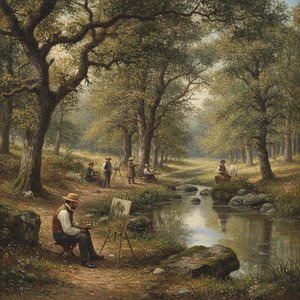
Jules Dupré's "La Petite Charrette" isn’t merely a depiction of a rural scene; it’s a carefully constructed evocation of a bygone era, a poignant glimpse into the quiet rhythms and enduring beauty of French countryside life in the 19th century. Painted with an almost palpable sense of tranquility, the artwork transports us to a world where time seems to slow, and the simple act of pulling a cart along a dusty road becomes imbued with significance. Dupré, a key figure within the Barbizon School, deliberately eschewed the romanticized idealism often associated with landscape painting, instead choosing to capture the raw, unvarnished reality of peasant life – its hardships, its dignity, and its deep connection to the land.
The Language of Light and Line: Composition and Technique
The composition of “La Petite Charrette” is masterfully balanced, utilizing a horizontal format to emphasize the expansive landscape. The winding dirt road acts as a powerful linear element, drawing the viewer’s eye into the scene and establishing a sense of depth. A towering oak tree dominates the upper right corner, its branches reaching skyward like protective arms – a symbol of strength, resilience, and perhaps even a silent witness to generations of rural life. Dupré employs an academic realist style, meticulously rendering each element with careful attention to detail. Notice the short, broken brushstrokes used to suggest the rough texture of the road, contrasting sharply with the smoother application in the distant hills. The subtle variations in tone create a remarkable sense of depth and atmosphere, mimicking the effects of atmospheric perspective – a technique perfected by artists like Constable.
- Color Palette: Dominated by earthy browns, greens, and yellows, reflecting the natural hues of the French countryside.
- Brushwork: A blend of short, broken strokes for texture and smoother application for distance.
- Linear Elements: The winding road serves as a primary guide through the composition.
Symbolism and Emotional Resonance
Beyond its realistic depiction, “La Petite Charrette” resonates with deeper symbolic meaning. The simple act of pulling a cart represents labor, sustenance, and connection to the land – fundamental aspects of peasant life. The quiet solitude of the scene evokes feelings of tranquility, simplicity, and perhaps even a touch of melancholy. Dupré wasn’t simply painting a landscape; he was capturing a mood, an atmosphere, and a way of life that was slowly disappearing in the face of industrialization. The distant hills, rendered with subtle atmospheric perspective, suggest both the vastness of the countryside and the enduring connection between humanity and nature.
A Legacy of Barbizon: Historical Context
Jules Dupré’s work is inextricably linked to the Barbizon School, a movement that championed direct observation and emotional resonance in landscape painting. Rejecting the idealized landscapes favored by earlier generations, the Barbizon artists sought to capture the raw beauty and inherent drama of nature as they experienced it. Dupré's focus on depicting the realities of peasant life—the hard work, the simple pleasures, and the profound connection to the land—aligns perfectly with the Barbizon School’s core values. His paintings offer a valuable window into 19th-century France, providing insights into the lives and perspectives of those who shaped its rural landscape.
질의응답
쥘 뒤프레의 "La petite charrette"의 저작권으로 복제가 가능한가요?
"La petite charrette"의 원작은 루브르 박물관에 소장되어 있으며, 이 작품은 퍼블릭 도메인 - 저작권 보호 기간이 만료되었습니다 상태입니다.
"La petite charrette"의 색상들은 빛을 어느 정도나 반사하는 것처럼 보이나요?
쥘 뒤프레의 "La petite charrette"의 기록된 휘도는 Soft Shadow입니다.
쥘 뒤프레의 "La petite charrette" 작품에 권장되는 인쇄 설정은 무엇인가요?
"La petite charrette" 작품의 권장 인쇄 설정은 Medium 크기와 Landscape 방향입니다.
이 작품에 대해 더 알아보기
 미리보기
미리보기
 공유하기
공유하기 공유하기
공유하기
 상세 정보
상세 정보 가이드 보기

 다운로드
다운로드
 유사 작품 더 보기
 X-레이
X-레이 슬라이드 쇼 보기
 질의응답
질의응답 통계 정보
통계 정보