 프린트 판매로 전환
 더 보기
더 보기







































 가로 또는 세로 중 어느 한 면이라도 105cm(약 41인치)를 초과하는 작품이나 복제화의 경우, 프레임은 분해된 키트 형태로 배송됩니다. 이는 안전한 배송을 보장하고 운송 중 발생할 수 있는 손상을 방지하기 위함입니다.


A Symphony of Earth and Sky: Unveiling Jules Dupré’s “Forest Landscape”
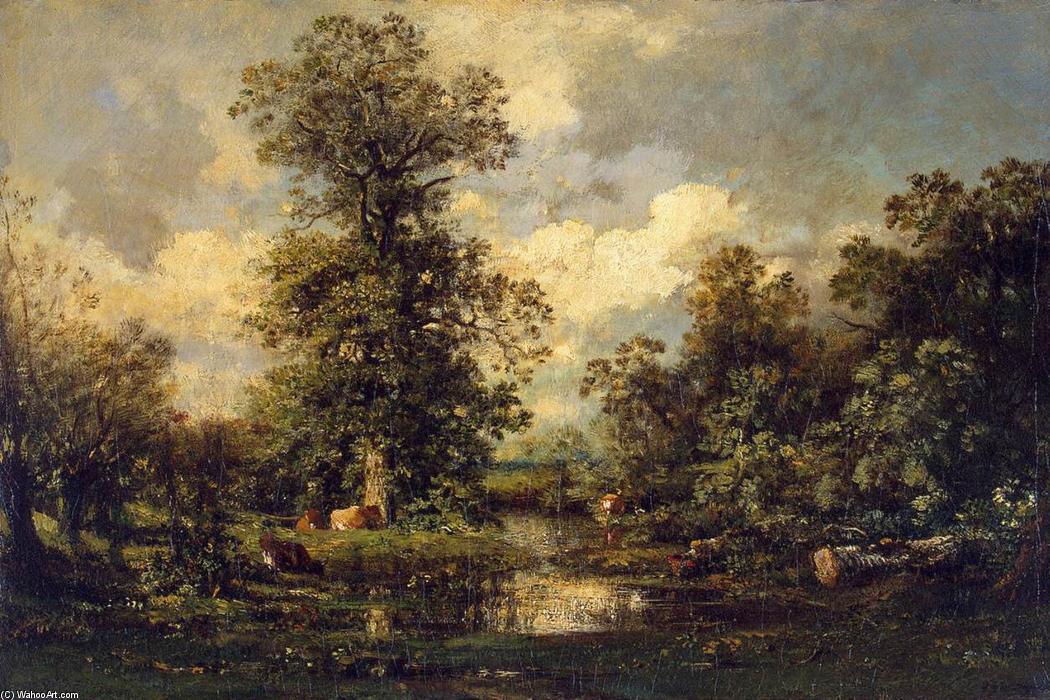
Jules Dupré's "Forest Landscape," painted in 1840, isn’t merely a depiction of trees; it’s an immersion into the heart of the Barbizon School’s philosophy – a profound reverence for nature rendered with raw emotion and meticulous observation. This oil on canvas, currently residing within the esteemed Hermitage Museum in St. Petersburg, transcends simple landscape painting, offering a glimpse into the soul of 19th-century France and the artist's deeply personal connection to the natural world.
The Barbizon School, emerging from the shadow of Romanticism, rejected the idealized landscapes favored by earlier generations. Instead, they sought truth in the everyday – the weathered bark of a tree, the dappled sunlight filtering through leaves, the subtle shifts in color that define a fleeting moment. Dupré embodies this ethos with remarkable clarity. He doesn’t strive for picturesque beauty; he presents the forest as it *is*, imbued with a sense of quiet drama and timelessness. The composition is anchored by a winding river, its surface mirroring the sky above – a clever device that blurs the boundaries between earth and heavens, suggesting an infinite expanse.
Decoding the Palette: Earth Tones and Emotional Resonance
Dupré’s masterful use of color is central to the painting's impact. He eschews bright hues in favor of a rich tapestry of earthy tones – deep greens, browns, ochres, and subtle blues – creating an atmosphere of profound tranquility and introspection. These aren’t merely colors; they are textures, evoking the dampness of moss, the roughness of bark, and the muted light of a forest floor. Notice how he employs loose brushstrokes, allowing the paint to flow freely across the canvas, capturing the movement of branches in the wind and the dappled patterns of sunlight. This technique contributes significantly to the painting’s sense of immediacy and vitality.
The sky itself is a study in atmospheric perspective – a swirling blend of clouds rendered with delicate washes of blue and gray. These aren't static formations; they seem to shift and change, mirroring the ever-changing moods of nature. The light filtering through these clouds casts a gentle illumination on the landscape below, highlighting the play of light and shadow in the foliage and along the river’s edge – creating an illusion of depth and volume that draws the viewer into the scene.
A Window to the Barbizon: Context and Symbolism
To fully appreciate “Forest Landscape,” it's crucial to understand its historical context. The Barbizon School, centered around the Forest of Fontainebleau, rejected the Parisian Salon’s emphasis on academic art and sought inspiration directly from nature. Artists like Dupré, Corot, and Millet spent countless hours observing and painting outdoors, capturing the essence of rural life and the beauty of the French countryside. Dupré's work is often interpreted as a reflection of his own emotional state – a yearning for simplicity, solitude, and connection with the natural world.
Symbolically, the forest itself represents a realm of mystery and introspection. It’s a place where one can escape the pressures of society and connect with something larger than oneself. The winding river serves as a metaphor for the flow of life – its constant movement reminding us to embrace change and accept the inevitable passage of time. The painting, therefore, is not simply a representation of a forest; it’s an invitation to contemplate our place within the grand scheme of nature.
Bringing “Forest Landscape” Home: Reproductions and Artistic Legacy
Handmade oil painting reproductions of this beautiful work are now available for purchase at OriginalUniqueArt.com, offering a tangible connection to Dupré’s artistic vision. Whether adorning your living room wall or serving as a focal point in a serene bedroom, “Forest Landscape” will undoubtedly evoke feelings of peace, tranquility, and wonder. Its timeless appeal ensures that it will remain a cherished addition to any art collection for generations to come.
질의응답
"Forest Landscape"의 색감은 강렬한 편인가요, 아니면 부드러운 편인가요?
"Forest Landscape"의 색채 강도는 Balanced입니다. 강도는 색상이 얼마나 선명하게 느껴지는지를 나타냅니다.
쥘 뒤프레의 "Forest Landscape"의 색채 구성은 어떻게 묘사되어 있나요?
쥘 뒤프레의 "Forest Landscape"의 색채 구성은 Earthy로 요약할 수 있습니다. 이는 작품에 사용된 색상들을 간결하게 표현한 것입니다.
"Forest Landscape"은(는) 쥘 뒤프레의 다른 작품들과 어떤 공통점을 지니고 있나요?
"Forest Landscape"은(는) 쥘 뒤프레의 Barbizon School 시기 작품으로, 작가의 주요 주제로는 barbizon realism, nature observation, romanticism, emotional landscape, french countryside, rural life, impressionistic brushwork, light study 등이 있습니다.
이 작품에 대해 더 알아보기
 미리보기
미리보기
 공유하기
공유하기 공유하기
공유하기
 상세 정보
상세 정보 가이드 보기

 다운로드
다운로드
 유사 작품 더 보기
 X-레이
X-레이 슬라이드 쇼 보기
 질의응답
질의응답 통계 정보
통계 정보