
![Pas Mèche [nothing Doing] — 쥘 바스티앙-르페주](/media/artworks/images-full/0a/a4/0aa443b038cfee7a0eeae71195adba8a.jpg)
 실제 크기로 보기
 보내기
보내기 공유하기
공유하기
 상세 보기
상세 보기 가이드 보기

 이미지 다운로드
 유사 작품 더 보기
 X-레이
X-레이 슬라이드 쇼 보기
 통계 정보
통계 정보Pas Mèche [Nothing Doing]


 상세 보기
상세 보기
핸드메이드 유화 복제화
작가가 직접 캔버스에 손으로 그린 유화 작품으로, 원하는 크기와 액자로 맞춤 제작해 드립니다. ( 프린트 판매로 전환 디지털 이미지 판매 채널로 전환)




P118B ₩10

P118H ₩10

P118W ₩10

P438Z ₩10

P508JH ₩12

P508YH ₩12

P805H ₩10

P805Z ₩10

P919BZ ₩10

P919G ₩10

P919XJ ₩10

P959ZH ₩10

P968JZ ₩12

W106C ₩8

W218G ₩10

W218JH ₩8

W218Y ₩10

W307PJ ₩10

W316G ₩10

W316PJ ₩8

W316Y ₩10

W398PJ ₩8

W4111J ₩10

W500HY ₩15

W500JH ₩15

W692G ₩12

W849H ₩8

W940BG ₩15

W953PJ ₩8




작품의 원본 비율을 그대로 유지하는 프리셋 사이즈 중에서 선택해 보세요.

액자나 벽면 크기에 맞춰 필요한 가로와 세로 길이를 입력해 주세요. 본 작품은 수작업으로 제작되므로, 요청하신 비율에 따라 작가가 그림의 가장자리를 조금 더 넓게 그리거나 일부를 조정하여 작업할 수 있습니다. 작업 시작 전, 최종 확인을 위해 디지털 목업 이미지를 보내드립니다. 이 페이지에 표시된 이미지는 실제 결과물과 다를 수 있으며, 오직 목업 이미지만이 정확한 결과물을 보여줍니다.
주문 완료 후 OriginalUniqueArt.com 팀에서 상세 안내를 위해 고객님께 이메일을 보내드리며, 미리보기 시안을 함께 제공해 드립니다.


 유리 옵션은 110cm 미만 크기에서만 선택 가능합니다.
![Pas Mèche [Nothing Doing]](/static/images/originaluniqueart/artworks/painting.a1e74a1cb7dc.png)
Pas Mèche [Nothing Doing]
재현 매체
복제본 규격
-


총 결제 금액
₩ 406798
A Moment Frozen in Rural France: Jules Bastien-Lepage’s *Pas Mèche*
Jules Bastien-Lepage's *Pas Mèche* (Nothing Doing), painted in 1882, isn’t merely a portrait; it’s a carefully constructed tableau of rural life imbued with a quiet dignity and an unspoken narrative. The painting depicts a young boy, likely a barge worker, standing on the edge of a small village road, his gaze direct and unwavering. He is a figure of remarkable composure amidst what appears to be a mundane scene – a worn brown jacket, raggedy trousers, and large, unlaced boots speak to a life of hard work and simple means. Yet, within this apparent ordinariness lies a profound sense of observation and a subtle suggestion of melancholy. Bastien-Lepage, a pivotal figure in the transition from Realism to Naturalism, masterfully captures not just an image but also a feeling—a poignant awareness of time passing and the quiet realities of peasant existence. The title itself, *Pas Mèche*, is a French slang phrase meaning “Nothing Doing,” hinting at a state of weary resignation or perhaps simply a moment’s pause before returning to labor.The Naturalist Approach: Light, Texture, and Observation
Bastien-Lepage's artistic approach was deeply rooted in the tenets of Naturalism, a movement that sought to depict life as it truly was—without idealization or romantic embellishment. He achieved this through meticulous observation and a masterful understanding of light and texture. Unlike the polished surfaces favored by earlier academic painters, Bastien-Lepage employed loose, visible brushstrokes, allowing the canvas to breathe and revealing the materiality of his subjects. The paint itself seems almost tactile—one can practically feel the roughness of the boy’s clothing and the weathered surface of the road beneath his feet. He utilized a muted palette dominated by earthy browns, greens, and greys, reflecting the colors of the rural landscape he so faithfully rendered. Crucially, Bastien-Lepage spent considerable time *en plein air* (outdoors), directly observing his subjects in their natural environment, ensuring an unparalleled level of accuracy and authenticity in his depictions. This commitment to direct observation is evident in the boy’s posture, the way the light falls across his face, and the subtle details of the surrounding village.Symbolism Within Simplicity: The Tools of Labor
Beyond the immediate depiction of the boy, *Pas Mèche* is rich with symbolic elements. The fishing rod clutched in his hand immediately establishes his profession—a barge worker who would have been responsible for guiding and controlling the boats navigating the canals and rivers of France. The horn slung across his back was a vital tool for communication, alerting lockmasters to the approach of a boat. These seemingly simple objects – the rod, the horn, the worn boots – represent not just labor but also a connection to tradition, community, and the rhythms of rural life. The boy’s direct gaze is particularly significant; it suggests an awareness beyond his years, perhaps a recognition of the limitations imposed upon him by his circumstances. His stillness conveys a quiet dignity—a refusal to be defined solely by his humble profession.A Legacy of Rural Realism
Jules Bastien-Lepage’s *Pas Mèche* stands as a cornerstone of French Naturalist painting, profoundly influencing generations of artists. His ability to capture the essence of rural life with such honesty and sensitivity resonated deeply with audiences seeking an alternative to the idealized depictions prevalent in academic art. Born in 1848 and tragically dying at just thirty-six, Bastien-Lepage’s brief but impactful career left behind a body of work that continues to captivate viewers today. *Pas Mèche* exemplifies his signature style—a blend of meticulous observation, evocative light, and a profound understanding of the human condition. It's a painting that invites contemplation, prompting us to consider the lives of those who labor unseen and the quiet beauty found in the most unassuming corners of the world. Reproductions of *Pas Mèche* offer a valuable opportunity to bring this poignant work into any interior space, serving as a reminder of France’s rich artistic heritage and the enduring power of simple, honest representation.질의응답
쥘 바스티앙-르페주의 "Pas Mèche [Nothing Doing]"에서 예술 사조와 시대상은 어떻게 맞닿아 있나요?
쥘 바스티앙-르페주의 "Pas Mèche [Nothing Doing]"은(는) 작가의 19세기 미술 시대 중 Naturalist Painting 사조에 속합니다.
제 방에 "Pas Mèche [Nothing Doing]"을(를) 어떤 사이즈로 프린트하는 것이 좋을까요?
쥘 바스티앙-르페주의 "Pas Mèche [Nothing Doing]"에 추천하는 조합: Living Room 공간에 어울리는 Medium 사이즈 프린트입니다.
"Pas Mèche [Nothing Doing]"에 대한 가이드는 어디에서 확인할 수 있나요?
쥘 바스티앙-르페주의 "Pas Mèche [Nothing Doing]"의 가이드 페이지에서는 인쇄 가능한 두 장 분량의 학습용 팩트시트를 제공합니다. 여기에는 작품과 작품 정보표, 작가의 생애 속 시기를 보여주는 연대기, 해당 작가의 다른 작품들, 측정된 컬러 팔레트, 그리고 네 가지 스타일로 바로 복사하여 사용할 수 있는 인용 문구가 포함되어 있습니다.
작가 소개
자연주의의 선구자: 쥘 바스티앵-르페주의 삶과 예술
쥘 바스티앵-르페주는 19세기 후반 프랑스 회화에서 중추적인 인물로 등장했으며, 확립된 사실주의 전통과 떠오르는 인상주의 운동을 잇는 다리 역할을 했습니다. 1848년 프랑스 메즈 지역의 작은 마을 담빌리에(Damvillers)에서 태어난 그의 예술적 여정은 프랑스 시골의 풍경과 삶에 깊이 뿌리내리고 있었습니다. 이러한 고향과의 연결고리는 단순한 전기적 사실을 넘어, 그의 예술 그 자체의 본질이 되어 캔버스에 주변 세계를 더욱 정직하게 그려내고자 하는 관객들의 마음에 깊이 울림을 주는 진정성을 불어넣었습니다. 비록 짧았지만 매우 생산적이었던 그의 경력은 1884년 서른여섯이라는 젊은 나이에 갑작스럽게 막을 내렸으나, 자연주의의 발전에 지울 수 없는 흔적을 남겼고 유럽 전역의 예술가들에게 영향을 미쳤습니다.시골의 뿌리에서 예술적 훈련까지
바스티앵-르페주의 초기 예술 교육은 아버지에게서 비롯되었는데, 아들의 재능을 알아보고 키워준 화가였습니다. 젊은 줄은 스케치북을 시골 풍경의 연구로 가득 채우며 관찰력 있는 눈으로 농촌 생활의 리듬을 포착했습니다. 자연 세계에 대한 이러한 초기 몰입은 그의 작품에서 결정적인 특징으로 남게 됩니다. 이후 1867년부터 파리의 보자르 미술학교(École des Beaux-Arts)에서 정식 훈련을 받았으며, 그곳에서 세련된 기법과 역사적 주제로 유명했던 저명한 아카데미 화가 알렉상드르 카바넬 밑에서 공부했습니다. 살롱 시스템이 요구하는 기술들을 숙달하는 동시에, 바스티앵-르페주는 그 제약으로부터 벗어나고자 하는 열망을 품고 있었습니다. 1870년 프랑스-프로이센 전쟁의 발발은 그의 학업을 중단시켰고, 그는 자원 군인으로 복무하게 되었습니다. 이 경험과 뒤이은 병환은 그를 다시 담빌리에로 돌아오게 했고, 그가 가장 잘 알고 있는 사람들, 즉 고향의 농민들과 노동자들의 삶을 그려내겠다는 그의 헌신을 더욱 공고히 했습니다.자연주의의 부상과 바스티앵-르페주의 화풍
전쟁 후 파리로 돌아온 바스티앵-르페주는 전통적인 아카데미 회화에서 벗어남을 알리는 작품들을 전시하기 시작했습니다. 그의 화풍은 질감과 형태를 쌓아 올리는 작고 의도적인 붓놀림의 정교한 사용과, 따뜻하고 자연스러운 색조가 지배하는 팔레트가 특징이었습니다. 그는 *야외(plein air)* 그림을 수용하여 빛과 대기의 덧없는 효과를 포착하기 위해 자연에서 직접 작업했습니다. 이러한 관찰과 진정성에 대한 헌신은 그를 이상화나 낭만주의 없이 삶을 있는 그대로 그리려 했던 떠오르는 자연주의 운동과 일치시켰습니다. 1879년 살롱에 출품된 건초 베기(Haymaking, 1877)는 분수령이 된 순간이었으며, 바스티앵-르페주를 이 새로운 예술적 방향의 선두 주자로 확립했습니다. 이 그림 속 농부들의 사실적인 묘사와 전원 풍경의 빛나는 표현은 비평가와 관객 모두를 매료시켰습니다. 그는 단순히 농민의 삶을 기록하는 것이 아니었습니다. 그는 그것에 고귀함과 존엄성을 불어넣으며 승화시키고 있었습니다.주요 작품과 지속적인 영향
바스티앵-르페주의 성공은 장르 장면을 넘어 확장되었습니다. 그의 인물화는 상당한 찬사를 받았는데, 특히 초기 인정을 받은 나의 할아버지 초상(Portrait of my Grandfather, 1874)와 1879년 유명 여배우 사라 번하르를 그린 인상적인 초상은 그에게 더 큰 명성을 안겨준 의뢰였습니다. 그는 또한 자연주의적 감각으로 역사적 주제들을 다루었는데, 현재 오르세 미술관에 소장된 잔 다르크가 대표적입니다. 이 작품은 잔을 신화 속 영웅이 아닌 자신의 시골 출신에 뿌리를 둔 젊은 여성으로 제시함으로써, 사회적, 역사적 맥락 속에서 인물을 그리려는 바스티앵-르페주의 헌신을 반영했습니다. 1883년경에는 그의 영향력이 너무나 광범위하여 비평가들은 유럽 전역의 예술가들이 그의 스타일을 모방하고 있음을 목격할 정도였는데, 이는 그의 비전의 힘을 증명하는 것이었습니다. 그의 작품은 조지 클로젠이나 톰 로버츠 같은 영국 화가들에게도 반향을 일으켜, 그들 역시 자신의 시골 생활 묘사에 자연주의적 요소를 통합했습니다. 쥘 바스티앵-르페주의 유산은 단지 그림의 아름다움과 감정적 깊이에만 있는 것이 아니라, 예술적 변화를 촉매한 그의 역할에도 있습니다. 그는 미래 세대 예술가들이 주변 세계를 표현하는 새로운 방식을 탐구할 수 있는 길을 열어주었으며, 기존의 규범에 도전하고 예술에 더욱 정직하고 진실된 접근 방식을 받아들였습니다.
쥘 바스티앙-르페주
1848 - 1884 , 프랑스
작가 정보 요약
- Artistic Movement Or Style: 자연주의
- Artists Or Movements Influenced By This Artist: ['인상주의']
- Artists Who Influenced This Artist:
- 사실주의 운동
- 조지 클라우젠
- 톰 로버츠
- Date Of Birth: 1848년
- Date Of Death: 1884년
- Full Name: 쥘 바스티앙-르페이지
- Nationality: 프랑스
- Notable Artworks:
- 나의 할아버지 초상화
- 잔 다르크
- 건초 베기
- 감자 수확 - 10월
- 수확 시기
- 라우라, 알마 타데마 부인
- 사라 번하르트
- 목탄 풍경, 겨울
- Place Of Birth: 다므빌리에, 프랑스
관련 기사

Echoes of Rural Life: Art's Enduring Representations of the Countryside
Explore the rich history of rural life in art! Discover masterpieces from Millet to Mauve & beyond. Learn about Realism, Barbizon School & find inspiration for your home with OriginalUniqueArt.

Léon Augustin L'Hermitte: Capturing the Soul of French Rural Life
Discover the captivating realist paintings of Léon Augustin L'Hermitte, masterfully depicting French rural life. Explore his technique, influences & legacy – a cornerstone of 19th-century art.

The Enduring Legacy of Oil on Canvas: Technique, History & Aesthetic Impact
Explore the rich history & techniques of oil painting – from Renaissance masters to Impressionism. Discover pigments, layering methods, and why this timeless medium endures. Expert insights for artists & art enthusiasts.

Oil on Canvas: A Historical & Technical Exploration of a Timeless Artistic Medium
Explore the rich history & enduring techniques of oil painting on canvas. Discover the science behind its longevity, conservation practices, and contemporary relevance. Expert insights for art enthusiasts.
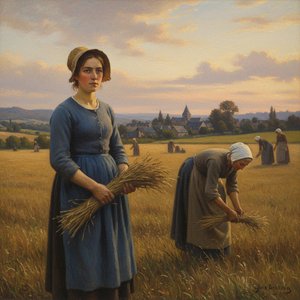
Jules Breton: Capturing the Poetic Soul of French Rural Life
Explore the captivating world of Jules Breton, master of French Realism. Discover his iconic paintings of rural life, learn about his artistic journey, and find high-quality reproductions to elevate your art collection at OriginalUniqueArt.