프린트 판매로 전환
 상세 보기
상세 보기







































 가로 또는 세로 중 어느 한 면이라도 105cm(약 41인치)를 초과하는 작품이나 복제화의 경우, 프레임은 분해된 키트 형태로 배송됩니다. 이는 안전한 배송을 보장하고 운송 중 발생할 수 있는 손상을 방지하기 위함입니다.


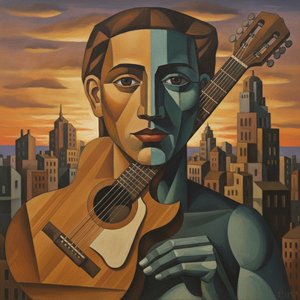
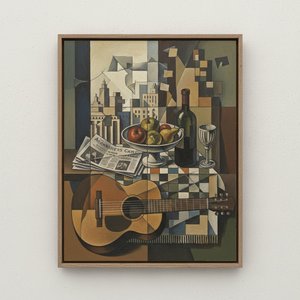
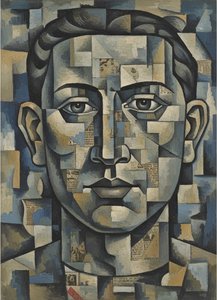
A Fragmented Portrait of Musical Reverie: Exploring Juan Gris’s Harlequin with Guitar
Juan Gris's “Harlequin with Guitar,” completed in 1919, stands as a cornerstone of Synthetic Cubism—a movement that irrevocably altered the landscape of artistic expression. More than just a depiction of a musician, this painting embodies the intellectual and aesthetic ambitions of its time, reflecting a profound engagement with geometric abstraction and a masterful manipulation of color and texture. Created in Paris during Gris’s formative years as an artist, it captures a moment of contemplative stillness amidst the dynamism of Cubist innovation.The Genesis of Geometric Harmony
Gris's approach to Cubism distinguishes him from his contemporaries like Picasso and Braque; he prioritized harmony and balance within fractured forms—a deliberate antithesis to the chaotic fragmentation championed by other artists. This pursuit of equilibrium is immediately apparent in “Harlequin with Guitar.” The central figure, a harlequin musician, isn’t rendered as a conventional portrait but rather dissected into interlocking planes of color and shape. These geometric elements – cubes, cylinders, cones—are juxtaposed against a muted backdrop featuring two additional figures, subtly hinting at an ensemble performance yet maintaining a sense of profound solitude. This careful orchestration speaks to Gris's belief that abstraction could convey emotion just as effectively as realism.Technique and Material Considerations
Executed in oil on canvas, “Harlequin with Guitar” exemplifies the Synthetic Cubist technique pioneered by Gris and his peers. Unlike Analytical Cubism’s focus on breaking down objects into constituent parts, Synthetic Cubism incorporates collage—specifically paper fragments—to enrich the visual experience. These paper inclusions aren't merely decorative; they contribute to the overall textural complexity of the painting and subtly disrupt the rigid geometric structure. The artist meticulously applied pigment with a brush, layering colors to achieve luminous effects and creating subtle gradations that heighten the sense of depth.Historical Context: Embracing Modernity’s Disquiet
The painting emerged during a period of intense intellectual ferment—the aftermath of World War I—characterized by anxieties about tradition and an eagerness to embrace new artistic languages. Cubism responded directly to these concerns, rejecting perspectival illusion and embracing the challenge of representing multiple viewpoints simultaneously. Gris's decision to depict a musician wasn’t arbitrary; it served as a deliberate provocation against academic conventions, asserting that art could explore psychological states alongside visual representation. The inclusion of the paper collage underscores this broader cultural preoccupation with experimentation and disruption.Symbolism Beyond Representation
While “Harlequin with Guitar” eschews literal depiction, its symbolism resonates deeply. The harlequin figure itself—a traditional theatrical character—represents adaptability and transformation—themes central to the Cubist project. The guitar symbolizes musical expression and contemplation, mirroring Gris’s own artistic sensibilities. Furthermore, the muted backdrop serves as a counterpoint to the vibrant geometric forms, suggesting an inner world of thought and emotion that transcends outward appearances.Emotional Resonance: A Quiet Intensity
Despite its formal austerity, “Harlequin with Guitar” possesses a palpable emotional intensity. The harlequin’s gaze—directed slightly off-center—captures a moment of introspection, inviting the viewer to contemplate the complexities of human experience. The subtle interplay of color and texture contributes to this feeling of quiet contemplation, creating an artwork that transcends mere visual stimulation and speaks to the profound beauty of geometric abstraction. It remains a testament to Gris’s ability to convey emotion through form—a remarkable achievement within the context of early 20th-century art.질의응답
후안 그리스의 "Harlequin with guitar - -"의 형태와 크기는 어떻게 되나요?
후안 그리스의 "Harlequin with guitar - -"은(는) 116 x 89 cm 크기의 Portrait 형식 작품입니다.
"Harlequin with guitar - -"은(는) 무엇에 관한 작품인가요?
"Harlequin with guitar - -"의 소재는 cubism, guitar, harlequin, portrait, geometric, collage, madrid입니다.
후안 그리스의 "Harlequin with guitar - -"의 색채는 작품의 감정과 어떻게 연결되나요?
후안 그리스의 "Harlequin with guitar - -"의 Dark 색조는 Reflective 분위기와 조화를 이룹니다. 색채는 작품이 감정을 전달하는 중요한 방식 중 하나입니다.
More about this painting
 실제 크기로 보기
 보내기
보내기 공유하기
공유하기
 상세 보기
상세 보기 가이드 보기

 이미지 다운로드
 유사 작품 더 보기
 X-레이
X-레이 슬라이드 쇼 보기
 Q&A
Q&A 통계 정보
통계 정보