Neoclassicism · 1769
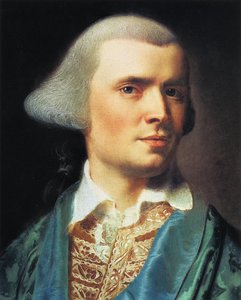
Ebenezer Storer (존 싱글턴 코플리, 1769)
존 싱글턴 코플리 (1738–1815) 작가의 Ebenezer Storer 1769년에 제작되었습니다. Neoclassicism 운동에 속합니다. Oil On Canvas(으)로 제작되었습니다. 크기는 61 × 46 cm입니다.
- 1769
- Oil On Canvas
- 61 × 46 cm

 미리보기

 수작업 유화 작품
 공유하기
 공유하기
 학습용 요약본


 다운로드
 유사 작품 더 보기
 X-레이
 슬라이드 쇼 보기
 질의응답

 통계 정보
Ebenezer Storer 요약
- 제목
- Ebenezer Storer
- 작가
- 존 싱글턴 코플리 (1738–1815)
- 작가 출생지
- 보스턴, 미국
- 제작 연도
- 1769
- 매체
- Oil On Canvas
- 크기
- 61 × 46 cm
- 제작 시기
- Early Modern
- 주제
- man, turban, green robe, white collar, portrait, fabric
Ebenezer Storer은(는) 무엇을 묘사하고 있나요?
Portrait of Ebenezer Storer by John Singleton Copley
This portrait painting depicts Ebenezer Storer, rendered by the artist John Singleton Copley. The work is likely from about 1769. The subject is positioned in a three-quarter view, facing forward with a slight turn toward the viewer's left. His gaze is directed toward the audience, establishing a sense of formality and dignity through his steady expression.
The subject is presented against a dark, undifferentiated background that lacks discernible texture. This choice of setting focuses the viewer's attention entirely on the figure of Storer. He is dressed in an elaborate robe and a turban, attire that suggests a position of wealth or a connection to trade. A stark white collar provides a sharp point of contrast against the darker tones of his clothing and the surrounding space.
The composition follows a traditional structure typical of 18th-century portraiture. The subject's head is topped by a prominent circular turban, while the folds of his garments create organic, curvilinear shapes. The lighting is diffused and even, appearing to originate from the upper left of the frame. This light illuminates the face and the textures of the clothing without creating harsh shadows, maintaining a calm and orderly presentation of the sitter.
Composition and Visual Elements of the Portrait
The subject is positioned slightly off-center within the frame, creating a three-quarter view. Storer faces forward, though his body and gaze maintain a slight turn toward the viewer's left. This orientation directs the eye toward the dark, undifferentiated background, which lacks any discernible detail or depth. The absence of environmental context focuses all visual attention on the figure and his attire.
The color palette is dominated by various shades of green. Deep forest green appears in the turban and the robe, while lighter, more muted greens are used within the patterns of the fabric. A stark white collar provides a sharp point of contrast against these darker tones and the surrounding shadows. The turban forms a prominent circular shape atop the head, providing a geometric counterpoint to the organic, curvilinear forms of the face and the draped clothing.
Light enters the composition from the upper left, illuminating the face and the textures of the garments without creating harsh shadows. This even lighting reveals the subtle variations in the flesh tones, which are rendered in shades of pink and beige. The fabric of the robe suggests a soft, luxurious texture through the use of highlights that indicate a slight sheen on the surface of the material.
Technique and Material Composition
This portrait is executed in oil paint on canvas. The technical approach is representative of 18th-century American portraiture, utilizing a method of careful observation to achieve a high degree of realism. The artist employs skillful rendering of form and texture, particularly in the depiction of the subject's attire and facial features. The fabric of the turban and robe shows subtle highlights that indicate a soft, luxurious sheen, while the skin tones are achieved through delicate variations in color to convey smoothness.
The lighting in the composition is diffused and even, avoiding harsh shadows across the subject. A gentle light source appears to originate from the upper left of the frame, illuminating the face and the folds of the clothing. This lighting strategy works in tandem with the artist's precise brushwork to define the edges of the white collar, the turban, and the draped garments. The background remains dark and undifferentiated, which focuses the viewer's attention on the physical presence and material details of the sitter.
Ebenezer Storer의 고해상도 이미지
존 싱글턴 코플리, Ebenezer Storer (1769). 퍼블릭 도메인
Ebenezer Storer에 관한 질문과 답변
"Ebenezer Storer"은(는) 언제 제작되었나요?
존 싱글턴 코플리의 "Ebenezer Storer"은(는) 1769년에 제작되었습니다.
존 싱글턴 코플리의 "Ebenezer Storer"의 기법은 무엇인가요?
"Ebenezer Storer"은(는) Oil On Canvas 기법으로 제작되었습니다.
원작 "Ebenezer Storer"의 크기는 어떻게 되나요?
존 싱글턴 코플리의 "Ebenezer Storer"의 원작 크기는 46 x 61 cm입니다. 복제화는 동일한 비율을 유지하면서 다른 크기로도 주문 가능합니다.
존 싱글턴 코플리의 "Ebenezer Storer"에는 어떤 소재가 등장하나요?
존 싱글턴 코플리의 "Ebenezer Storer"에 담긴 주제: man, turban, green robe, white collar, portrait, fabric, skin tones
존 싱글턴 코플리의 "Ebenezer Storer"은(는) 퍼블릭 도메인인가요?
존 싱글턴 코플리의 "Ebenezer Storer"의 저작권 정보: 해당 작품은 퍼블릭 도메인 - 저작권 보호 기간이 만료되었습니다 상태입니다. 이는 이미지 복제 가능 여부를 결정하는 기준이 됩니다.
"Ebenezer Storer"은(는) 어느 작가의 작품인가요?
"Ebenezer Storer"의 작가는 존 싱글턴 코플리입니다. 이 작품은 존 싱글턴 코플리의 이름으로 등록되어 있습니다.
존 싱글턴 코플리의 "Ebenezer Storer"은(는) 어떤 미술 사조에 속하나요?
존 싱글턴 코플리의 "Ebenezer Storer"은(는) Neoclassicism 사조에 속하며, 이 사조는 해당 작품의 양식적 배경을 잘 보여줍니다.
Ebenezer Storer은(는) 존 싱글턴 코플리의 예술적 경력 중 어느 시기에 해당하나요?
존 싱글턴 코플리의 작품 세계에서 "Ebenezer Storer"은(는) Mature Period 시기의 작품입니다. 이 시기는 작가의 다른 작품들과 비교해 보는 데 유용한 지표가 됩니다.
"Ebenezer Storer"이(가) 제작될 당시 존 싱글턴 코플리의 나이는 몇 세였나요?
존 싱글턴 코플리은(는) 31세에 "Ebenezer Storer"을(를) 제작했습니다. 작가는 1738년에 태어났으며, 이 작품의 제작 연도는 1769년입니다.
아티스트 존 싱글턴 코플리 소개
1738–1815, 미국
존 싱글턴 코플리
초기 생애, 가족 그리고 예술적 훈련 1738년, 존 싱글턴 코플리는 식민지 보스턴의 역동적인 상업적 활기 속에서 태어났습니다. 그의 유년 시절은 롱 워프(Long Wharf)의 해양 무역 환경에 깊이 뿌리내리고 있었는데, 그의 어머니 메리 싱글턴 코플리는 그곳에서 가게를 운영했고, 아버지 리처드 코플리는 담배 상인으로 활동했습니다. 이러한 환경은 단순한 사회적 배경 그 이상의 의미를 지녔습니다. 그것은 훗날 그의 시각적 언어를 정의하게 될 물질적 질감과 사회적 계층 구조를 직접적으로 관찰할 수 있는 통로가 되었습니다.
존 싱글턴 코플리의 다른 작품들
 왓슨과 샤크1778
 Brook Watson and the Shark1778
 Paul Revere1768
 The Colapse of the Earl of Chatham in the House of Lords (also known as The Death of the Earl of Chatham)1779
Ebenezer Storer 관련 에세이
 Masterpieces of John Singleton Copley: The Top 25 Essential ArtworksExplore the top 25 masterpieces of John Singleton Copley. Discover the finest Colonial American art on OriginalUniqueArt.com.
 18th century American paintersMasterpieces by Copley and Stuart define 18th century American art. Explore the full collection online at OriginalUniqueArt.com.
 American artworks of the 1810s1810s American art by Gilbert Stuart, John Trumbull, and Rembrandt Peale. Find museum-quality reproductions on OriginalUniqueArt.com.