

 보내기
보내기 공유하기
공유하기
 상세 보기
상세 보기 가이드 보기

 이미지 다운로드
 유사 작품 더 보기
 슬라이드 쇼 보기
 통계 정보
통계 정보Untitled
 Found Object Art
- Contemporary Art
 1980
1980- Contemporary
 49.0 x 66.0 cm
 Souls Grown Deep
 상세 보기
상세 보기
이 페이지에 표시된 작품은 저작권법의 보호를 받으며, 이에 따라 동일한 복제품을 제작하거나 판매하는 것은 법으로 금지되어 있습니다. 이러한 권리 보호는 다음과 같은 국제 협약에 따라 시행됩니다. 베른 협약 또한 다음에서 명시하는 법률을 포함한 국내법에 의해 보호됩니다. 미국 저작권법 제17조.
저희는 존중을 담은 합법적인 대안으로서, 원작에서 영감을 받은 맞춤형 수제 유화 작품을 제공합니다. 저희의 숙련된 전문 화가들은 원작의 스타일, 분위기, 예술적 정수를 면밀히 연구하여, 그 자체로 독창적인 창작물이면서도 원작과 동일한 감동을 불러일으키는 새로운 작품을 만들어냅니다.
이 방식은 저작권 보호를 받는 예술 작품을 복제하거나 그대로 재현하는 것이 아니기에 저작권 규정을 완벽히 준수합니다. 대신, 이는 창의적인 재해석의 과정을 거칩니다. 즉, 원작에서 영감을 받되 원작과 동일하지 않은 새로운 회화 작품을 의미합니다.
핸드메이드 유화 복제화
작가가 직접 캔버스에 손으로 그린 유화 작품으로, 원하는 크기와 액자로 맞춤 제작해 드립니다. ( 프린트 판매로 전환 디지털 이미지 판매 채널로 전환)




































작품의 원본 비율을 그대로 유지하는 프리셋 사이즈 중에서 선택해 보세요.

액자나 벽면 크기에 맞춰 필요한 가로와 세로 길이를 입력해 주세요. 본 작품은 수작업으로 제작되므로, 요청하신 비율에 따라 작가가 그림의 가장자리를 조금 더 넓게 그리거나 일부를 조정하여 작업할 수 있습니다. 작업 시작 전, 최종 확인을 위해 디지털 목업 이미지를 보내드립니다. 이 페이지에 표시된 이미지는 실제 결과물과 다를 수 있으며, 오직 목업 이미지만이 정확한 결과물을 보여줍니다.
주문 완료 후 OriginalUniqueArt.com 팀에서 상세 안내를 위해 고객님께 이메일을 보내드리며, 미리보기 시안을 함께 제공해 드립니다.


 유리 옵션은 110cm 미만 크기에서만 선택 가능합니다.

Untitled
재현 매체
복제본 규격
-


총 결제 금액
₩ 409430
A Sentinel of Glass and Light
In the evocative realm of John Murray Thomson’s 1980 work, Untitled, we encounter a profound intersection between the mundane objects of modern life and the ancient, spiritual impulse to protect. This striking piece, executed on a found television set, transcends its technological origins to become something far more esoteric. At first glance, the viewer is met with a vibrant yellow background that radiates an almost solar energy, yet beneath this brightness lies a complex layer of symbolic defense. Thomson utilizes the very nature of the medium—the glass screen of the television—to explore themes of vulnerability and fortification. Because glass is inherently penetrable by light, sound, and even malevolent energies, the artist transforms this window into a shield, turning a common household appliance into a sacred talisman.
The technique employed in this piece is as much about ritual as it is about artistry. Thomson’s brushwork creates vertical forms in shades of blue and white, which act as guardian figures—both human and spiritual—standing watch over the interior space. These figures are buttressed by bold yellow accents, creating a visual barrier designed to repel external threats. On the reverse side of the object, the artist left traces of meandering red lines that appear to crawl through vents like living organisms, accompanied by cryptic red inscriptions that suggest a warning or perhaps a protective curse. This layering of meaning creates a tension between the visible surface and the hidden, more primal intentions of the creator.
Symbolism and the Art of Protection
To understand Untitled is to understand Thomson’s unique philosophy regarding the environment of the home. For the artist, the choice of materials was never arbitrary; every object held a specific weight of meaning. By painting over an old television set, he recontextualized a symbol of mass media and domestic passivity into a vessel for spiritual vigilance. The blue and white patterns on the screen, which some might mistake for the mechanical interior of a microwave or a digital glitch, are actually carefully composed elements intended to stabilize the energy of the piece. This work serves as a fascinating study in how art can function as an architectural component of a living space, acting not just as decoration, but as a perimeter defense against the unseen.
For collectors and interior designers, this painting offers a rare opportunity to possess a piece that is both intellectually stimulating and visually arresting. Its unique composition—combining the industrial texture of a found object with the ethereal quality of spiritual iconography—makes it a commanding centerpiece for any contemporary collection. It invites conversation about the boundaries between our technological world and our ancestral fears, making it an ideal acquisition for those who seek art that possesses both a historical soul and a modern, avant-garde edge. Whether placed in a minimalist gallery setting or a richly textured domestic interior, Untitled continues to pulse with the protective energy of its creator.
질의응답
John Murray Thomson의 "Untitled"은(는) 세로형, 가로형 또는 정사각형 구도인가요?
John Murray Thomson의 "Untitled"은(는) Landscape 형식입니다. 이 형식은 작품 구성의 비율을 나타냅니다.
John Murray Thomson의 "Untitled"의 색채는 작품의 감정과 어떻게 연결되나요?
"Untitled"에서 Neutrals 색조는 Mysterious 분위기를 자아냅니다.
"Untitled"의 색감을 고려했을 때, 어느 공간에 전시하는 것이 가장 좋을까요?
Neutrals 색조를 담은 John Murray Thomson의 "Untitled"는 Coworking에 배치하시길 추천드립니다. 이 작품의 색감이 이러한 제안의 이유이기도 합니다.
작가 소개
The Echoes of the Wild: Exploring the Art and Life of John Murray Thomson
John Murray Thomson, a name perhaps less familiar than his contemporaries within the Group of Seven, nevertheless holds a profound significance in Canadian art history. Born in 1885 in Crieff, Scotland, and later establishing himself as a prominent figure in the burgeoning landscape movement of early 20th-century Canada, Thomson’s work transcends mere representation; it embodies a deep connection to the natural world, infused with a quiet reverence for the wilderness he so passionately depicted. His journey from a childhood steeped in rural life to becoming a celebrated artist reveals not only an exceptional talent but also a remarkable sensitivity to the rhythms and textures of the Canadian landscape.
Thomson’s early years were shaped by a strong connection to nature, nurtured within his family's farming community. He spent much of his youth exploring the Scottish countryside, developing a keen eye for detail and an appreciation for the subtle variations in light and colour that define the natural world. This formative experience would later become the bedrock of his artistic vision. Following his father’s death, the family moved to Ontario, where Thomson continued to immerse himself in the outdoors, honing his skills as a fisherman and tracker – activities that profoundly influenced his approach to painting. He initially pursued a career in penmanship before finding his true calling in art, receiving a Carnegie Travelling Scholarship which allowed him to study at the Académie Julian in Paris, exposing him to the Impressionist techniques of artists like Monet and Pissarro.
Upon returning to Canada, Thomson’s artistic focus solidified around the Algonquin Park region. He was captivated by its vastness, its shimmering lakes, and the dense forests teeming with wildlife. Unlike some of his more overtly romantic contemporaries, Thomson's paintings rarely depict grand vistas or dramatic skies. Instead, he favored intimate scenes—a lone canoe gliding across a still lake, a cluster of pines silhouetted against the twilight sky, or a close-up study of a jack pine’s rough bark. His technique was characterized by broad brushstrokes and a generous application of paint, creating a sense of immediacy and texture that captured the essence of the landscape. He wasn't interested in photographic realism; rather, he sought to convey the *feeling* of being immersed within nature – its stillness, its solitude, and its inherent beauty.
Thomson’s artistic development was inextricably linked to his personal life. His marriage to Ellen, a talented artist herself, provided him with a supportive partnership, while his deep love for animals—he kept a rhesus monkey, falcon, owl, and numerous smaller creatures as pets – further informed his work. His paintings are imbued with a sense of empathy and understanding towards the creatures he depicted, reflecting a belief in their inherent worth and dignity. He was also an avid angler and spent considerable time observing and sketching wildlife in its natural habitat. His meticulous attention to detail—the texture of bark, the ripples on water, the delicate veins of leaves—demonstrates a profound respect for the intricacies of the natural world.
Despite his significant contributions to Canadian art, Thomson’s legacy has often been overshadowed by that of the Group of Seven. However, his work deserves recognition as a pivotal figure in shaping the Canadian landscape tradition. His paintings offer a unique perspective on the wilderness—one characterized by quiet contemplation, understated beauty, and a deep sense of connection to the natural world. His influence can be seen in the works of subsequent generations of Canadian artists, who continue to draw inspiration from his masterful depictions of the Canadian landscape. Today, Thomson’s paintings are held in prominent collections across Canada, ensuring that his artistic vision continues to resonate with audiences for years to come.
Thomson's Artistic Style and Techniques
Thomson’s distinctive style is immediately recognizable through a combination of several key elements. He largely eschewed the highly finished, polished surfaces favored by some of his contemporaries, opting instead for a more expressive and textured approach. His brushwork is often loose and gestural, conveying a sense of spontaneity and immediacy. He employed a technique known as “alla prima,” meaning he would complete a painting in a single sitting, capturing the fleeting effects of light and atmosphere with remarkable speed and accuracy.
Color played a crucial role in Thomson’s work. He was particularly adept at capturing the subtle shifts in color that occur throughout the day, from the cool blues and greens of dawn to the warm oranges and reds of sunset. His palette was generally restrained, relying on earthy tones—browns, greens, and grays—to evoke the mood and atmosphere of the landscape. However, he wasn’t afraid to introduce bursts of vibrant color—the brilliant blue of a lake or the fiery red of a maple leaf—to draw attention to specific details.
Furthermore, Thomson's use of light was particularly noteworthy. He paid close attention to how light interacted with the landscape, creating a sense of depth and atmosphere through subtle gradations of tone and color. He often painted in the early morning or late afternoon, when the light was softest and most evocative. His paintings are not simply representations of landscapes; they are carefully constructed compositions designed to evoke specific emotions and sensations.
Thomson's Connections to the Group of Seven
While Thomson never formally joined the Group of Seven—a collective of Canadian artists who sought to establish a distinct national art style—he maintained close relationships with many of its members, including J.E.H. MacDonald and Franklin Carmichael. He frequently exhibited alongside them and shared their interest in depicting the Canadian wilderness. Many believe that Thomson’s work served as an important influence on the Group's development, particularly in terms of his emphasis on capturing the essence of the landscape rather than simply reproducing its appearance.
Despite this connection, Thomson maintained a somewhat independent artistic trajectory. His paintings often lacked the overtly symbolic or mythological elements that characterized some of the Group’s work. Instead, he focused primarily on depicting the natural world with honesty and directness. However, his shared commitment to portraying the Canadian landscape—and his willingness to experiment with new techniques and approaches—cemented his place as a key figure in the broader context of early 20th-century Canadian art.
Legacy and Historical Significance
John Murray Thomson’s legacy extends far beyond his individual artistic achievements. He is considered a foundational figure in the development of Canadian landscape painting, paving the way for subsequent generations of artists who sought to capture the beauty and spirit of the Canadian wilderness. His work has been celebrated for its honesty, its emotional resonance, and its profound connection to the natural world.
Thomson’s paintings continue to be exhibited in museums and galleries across Canada, attracting a wide range of admirers. His art serves as a reminder of the importance of preserving our wilderness areas and appreciating the beauty of the natural world. Furthermore, his life story—a journey from rural Scotland to artistic recognition—offers an inspiring example of perseverance, dedication, and a deep love for nature.

작가 정보 요약
- Artistic Movement Or Style: Animal art, landscape
- Artists Or Movements Influenced By This Artist: ['Group of Seven']
- Artists Who Influenced This Artist: ['Tom Thomson']
- Date Of Birth: December 17, 1885
- Date Of Death: October 16, 1974
- Full Name: John Murray Thomson
- Nationality: Scottish
- Notable Artworks:
- The Jack Pine
- West Wind
- Ducks in a Pool
- Place Of Birth: Crieff, Perthshire, Scotland
관련 기사

The Allure of Azure: Exploring the Symbolic & Aesthetic Depths of Blue in Art History
Explore the rich history of blue in art! Discover its symbolism, from ancient pigments to modern masterpieces by Kandinsky & Seurat. Uncover the psychological impact and cultural meanings behind this captivating hue.

White on Canvas: 10 Masterpieces & Timeless Elegance for Your Home Decor
Explore 10 iconic white paintings by Monet, Whistler & Rothko! Discover the stories behind these serene masterpieces and their impact on art history. Find museum-quality reproductions for your home decor at .
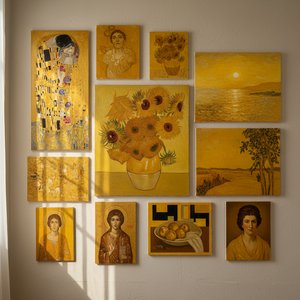
Golden Hues: Top 10 Paintings Dominated by Yellow Ochre |
Explore 10 iconic paintings bathed in golden yellow ochre! From Van Gogh's sunflowers to Monet’s haystacks, discover the stories behind these masterpieces. Find museum-quality art reproductions & elevate your home decor on .

Slate Blue Masterpieces: 10 Iconic Paintings & Timeless Home Decor Ideas
Immerse yourself in the captivating world of slate blue! Explore 10 iconic paintings by Monet, Van Gogh & Renoir. Discover their stories, techniques & find museum-quality art reproductions for your home at .
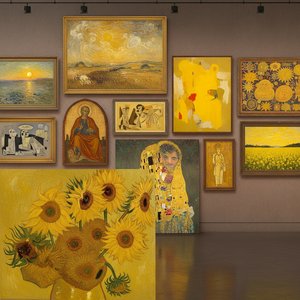
Golden Hues: 10 Masterpieces Dominated by Chrome Yellow | OriginalUniqueArt
Immerse yourself in golden light! Explore 10 famous paintings dominated by 'Chrome Yellow', from Van Gogh’s Sunflowers to Monet's Haystacks. Discover the stories behind these iconic Impressionist & Post-Impressionist masterpieces and find museum-quality art reproductions at OriginalUniqueArt.com.