Neoclassicism
Wesley (존 잭슨)
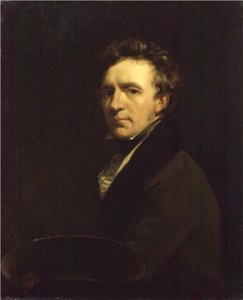
존 잭슨 (1778–1831) 작가의 Wesley Neoclassicism 운동에 속합니다. Oil On Canvas(으)로 제작되었습니다.
- Oil On Canvas

 미리보기

 수작업 유화 작품
 공유하기
 공유하기
 학습용 요약본


 다운로드
 유사 작품 더 보기
 X-레이
 슬라이드 쇼 보기
 질의응답

 통계 정보
Wesley 요약
- 제목
- Wesley
- 작가
- 존 잭슨 (1778–1831)
- 작가 출생지
- 래스팅엄, 영국
- 매체
- Oil On Canvas
- 제작 시기
- Early Modern
- 주제
- portrait, clergy, dignified, formal, neoclassical, authority
Wesley은(는) 무엇을 묘사하고 있나요?
Identification of the Portrait of Wesley
In this portrait, titled Wesley, the artist John Jackson presents a formal and dignified depiction of his subject. The work focuses on an elderly man, whose presence suggests the weight of a significant role, likely that of a clergyman or a judge. There is a quiet authority in his steady, contemplative expression, which meets the viewer with a sense of seasoned wisdom. The portrait captures a moment of stillness, focusing on the character and intellect of the sitter through a direct and serious gaze.
The subject is rendered in traditional clerical attire, which provides immediate insight into his social standing and professional life. He wears a long white wig and a black robe, accented by a stole that emphasizes his religious or judicial vocation. This specific choice of clothing, combined with the formal composition, establishes the sitter as a man of importance and discipline. The dark, indistinct background ensures that the viewer's attention remains fixed entirely upon the man and the textures of his garments.
Composition and Visual Elements
The composition is centered on the subject's head and shoulders, creating an immediate sense of presence. This focused arrangement draws the eye directly to the man's face, where a serious and contemplative expression suggests a life of deep thought. He is dressed in traditional clerical attire, characterized by a long white wig and a black robe that anchors the figure within the frame. The background remains dark and indistinct, a murky expanse that prevents distraction and pushes the subject into the foreground.
Lighting is used with a deliberate, dramatic intent. Strong highlights strike the face and the folds of the robes, carving out the form against the shadows. This chiaroscuro effect provides a sense of volume and weight to the figure. While the portrait feels intimate, the perspective is linear, utilizing subtle converging lines to suggest a sense of depth within the space. The interplay of light and shadow defines the contours of the clothing and the texture of the hair, grounding the figure in a tangible, physical reality.
Technique and Artistic Materials
The work is executed in oil paints on canvas, a choice that allows for a profound sense of depth and presence. Jackson employs a meticulous technique, characterized by careful observation and skillful brushwork that defines the contours of the face and the heavy folds of the clerical attire. There is a deliberate precision in how the light is handled, creating a sense of solidity through the careful application of pigment.
The texture of the piece is notably rich and layered. Through the use of impasto techniques, the artist has built up the surface to create a tangible quality, particularly visible in the rendering of the white wig and the heavy robes. This tactile approach provides a physical weight to the subject, ensuring that the interplay of light and shadow feels grounded and real rather than merely painted.
Related Works by John Jackson
Beyond this portrait, Jackson’s oeuvre reveals a consistent interest in the psychological depth of his subjects. His catalog includes Reginald Macdonald, a work that reflects his ability to handle formal portraiture. He also produced several self-portraits, which offer a more intimate look at the artist himself, providing a glimpse into his own character and the introspective nature of his practice. These works demonstrate his capacity to move between the public persona of a sitter and the private reality of the individual.
The artist’s technical range is further evidenced by his various studies, such as Flaxman. In these pieces, one can observe his command over oil textures and his specific approach to directional lighting. His ability to manipulate light and shadow is a recurring element across his various commissions. Whether working on a formal portrait or a focused study, Jackson maintained a commitment to capturing the essential presence of the person before him.
Wesley의 고해상도 이미지
존 잭슨, Wesley. 퍼블릭 도메인
Wesley에 관한 질문과 답변
존 잭슨의 "Wesley"의 기법은 무엇인가요?
"Wesley"은(는) 어떤 내용을 담고 있나요?
존 잭슨의 "Wesley"의 이미지를 자유롭게 복제할 수 있나요?
존 잭슨의 "Wesley"은(는) 어떤 미술 사조에 속하나요?
"Wesley"은(는) 존 잭슨의 예술적 발전 단계 중 어느 시기를 나타냅니까?
존 잭슨의 "Wesley"은(는) 퍼블릭 도메인에 해당하나요? 그 이유는 무엇인가요?
"Wesley"은(는) 존 잭슨의 다른 작품들과 어떤 공통점을 지니고 있나요?
"Wesley"의 주제가 존 잭슨 작가의 평소 작업 세계와 어떤 연관이 있나요?
존 잭슨의 작품 세계를 관통하는 주요 주제에는 reflects jackson's skill, demonstrates mastery, typical of his portraits, established style, classical ideals, roman portraiture, neoclassical style, formal composition가 포함되어 있으며, "Wesley"은 특히 portrait, clergy, dignified, formal, neoclassical, authority, wisdom, religious에 초점을 맞추고 있습니다.
아티스트 존 잭슨 소개
1778–1831, 영국
존 잭슨
초기 생애와 도제 시절: 망설임으로 시작된 길 1778년 5월 31일, 요크셔의 고즈넉한 마을 라스트햄에서 태어난 존 잭슨은 본래 예정되었던 운명과는 전혀 다른 길을 걷게 되었습니다. 실용적인 재봉사였던 그의 아버지는 아들 또한 자신과 같은 기술을 익히길 바랐고, 어린 존은 그에 따라 도제 생활을 시작했습니다. 하지만 옷감과 솔기 사이에서도 예술을 향한 거부할 수 없는 갈망은 그의 마음속에서 피어올랐습니다. 그는 가족의 기대에 대한 조용한 저항처럼 친구와 지인들의 초상화를 몰래 스케치하곤 했습니다.
존 잭슨의 다른 작품들
 Portrait of a Man1822
 Reverend William Holwell Carr1827
 Portrait of a Gentleman1810
 Frederick, Duke of York (1763-1827)1822
Wesley 관련 에세이
 The Artistry and Process of Bespoke Oil Painting: From Concept to CanvasMaster the technical artistry of bespoke oil painting from glazing to impasto. Discover the secrets of fine art commissions today.
 25 Essential Portraits by François Clouet: A Guide to His Finest WorksExplore 25 iconic François Clouet portraits from the French Renaissance. Discover the full collection online at OriginalUniqueArt.com.
 25 Essential John Collier Paintings: Iconic Portraits and Narrative ScenesExplore 25 iconic John Collier paintings and Pre-Raphaelite portraits. Discover the full collection online at OriginalUniqueArt.com.