프린트 판매로 전환
 상세 보기
상세 보기







































 가로 또는 세로 중 어느 한 면이라도 105cm(약 41인치)를 초과하는 작품이나 복제화의 경우, 프레임은 분해된 키트 형태로 배송됩니다. 이는 안전한 배송을 보장하고 운송 중 발생할 수 있는 손상을 방지하기 위함입니다.


A Symphony of Atmosphere: John Henry Twachtman’s 1896 Landscape
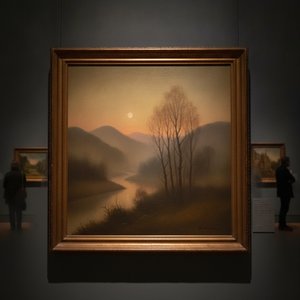
John Henry Twachtman's *Landscape*, created in 1896, is a quintessential example of American Impressionism subtly infused with the emerging principles of Tonalism. Measuring a delicate 33 x 33 cm, this pastel work isn’t about grand narratives or meticulous detail; it’s an intimate study of mood and light, capturing a fleeting moment of tranquility along a quiet riverbank. The scene depicts a serene waterway bordered by trees, their forms softened and blended through the masterful application of pastel. Unlike the vibrant, broken color of French Impressionism, Twachtman favors a restrained palette – muted greens, golds, and subtle blues – creating an atmosphere of peaceful contemplation. This isn’t simply *a* landscape; it's an evocation of a feeling, a sensory experience translated onto paper.Technique & The Allure of Pastel
Twachtman’s choice of pastel is crucial to the painting’s effect. Unlike oil or acrylic, pastel allows for direct application of pure pigment, resulting in a velvety texture and luminous quality. He doesn't blend extensively; instead, he layers colors, allowing them to optically mix in the viewer’s eye. This technique contributes to the work’s ethereal feel, as if the scene is gently dissolving before us. The photo description highlights the “granulated surface” and “visible brushstrokes,” emphasizing the materiality of the pastel itself – a deliberate choice that distinguishes Twachtman's approach from smoother, more polished techniques. The soft application enhances the reflective quality of the water, creating an illusion of depth without relying on harsh lines or strong contrasts.Tonalism & The American Voice
While influenced by Impressionism gained during his European travels, Twachtman carved out a distinctly *American* artistic identity through Tonalism. This movement, flourishing in the late 19th century, prioritized atmospheric effects and emotional resonance over precise representation. Landscape embodies this perfectly. The emphasis isn’t on identifying specific trees or plants but rather on experiencing the overall mood – a sense of quietude, solitude, and harmony with nature. Twachtman wasn't merely depicting what he *saw*; he was conveying how it *felt* to be present in that landscape. Comparing this work to his other paintings like *Path in the Hills, Branchville, Connecticut*, reveals a consistent exploration of these themes – serene landscapes rendered with a poetic sensibility.Symbolism & Emotional Resonance
The solitary tree featured prominently in the composition can be interpreted as a symbol of resilience and enduring beauty amidst the ever-changing natural world. The reflective water suggests introspection and the passage of time, inviting viewers to contemplate their own connection to nature and the fleeting moments of life. The overall emotional impact is one of serenity and peaceful melancholy – a feeling that resonates deeply with those seeking respite from the complexities of modern life. This painting isn’t just a decorative object; it's an invitation to pause, breathe, and reconnect with the natural world.- Artist: John Henry Twachtman
- Painting Title: Landscape
- Medium: Pastel
- Date: 1896
- Size: 33 x 33 cm
질의응답
"Landscape"의 뒤에 숨겨진 예술가와 화풍은 무엇인가요?
"Landscape"은(는) Impressionism 양식으로 존 헨리 트와크트만가 제작하였습니다. 작가와 미술 사조는 해당 작품의 전통을 나타냅니다.
존 헨리 트와크트만의 "Landscape"의 주요 색상은 무엇인가요?
"Landscape"에서 가장 돋보이는 색상은 Bronze (#c7ad32)입니다. 작품의 주된 색상은 인테리어와 작품을 조화롭게 매치할 때 유용합니다.
"Landscape"을(를) 더 자세히 살펴볼 수 있을까요?
존 헨리 트와크트만의 "Landscape"의 X-Ray 뷰는 작품의 X선 분석 페이지에서 확인하실 수 있습니다. 이 페이지에서는 11개의 광학 레이어를 통해 이미지를 인터랙티브하게 살펴볼 수 있습니다.
More about this painting
 실제 크기로 보기
 보내기
보내기 공유하기
공유하기
 상세 보기
상세 보기 가이드 보기

 이미지 다운로드
 유사 작품 더 보기
 X-레이
X-레이 슬라이드 쇼 보기
 Q&A
Q&A 통계 정보
통계 정보