
 미리보기
미리보기
 공유하기
공유하기 공유하기
공유하기
 상세 정보
상세 정보

 다운로드
다운로드
 유사 작품
유사 작품 X-레이
X-레이 슬라이드 쇼
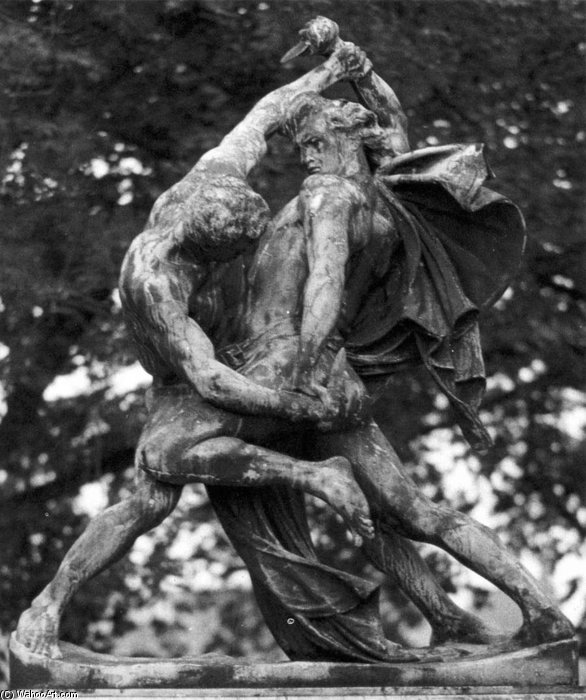
Knife Fight
 더 보기
더 보기
수제 유화 복제품
원하는 크기와 액자로 주문 제작되는, 작가들이 직접 캔버스에 손으로 그린 유화 작품입니다. ( 프린트 주문으로 전환 이미지로 전환)




































작품의 원본 비율을 유지하는 미리 설정된 크기 중에서 선택하세요.

특정 프레임이나 공간에 맞도록 직접 크기를 입력할 수 있습니다. 선택하신 크기가 원본 이미지의 비율과 일치하지 않는 경우, 작품을 자르거나 추가적인 손으로 그린 요소를 사용하여 그림을 확장합니다. 제작 시작 전 승인을 위해 디지털 목업을 보내드립니다.
화면 미리 보기는 실제 자르기 또는 확장을 반영하지 않습니다. 최종 구성은 목업을 통해서만 정확하게 확인하실 수 있습니다.
맞춤 크기 제작도 가능하지만, 원본 비율을 유지하기 위해 사전 정의된 목록에서 크기를 선택하시는 것을 권장합니다.
주문 후 OriginalUniqueArt.com 팀에서 상세 안내를 위해 고객님께 이메일을 보내드리며, 미리보기 시안을 제공해 드립니다.


 유리 옵션은 110cm 미만 크기에서만 선택 가능합니다.

Knife Fight
재현 기법
복제본 크기
-


최종 결제 금액
$ 325
작가 약력
A Sculptor of Viking Spirit and Parisian Elegance
Born into the humble warmth of a baker’s family in Gothenburg in 1814, Johann Peter Molin possessed an innate talent that would eventually transcend the flour-dusted streets of his youth to define the monumental landscape of 19th-century Sweden. His journey from the Swedish coast to the artistic epicenters of Europe is a testament to a profound creative drive. In 1843, driven by a burgeoning passion for form and figure, Molin traveled to Copenhagen to study under the esteemed Herman Wilhelm Bissen. This period was foundational, as Bissen’s mastery of national identity and classical narrative provided Molin with the technical vocabulary necessary to translate historical myth into tangible bronze and marble. However, it was his subsequent immersion in the vibrant, pulsating atmosphere of Paris that truly refined his vision, allowing him to absorb the burgeoning naturalism and emotional depth that would later breathe life into his most iconic works.
Molin’s artistic evolution was a delicate dance between the rigorous discipline of classical training and the evocative power of Romanticism. While his roots remained firmly planted in the academic traditions of Copenhagen, his years in Paris exposed him to a world where movement, psychology, and atmosphere were beginning to take precedence over static perfection. This duality created a unique sculptural language—one that could capture the muscular tension of a combatant or the ethereal grace of a mythological figure with equal precision. His work often sought to bridge the gap between the ancient Norse legends and the sophisticated aesthetic of the modern era, creating a dialogue between the rugged spirit of the Viking past and the refined elegance of 19th-century European art.
Masterpieces of Myth and Monarchy
The legacy of Molin is most vibrantly felt in the public squares of Stockholm, where his sculptures serve as silent narrators of Swedish history and folklore. Perhaps his most enduring contribution to the visual identity of his nation is The Knife Wrestlers (Bältespännarna), completed in 1859. This dramatic depiction of Nordic combat, characterized by its intense physical struggle and raw energy, remains a masterpiece of genre sculpture. It captures a moment of visceral tension that resonates with the Romantic fascination for primal human conflict. Similarly, his equestrian statue of King Karl XII, unveiled in 1868 in Kungsträdgården, stands as a powerful symbol of national pride, portraying the monarch in a dynamic battle pose that commands the viewer's attention through its sheer sculptural force.
Beyond the martial and the heroic, Molin demonstrated a remarkable ability to weave elements of folklore into the very fabric of urban design. The Molin Fountain, located in the same Kungsträdgården, serves as a lyrical counterpart to his more aggressive works. Featuring allegorical figures and nods to Swedish legends—such as the elusive Näcken—the fountain celebrates the arts and sciences through a lens of enchantment. His ability to move between the monumental scale of royal monuments and the intimate, storytelling nature of decorative fountains showcases an artist of immense versatility.
A Legacy Carved in Bronze
Molin’s career was marked by significant professional triumphs that solidified his status within the European artistic hierarchy. His appointment as a professor at the Royal Swedish Academy of Fine Arts in 1855 allowed him to shape the next generation of sculptors, ensuring that his technical precision and narrative sensibility would endure. His international acclaim was further cemented by prestigious decorations, including:
- The Order of Vasa
- The Order of the Polar Star
- The Order of St. Olav
- The Prussian Pour le Mérite
Though he passed away in 1873 near Vaxholm, Molin’s influence remains etched into the stone and bronze of the cities he helped beautify. He was more than a mere craftsman; he was a storyteller who used the permanence of sculpture to immortalize the legends, heroes, and cultural identity of his homeland. Through his hands, the rugged myths of the North were transformed into an enduring classical elegance that continues to inspire awe in all who encounter them.

johann peter molin
1814 - 1873 , Sweden
주요 정보
- Artistic Movement Or Style: Genre painting, Landscape paintings
- Artists Or Movements Influenced By This Artist: ['']
- Artists Who Influenced This Artist: ['']
- Date Of Birth: 1814
- Full Name: Johann Peter Molin
- Nationality: Swedish
- Notable Artworks:
- Fountain
- Knife Fight
- Place Of Death: Ekudden near Vaxholm

