프린트 판매로 전환
 더 보기
더 보기







































 가로 또는 세로 중 어느 한 면이라도 105cm(약 41인치)를 초과하는 작품이나 복제화의 경우, 프레임은 분해된 키트 형태로 배송됩니다. 이는 안전한 배송을 보장하고 운송 중 발생할 수 있는 손상을 방지하기 위함입니다.


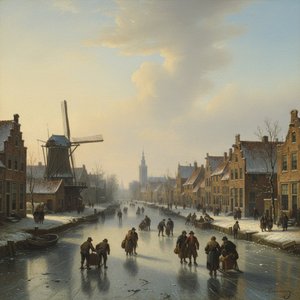
A Symphony of Light and Sky: The Essence of Windmill near Delft
In the quiet, sun-drenched landscapes of the Netherlands, certain moments possess a timeless quality that transcends the mere passage of years. Johan Barthold Jongkind’s 1857 masterpiece, Windmill near Delft, captures such a moment with unparalleled grace. This is not simply a landscape painting; it is a profound meditation on the ephemeral nature of light and the enduring spirit of the Dutch countryside. As the eye wanders across the canvas, one is immediately struck by the brilliant azure sky, where fluffy white clouds drift lazently, casting soft shadows upon the earth below. The composition is anchored by a solitary windmill, positioned with a deliberate, off-center elegance that guides the viewer’s gaze through a tranquil scene of rural life.
The painting serves as a vital bridge between the structured traditions of Dutch Romanticism and the burgeoning revolution of Impressionism. While the subject matter—a quintessential Dutch vista featuring a winding canal and figures engaged in daily rhythms—honors the heritage of masters like Vermeer, Jongkind’s technique whispers of a new era. He moves away from the rigid, meticulous outlines of his predecessors, opting instead for a loose, expressive brushwork that prioritizes atmosphere over anatomical precision. This approach allows the light to appear almost tactile, as if the viewer could feel the warmth of the sun filtering through an overcast afternoon. For the discerning collector or interior designer, this piece offers a sense of movement and vitality, making it a breathtaking focal point for any space seeking a touch of classical serenity paired with modern energy.
Technique and the Impressionistic Dawn
To study Windmill near Delft is to witness the early tremors of the Impressionist movement. Jongkind, a close contemporary and friend to Claude Monet and Eugène Boudin, utilized a palette that was both vibrant and harmoniously muted. His technique involves a sophisticated layering of oil paints to build depth and luminosity, creating a surface where colors bleed into one another with soft, feathered edges. The canal in the foreground acts as a mirror, reflecting the expansive heavens above and pulling the viewer deeper into the perspective of the landscape. This use of horizontal lines emphasizes the vastness of the Dutch horizon, instilling a sense of peace and boundless space.
The emotional resonance of the work lies in its ability to evoke nostalgia without descending into sentimentality. The scattered figures—women tending to flowers by the water’s edge and a man navigating a small boat—are not mere decorations; they are symbols of the quiet, industrious pulse of community life. There is a rhythmic quality to the composition, where the geometric strength of the windmill meets the organic, flowing shapes of the foliage and water. For those looking to adorn a home or gallery, this reproduction offers more than just aesthetic beauty; it provides an invitation to slow down and appreciate the fleeting, beautiful textures of the natural world.
질의응답
"Windmill near Delft"은 어떤 기법으로 제작되었나요?
요한 바르톨트 종킨드은(는) "Windmill near Delft" 작품에 Oil On Canvas 기법을 사용했습니다. 이 기법은 원작의 재료적 특성을 잘 보여줍니다.
"Windmill near Delft"의 색감은 강렬한 편인가요, 아니면 부드러운 편인가요?
요한 바르톨트 종킨드의 "Windmill near Delft"은(는) Balanced의 색채 강도를 보여줍니다.
요한 바르톨트 종킨드의 "Windmill near Delft"의 작품 방향(가로/세로)은 어떻게 되나요?
요한 바르톨트 종킨드의 "Windmill near Delft"은(는) Portrait 구도로 이루어져 있습니다. 프린트 크기를 결정하시기 전에 비율을 확인해 보시는 것이 좋습니다.
이 작품에 대해 더 알아보기
 미리보기
미리보기
 공유하기
공유하기 공유하기
공유하기
 상세 정보
상세 정보 가이드 보기

 다운로드
다운로드
 유사 작품 더 보기
 X-레이
X-레이 슬라이드 쇼 보기
 질의응답
질의응답 통계 정보
통계 정보