프린트 판매로 전환
 더 보기
더 보기







































 가로 또는 세로 중 어느 한 면이라도 105cm(약 41인치)를 초과하는 작품이나 복제화의 경우, 프레임은 분해된 키트 형태로 배송됩니다. 이는 안전한 배송을 보장하고 운송 중 발생할 수 있는 손상을 방지하기 위함입니다.


Joan Miró: Decoding Catalan Dreams
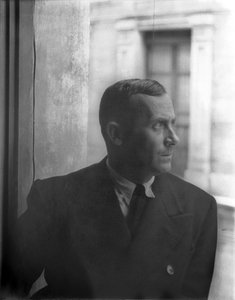
A Catalan Visionary: The Life and Art of Joan Miró Joan Miró i Ferrà, born in Barcelona in 1893, stands as one of the most significant figures in 20th-century art. His journey was not merely a progression through styles but an exploration of inner worlds, translating dreams, memories, and Catalan identity onto canvas with a uniquely poetic visual language. From humble beginnings marked by illness and initial parental reservations about his artistic pursuits, Miró persevered, driven by an innate need to express the intangible—the emotions, sensations, and subconscious currents that lie beneath the surface of reality. His early life was steeped in the traditions of Barcelona, a city brimming with architectural marvels thanks to Antoni Gaudí, whose organic forms would subtly influence Miró’s later abstractions. The goldsmithing profession of his father instilled an appreciation for meticulous craftsmanship, while the rugged Catalan landscape became a recurring motif and source of inspiraThe Birth of Surrealism
Miró's artistic breakthrough arrived during the tumultuous years following World War I, coinciding with the emergence of Surrealism—a movement spearheaded by André Breton that sought to liberate creativity from rational constraints. Influenced profoundly by Sigmund Freud’s psychoanalytic theories and fascinated by automatism—the spontaneous creation of images without conscious thought—Miró embraced techniques designed to tap into the subconscious mind. This fascination manifested in his use of collage, incorporating found objects and fragments of text alongside painted surfaces, creating layered compositions that defied conventional representation. Breton himself recognized Miró’s singular vision as embodying the essence of Surrealist aesthetics: “He is a painter who has discovered the secret of dreaming.”“Sèrie Grans rupestres”: An Eye to Eternity
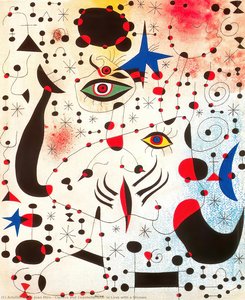
The painting "Sèrie Grans rupestres," or “Great Cave Paintings,” exemplifies Miró’s distinctive style—characterized by bold, biomorphic forms rendered in vibrant hues against stark white backgrounds. Dominating the canvas is a central eye-like shape, encircled by dots and lines that pulsate with energy. This motif isn't merely decorative; it represents a profound symbol of perception, awareness, and contemplation—a visual echo of prehistoric cave paintings depicting animals and human figures, suggesting an enduring connection to primal imagery and spiritual beliefs. The artist’s meticulous application of oil paint creates a textured surface that enhances the painting’s tactile quality, inviting viewers to engage with its visual richness on multiple levels.Technique and Material Considerations
Miró's artistic process involved layering techniques—primarily brushwork combined with collage elements—to achieve his desired effect. He began by applying thin washes of color onto the canvas, establishing a luminous foundation that allowed for subsequent additions of thicker paint strokes. These strokes were executed with confidence and precision, capturing the dynamism inherent in Miró’s vision. The incorporation of collage materials—such as newspaper clippings and fragments of fabric—added textural contrast and disrupted visual harmony, mirroring the chaotic nature of dreams and subconscious experience. Furthermore, Miró's careful selection of pigments ensured that his paintings retained their brilliance over time, reflecting a commitment to artistic excellence and enduring beauty.Emotional Resonance: Beyond Representation
Ultimately, “Sèrie Grans rupestres,” like much of Miró’s oeuvre, transcends mere visual representation—it communicates an emotional state rather than depicting a specific scene. The painting evokes feelings of wonder, curiosity, and perhaps even apprehension—mirroring the awe experienced when confronted with the immensity of geological time and the mysteries of the cosmos. It invites contemplation on themes of mortality, rebirth, and the enduring power of imagination. For interior designers seeking to infuse their spaces with artistic inspiration, Miró’s work offers a compelling counterpoint to conventional decorative styles—a celebration of spontaneity, abstraction, and the evocative beauty of dreamlike imagery.질의응답
호안 미로의 "Sèrie Grans rupestres"에서 느껴지는 정서는 무엇인가요?
호안 미로의 "Sèrie Grans rupestres"에 담긴 정서적 톤은 Calm입니다. 이는 작품이 전달하는 감정을 요약한 것입니다.
호안 미로의 "Sèrie Grans rupestres"은(는) 퍼블릭 도메인인가요?
호안 미로의 "Sèrie Grans rupestres"의 저작권 정보: 해당 작품은 저작권 보호 대상입니다 상태입니다. 이는 이미지 복제 가능 여부를 결정하는 기준이 됩니다.
"Sèrie Grans rupestres"은(는) 누구에게 어떤 용도로 선물하기 좋을까요?
Sèrie Grans rupestres은(는) Accent을(를) 위해 Wedding님께 드리는 선물로 추천합니다.
이 작품에 대해 더 알아보기
 미리보기
미리보기
 공유하기
공유하기 공유하기
공유하기
 상세 정보
상세 정보 가이드 보기

 다운로드
다운로드
 유사 작품 더 보기
 X-레이
X-레이 슬라이드 쇼 보기
 질의응답
질의응답 통계 정보
통계 정보