

 실제 크기로 보기
 보내기
보내기 공유하기
공유하기
 상세 보기
상세 보기 가이드 보기

 이미지 다운로드
 유사 작품 더 보기
 X-레이
X-레이 슬라이드 쇼 보기
 통계 정보
통계 정보The Four Elements: Fire
 Oil On Canvas
- WallArt
- Northern Renaissance
 1570
1570 158.0 x 215.0 cm
 국립미술관 (National Gallery)
 상세 보기
상세 보기
지클레 / 아트 프린트
빠른 제작과 다양한 마감 옵션을 선택할 수 있는 박물관 수준의 지클레이 및 캔버스 프린트. ( 수작업 채색 복제본 주문하기 디지털 이미지 판매 채널로 전환)




P118B ₩10

P118H ₩10

P118W ₩10

P438Z ₩10

P508JH ₩12

P508YH ₩12

P805H ₩10

P805Z ₩10

P919BZ ₩10

P919G ₩10

P919XJ ₩10

P959ZH ₩10

P968JZ ₩12

W106C ₩8

W218G ₩10

W218JH ₩8

W218Y ₩10

W307PJ ₩10

W316G ₩10

W316PJ ₩8

W316Y ₩10

W398PJ ₩8

W4111J ₩10

W500HY ₩15

W500JH ₩15

W692G ₩12

W849H ₩8

W940BG ₩15

W953PJ ₩8




작품의 원본 비율을 그대로 유지하는 프리셋 사이즈 중에서 선택해 보세요.

액자나 벽면 크기에 맞춰 필요한 가로와 세로 길이를 입력해 주세요. 프린트는 원본 이미지보다 크게 제작할 수 없으며 오직 자르는 것만 가능하므로, 비율이 다른 사이즈를 선택할 경우 이미지의 일부가 잘려 나갈 수 있습니다. 인쇄 작업에 들어가기 전, 최종 확인을 위해 디지털 목업을 보내드립니다. 이 페이지에 표시된 이미지는 실제 잘리는 영역을 나타내지 않으며, 오직 목업을 통해서만 정확한 확인이 가능합니다.


 유리 옵션은 110cm 미만 크기에서만 선택 가능합니다.

The Four Elements: Fire
지클레 / 아트 프린트
복제본 규격
-


총 결제 금액
₩ 109488
A Kitchen’s Revelation: Joachim Beuckelaer and the Dawn of Still Life
Joachim Beuckelaer's "The Four Elements: Fire" isn’t merely a depiction of a bustling 16th-century kitchen; it’s a carefully constructed tableau, a microcosm of daily life imbued with subtle symbolism and a burgeoning artistic ambition. Born in Antwerp around 1533, Beuckelaer emerged from the vibrant artistic milieu of his family – his father, Mattheus Beuckeleer, and uncle, Pieter Aertsen – to become a master of scenes that elevated the commonplace to an extraordinary level. Unlike earlier depictions of domesticity, which often prioritized religious narrative, Beuckelaer’s kitchen scenes, and indeed this particular “Fire,” began to shift the focus towards observing and celebrating the tangible realities of existence itself. This wasn't simply painting what he saw; it was a deliberate act of elevation, laying crucial groundwork for the eventual development of still life as an independent genre within art history.
The painting immediately draws the eye with its astonishing detail – twelve figures are present, engaged in a symphony of activity: cooking, eating, preparing ingredients. Bowls overflow with produce, knives gleam on tables, and the presence of an oven and sink anchors the scene to the practicalities of daily life. However, it’s not just the abundance that captivates; it's the arrangement, the carefully considered placement of objects, and the subtle interplay of light and shadow that create a sense of palpable realism. Beuckelaer’s skill lies in his ability to render textures – the rough grain of wood, the sheen of polished metal, the plumpness of fruit – with an almost photographic precision.
The Language of Elements: Symbolism Within the Scene
“Fire” is one of a set of four paintings exploring the classical elements—Earth, Water, Air, and Fire—and Beuckelaer masterfully integrates these themes into his everyday subject matter. The title itself immediately establishes this elemental framework. Beyond the immediate depiction of a kitchen scene, the painting operates as a complex allegory. The central focus – the preparation of food over an open fire – is inherently linked to the element of Fire, but Beuckelaer doesn’t stop there. Look closely, and you'll notice subtle references to the other elements woven throughout the composition. The abundance of fruits and vegetables speaks to Earth, while the presence of water (in the sink and implied in the cooking process) represents Water. Even the figures themselves contribute to the overall narrative – their actions and gestures subtly reinforce the elemental themes.
Crucially, Beuckelaer doesn’t simply depict these elements; he juxtaposes them with a dramatic backdrop: a meticulously constructed architectural scene featuring Christ, Martha, and Mary in the House of Bethany. This pairing is not arbitrary. It represents a deliberate contrast between the earthly pleasures of the senses – represented by the kitchen scene—and the spiritual realm. The inclusion of biblical figures serves as a moral compass, reminding viewers to temper their desires with faith and virtue. The arrangement of objects within the kitchen itself can be interpreted as a symbolic representation of temptation and restraint.
A Pioneering Technique: Perspective and Illusion
What truly distinguishes “The Four Elements: Fire” is Beuckelaer’s innovative use of perspective and illusionistic techniques. The scene feels remarkably three-dimensional, despite being painted on a relatively flat wooden panel. He employs multiple vanishing points to create the impression of depth and space, drawing the viewer into the heart of the kitchen. This masterful manipulation of perspective was groundbreaking for its time, pushing the boundaries of realism in Northern European painting. The sheer number of objects depicted – bowls, utensils, foodstuffs—further enhances this illusionistic effect, creating a sense of overwhelming abundance that is both captivating and slightly disorienting.
Furthermore, Beuckelaer’s attention to detail extends beyond mere representation; he imbues his figures with a remarkable degree of personality. Each individual seems engaged in their own activity, contributing to the overall dynamism of the scene. This level of realism was unprecedented for its time and demonstrates Beuckelaer's exceptional skill as an artist.
A Window into a World Transformed
“The Four Elements: Fire” is more than just a painting; it’s a snapshot of a rapidly changing world. As the Renaissance progressed, artists began to move away from solely religious subjects and towards depicting scenes of everyday life with increasing realism and attention to detail. Beuckelaer's work stands as a pivotal moment in this transition, marking a shift towards a more secular and humanistic approach to art. Reproductions of this captivating piece offer a unique glimpse into the domestic life of 16th-century Antwerp, while simultaneously revealing the burgeoning artistic ambition that would ultimately shape the course of Western art history. It’s a testament to Beuckelaer's ability to transform the mundane into the magnificent.
질의응답
"The Four Elements: Fire"의 작가인 요아힘 브뤼켈라르는 다른 이름으로도 알려져 있나요?
요아힘 브뤼켈라르은(는) Joachim Bueckelaer, Ioachimus Bueckelaer, Joachim, Joachim Beuckelaer(으)로도 알려져 있습니다.
요아힘 브뤼켈라르의 "The Four Elements: Fire"은 강렬한 대비를 사용하나요, 아니면 부드러운 조화를 이루고 있나요?
요아힘 브뤼켈라르의 "The Four Elements: Fire"의 색채 구성은 Gentle한 대비와 Strong Color Unity한 조화를 동시에 보여줍니다.
요아힘 브뤼켈라르의 "The Four Elements: Fire"의 대비는 어느 정도로 강한가요?
요아힘 브뤼켈라르의 "The Four Elements: Fire"의 대비 수준은 Gentle입니다.
작가 소개
일상에 몰입한 삶: 요아힘 브뤼켈러와 정물화의 여명
동시대의 다른 화가들에 비해 이름이 덜 알려졌을지는 모르지만, 요아힘 브뤼켈러는 플랑드르 회화사에서 중추적인 위치를 차지하고 있습니다. 예술적 혁신이 요동치던 도시 안트베르펜에서 1533년경 태어난 그는 시장과 주방의 북적이는 세상을 묘사하는 거장으로 등장했습니다. 그의 작품은 단순히 일상을 재현한 것에 그치지 않았습니다. 그것은 종교적 상징주의가 미묘하게 얽힌 정교한 서사였으며, 전통적인 영적 주제와 더불어 존재의 실질적인 현실을 관찰하고 찬미하려는 예술적 초점의 변화를 알리는 신호탄이었습니다. 브뤼켈러는 단순히 눈에 보이는 것을 그린 것이 아니라, 평범한 사물들을 예술적 주목을 받을 만한 수준으로 격상시킴으로써 정물화라는 독립된 장르가 발전할 수 있는 결정적인 토대를 마련했습니다. 그의 예술적 배경 또한 매우 깊었습니다. 아버지 마테우스 브뤼켈러와 삼촌 피터 아르센스 모두 저명한 화가였기에, 그는 어린 시절부터 자연스럽게 예술적 환경에 노출되어 훈련을 받을 수 있었습니다. 아마도 그는 삼촌의 작업실에서 기술을 연마하며 아르센스의 선구적인 시장 풍경 기법을 흡수했을 것이며, 결국에는 기술적 숙련도와 섬세한 스토리텔링 면에서 삼촌을 뛰어넘는 경지에 이르렀습니다.안트베르펜의 작업실과 예술적 발전
16세기 안트베르펜은 상업과 문화가 활기차게 교차하던 중심지였으며, 브뤼켈러의 예술은 이러한 에너지를 그대로 투영하고 있습니다. 그는 1560년 성 루카 길드의 독립 마스터로 인정받으며 예술계 내에서 자신의 입지를 공고히 했습니다. 그러나 그는 단순히 아르센스의 스타일을 복제하는 데 머물지 않고, 거기에 복잡성과 세밀함을 더해 더욱 정교하게 다듬었습니다. 아르천스가 때때로 다소 무질서한 풍요로움을 보여주었다면, 브뤼켈러는 구도에 더 큰 질서와 명료함을 부여했습니다. 그의 장면들은 매우 치밀하게 배치되어 있으며, 생선의 반짝이는 비늘, 과일의 탐스러운 질감, 주석 그릇의 은은한 광택 등 각 사물이 놀라울 정도로 정밀하게 묘사되어 있습니다. 이러한 사실주의에 대한 집념은 단순한 기술적 숙련을 넘어, 일상의 사물들에 존재감과 의미를 불어넣기 위한 노력이었습니다. 4원소 시리즈는 이러한 접근 방식을 보여주는 증거입니다. 생선 시장을 묘록한 이 연작은 자연의 풍요로움을 찬양하는 동시에, 열두 종류의 생선을 통해 사도들을 상징하고 배경에는 오병이어의 기적을 암시하며 성서적 서사를 미묘하게 연결합니다. 세속적인 것과 신성한 것을 이토록 매끄럽게 결합하는 능력은 그의 작품을 상징하는 독보적인 특징이 되었습니다.캔버스가 된 주방: 상징과 서사
브뤼켈러는 시장 풍경을 넘어, 활동과 상징적 잠재력이 가득한 공간인 주방을 묘사하는 데에도 탁월했습니다. 예를 들어, 그의
요아힘 브뤼켈라르
1533 - 1573 , 벨기에
작가 정보 요약
- Artistic Movement Or Style: 르네상스 미술
- Artists Or Movements Influenced By This Artist:
- 프란스 스니더스
- 빈첸초 캠피
- Artists Who Influenced This Artist: ['피터르 아르트센']
- Date Of Birth: 약 1533년
- Date Of Death: 약 1573년
- Full Name: 요아힘 뵈켈레르
- Nationality: 플랑드르
- Notable Artworks:
- 4원소 시리즈
- 그리스도가 있는 주방 장면
- 사체 정물화
- Place Of Birth: 벨기에 안트베르펜
관련 기사

Silent Narratives: Exploring the Enduring Appeal of Still Life Painting Across Centuries
Explore the rich history of still life painting with OriginalUniqueArt. Discover Dutch Masters, decode vanitas symbolism & learn about collecting timeless art. Expert insights and museum-quality reproductions.
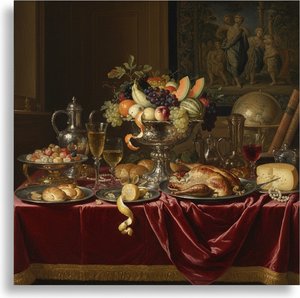
Abraham Hendricksz van Beyeren: Pioneering Dutch Still Life & the Banquet Tradition
Explore the captivating world of Dutch Golden Age still life with Abraham van Beyeren. Discover his innovative techniques, symbolic banquet scenes & lasting influence on art history. Learn about collecting these masterpieces.
The Enduring Appeal of Still Life: A Historical & Contemporary Exploration
Explore the rich history & symbolism of still life painting with OriginalUniqueArt. Discover masterpieces from the Dutch Golden Age, learn about vanitas art, and find expert guidance for collecting timeless artworks.
Clyfford Still's Abstract Expressionism: A Study of Color, Form & the Existential Landscape
Explore the profound world of Clyfford Still's Abstract Expressionism with OriginalUniqueArt. Discover his unique style, existential themes & investment potential. Expert analysis for discerning collectors.
Gastronomic Canvas: Culinary Aesthetics & Artistic Representation for Hotel Design
Explore the captivating intersection of culinary arts & artistic representation for hotel design. Discover techniques to elevate dining experiences through visual harmony, composition, and inspiration from classic still life painting.
