 프린트 판매로 전환
 더 보기
더 보기







































 가로 또는 세로 중 어느 한 면이라도 105cm(약 41인치)를 초과하는 작품이나 복제화의 경우, 프레임은 분해된 키트 형태로 배송됩니다. 이는 안전한 배송을 보장하고 운송 중 발생할 수 있는 손상을 방지하기 위함입니다.


Denis Diderot: A Portrait of Enlightenment
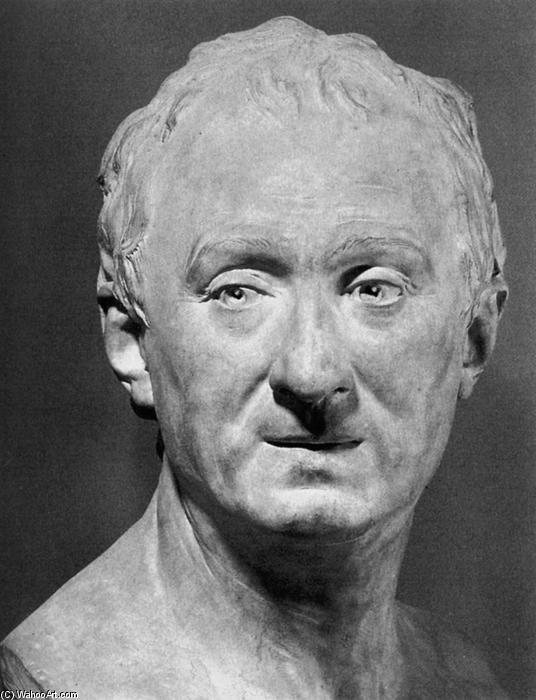
Jean-Antoine Houdon’s “Denis Diderot” is more than just a bust; it's a distilled essence of the 18th century’s intellectual revolution. Completed in 1771, this remarkable sculpture captures not merely the likeness of the influential philosopher but also his profound thoughtfulness and the weight of his ideas. The photograph itself, a meticulously rendered grayscale image, allows us to appreciate the incredible detail Houdon achieved in capturing Diderot's features – the subtle furrow of his brow, the keen intelligence in his eyes, and the dignified bearing of his posture. The stark monochrome palette emphasizes the texture of the marble, revealing the artist’s masterful subtractive technique—a testament to the painstaking process of carving this monumental figure from a solid block.
Houdon, a pivotal figure bridging the Rococo and Neoclassical eras, was driven by a desire to represent subjects with an unprecedented level of psychological realism. Unlike the idealized figures prevalent in earlier styles, Houdon sought to portray the inner life of his sitters, imbuing them with character and emotion. This is powerfully evident in “Denis Diderot.” The slightly asymmetrical composition—Diderot’s head positioned just off-center—creates a dynamic tension that draws the viewer's eye and invites contemplation. The lighting, originating from above and subtly to the left, dramatically sculpts Diderot’s face, highlighting his features with sharp contrasts of light and shadow, lending an almost theatrical quality to the portrait.
Neoclassical Realism and the Philosopher’s Gaze
The sculpture firmly resides within the Neoclassical style, a movement that championed clarity, order, and a return to classical ideals. Houdon's meticulous attention to anatomical accuracy and his ability to capture subtle nuances of expression are hallmarks of this period. However, it is Diderot’s gaze itself that truly captivates. It isn’t a triumphant or assertive stare; rather, it conveys a quiet intensity, an almost melancholic contemplation—a reflection perhaps of the immense intellectual burden he carried as co-founder of the Encyclopédie. The lines etched around his eyes and mouth speak to years spent wrestling with complex ideas and challenging established norms.
Further research reveals that Diderot’s life was inextricably linked to the tumultuous events of his time – the rise of Enlightenment thought, the burgeoning revolutionary fervor, and the constraints imposed by a conservative monarchy. Houdon's portrait serves as a visual embodiment of this era, capturing not just a man but also an intellectual movement dedicated to reason, knowledge, and social reform. The sculpture’s enduring appeal lies in its ability to evoke these historical currents and invite us to consider the legacy of one of history’s most influential thinkers.
Technical Mastery and Marble's Enduring Beauty
The creation of “Denis Diderot” involved a complex interplay of artistic skill and technical expertise. Houdon utilized subtractive sculpting techniques, carefully removing material from the marble block to gradually reveal the desired form. The photograph itself likely originates from an original print or scan, preserving the remarkable texture of the finished sculpture. Notice how the smooth surfaces reflect light, contrasting with the subtly rougher areas where the carving process left its mark – a tangible reminder of the artist’s hand.
The use of grayscale in the photograph is particularly effective in highlighting these textural differences and emphasizing the three-dimensionality of the bust. It allows us to appreciate the subtle gradations of tone that Houdon achieved, creating a sense of volume and depth. Considering the sculpture's original material – marble—adds another layer of appreciation for Houdon’s skill; marble is notoriously difficult to work with, demanding patience, precision, and a deep understanding of its properties.
A Timeless Portrait: Reproduction Possibilities
OriginalUniqueArt.com offers meticulously crafted hand-painted reproductions of “Denis Diderot,” ensuring that the artistry and detail of Houdon’s original sculpture are faithfully preserved. These reproductions provide an exceptional opportunity to bring this iconic portrait into your home or office, serving as a powerful reminder of the Enlightenment's intellectual legacy. Whether you are an art enthusiast, a collector, or simply seeking a unique piece of decor, a OriginalUniqueArt reproduction of “Denis Diderot” is a timeless investment that celebrates both artistic excellence and historical significance.
질의응답
"Denis Diderot"의 고해상도 다운로드 버전을 구매할 수 있나요?
"Denis Diderot"은(는) 디지털 이미지 파일 페이지에서 고해상도 디지털 이미지 다운로드 형태로 직접 구매하실 수 있습니다.
장-앙투안 우동의 "Denis Diderot"의 복제본은 어디에 걸면 좋을까요?
장-앙투안 우동의 "Denis Diderot"의 Portrait 형식은 Living Room에 추천합니다. 작품의 형식과 공간의 조화는 복제화 배치에 중요한 가이드가 됩니다.
"Denis Diderot"은(는) 어떤 화풍에 속하나요?
장-앙투안 우동의 "Denis Diderot"은(는) Neoclassical 사조에 속하며, 이 사조는 해당 작품의 양식적 배경을 잘 보여줍니다.
이 작품에 대해 더 알아보기
 공유하기
공유하기 공유하기
공유하기
 상세 정보
상세 정보 가이드 보기

 다운로드
다운로드
 유사 작품 더 보기
 슬라이드 쇼 보기
 질의응답
질의응답 통계 정보
통계 정보