프린트 판매로 전환
 더 보기
더 보기







































 가로 또는 세로 중 어느 한 면이라도 105cm(약 41인치)를 초과하는 작품이나 복제화의 경우, 프레임은 분해된 키트 형태로 배송됩니다. 이는 안전한 배송을 보장하고 운송 중 발생할 수 있는 손상을 방지하기 위함입니다.


A Symphony of Color and Light: Jan van Huysum’s “Fruit Still-Life”
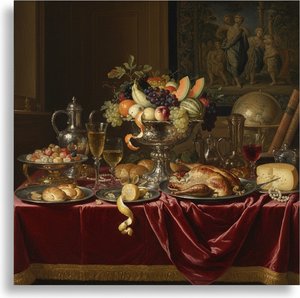
Jan van Huysum's "Fruit Still-Life," painted around 1728, isn’t merely a depiction of produce; it’s an immersive experience. This remarkable work, housed within the Rijksmuseum in Amsterdam, exemplifies the pinnacle of Dutch Golden Age still life painting – a genre where meticulous observation and masterful illusionism converged to create breathtakingly realistic and emotionally resonant scenes. More than just a collection of fruits and flowers, it's a testament to van Huysum’s extraordinary ability to capture not only their appearance but also their inherent vitality and the play of light upon them.
The painting immediately draws the eye with its profusion of color – deep ruby reds of ripe cherries and apples, the vibrant yellows of peaches and apricots, and the cool greens of grapes and leafy vines. These aren’t simply painted colors; they possess a remarkable luminosity, achieved through van Huysum's innovative use of oil paint on copper. This technique allowed for an unparalleled level of detail and brilliance, mimicking the way light would naturally interact with these textures. The background, rendered in a warm, earthy brown, serves as a sophisticated foil, intensifying the impact of the vibrant foreground elements.
The Master’s Technique: Illusion and Detail
Van Huysum was renowned for his technical virtuosity, a skill honed under the tutelage of his father, Justus van Huysum the Elder – another accomplished flower painter. This lineage instilled in him not only an understanding of botanical accuracy but also a deep appreciation for the art of illusion. He didn’t simply paint what he saw; he painted what he *felt* was there, creating a sense of depth and volume that transcends the two-dimensional surface. Notice how the individual petals appear to curl and unfold, the droplets of moisture clinging to the fruit, and the delicate veins running through the leaves – all rendered with astonishing precision.
The use of chiaroscuro—the dramatic contrast between light and shadow—is particularly noteworthy. Van Huysum masterfully employs this technique to sculpt the forms, creating a sense of three-dimensionality that makes the still life feel almost tangible. The shafts of light, seemingly originating from an unseen source, illuminate specific areas, drawing the viewer’s eye across the composition and highlighting the textures and colors of each element.
Symbolism and Context: A Dutch Golden Age Masterpiece
"Fruit Still-Life" is deeply rooted in the artistic conventions of its time. During the Dutch Golden Age (roughly 1600-1700), still life painting gained prominence as a genre, often imbued with symbolic meaning. Fruits and flowers weren’t just decorative elements; they frequently represented virtues, vices, or even religious concepts. While the precise symbolism within this particular piece may be open to interpretation, it's likely that van Huysum incorporated elements of abundance, fertility, and the fleeting beauty of nature – themes central to Dutch culture at the time.
Furthermore, the inclusion of a landscape element in the background—a subtle suggestion of architecture or a distant vista—adds another layer of complexity. This technique, common in Dutch still life painting, served to create a sense of space and depth, grounding the composition within a broader context. It’s a reminder that even in a seemingly simple depiction of fruit and flowers, van Huysum was engaging with complex artistic traditions and philosophical ideas.
A Legacy of Blossoms: Van Huysum's Enduring Appeal
Jan van Huysum’s legacy extends far beyond his technical skill. He elevated still life painting to a new level of artistry, capturing not just the appearance but also the essence of the natural world. His works continue to captivate viewers with their vibrant colors, exquisite detail, and profound sense of beauty. Reproductions like those offered by OriginalUniqueArt.com allow us to appreciate this remarkable artist’s genius and bring his luminous floral arrangements into our homes, offering a timeless connection to the artistic richness of the Dutch Golden Age.
질의응답
"Fruit Still-Life"에서 대비와 조화는 어떻게 어우러지나요?
얀 반 하위슴의 "Fruit Still-Life"의 색채 구성은 Balanced한 대비와 Balanced Harmony한 조화가 어우러져 있습니다.
"Fruit Still-Life"의 주제가 얀 반 하위슴 작가의 평소 작업 세계와 어떤 연관이 있나요?
얀 반 하위슴의 주요 주제인 floral abundance, dutch golden age, symbolic fruit, classical elements, van huysum’s signature style”, “detailed realism, baroque precision”, family legacy 중에서도, "Fruit Still-Life"은 fruit, flowers, composition, copper, van huysum, baroque, dutch golden age, detail에 독자적인 초점을 맞추고 있습니다.
"Fruit Still-Life"이(가) 얀 반 하위슴의 가장 인기 있는 작품 중 하나인가요?
얀 반 하위슴의 "Fruit Still-Life"의 인기도는 Iconic 수준입니다. 이 분류는 해당 작품이 얼마나 널리 알려져 있는지를 반영합니다.
이 작품에 대해 더 알아보기
 미리보기
미리보기
 공유하기
공유하기 공유하기
공유하기
 상세 정보
상세 정보 가이드 보기

 다운로드
다운로드
 유사 작품 더 보기
 X-레이
X-레이 슬라이드 쇼 보기
 질의응답
질의응답 통계 정보
통계 정보