 프린트 판매로 전환
 더 보기
더 보기







































 가로 또는 세로 중 어느 한 면이라도 105cm(약 41인치)를 초과하는 작품이나 복제화의 경우, 프레임은 분해된 키트 형태로 배송됩니다. 이는 안전한 배송을 보장하고 운송 중 발생할 수 있는 손상을 방지하기 위함입니다.


God the Father: A Testament to Renaissance Faith
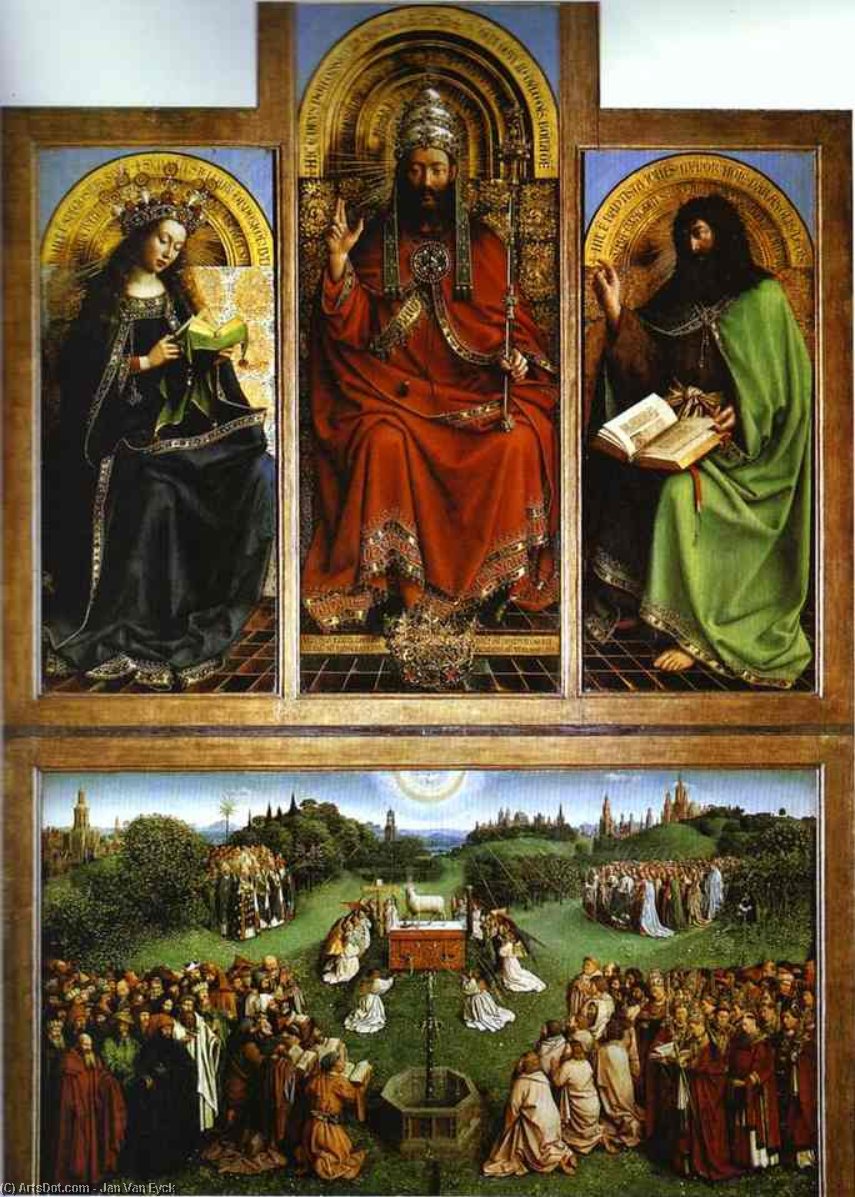
Jan van Eyck’s “God the Father,” completed in 1432, stands as an unparalleled achievement of Early Netherlandish painting and embodies the spiritual fervor that characterized the burgeoning Northern Renaissance. More than just a depiction of religious iconography, this monumental panel—measuring 212 x 83 cm—represents a pivotal moment in artistic history, marking the decisive adoption of oil paint on wood and establishing Van Eyck as a pioneer whose influence reverberates through subsequent generations of artists. Its location within St Bavo’s Cathedral in Ghent serves as a constant reminder of its enduring significance within Flemish religious culture.Composition and Symbolism: The Trinity Embodied
The painting's composition is deliberately structured to convey profound theological concepts. At its core lies a triad—three figures representing Jesus Christ seated upon thrones, each holding a book—a visual representation of the Holy Trinity. This deliberate arrangement transcends mere artistic convention; it speaks directly to Christian doctrine, emphasizing God’s unity and divine majesty. The central figure is crowned with laurel wreaths, symbolizing his regal authority as King of Heaven, while the flanking figures lack crowns, signifying their roles as the Son and Holy Spirit—figures subordinate yet equally vital in God's plan. Surrounding these central saints are attendants – kneeling figures expressing reverence – further reinforcing the solemn atmosphere and inviting contemplation. An angel positioned prominently on the upper right corner adds to the celestial grandeur of the scene, anchoring it within a realm beyond earthly comprehension.Technique: The Revolutionary Brilliance of Oil Paint
What distinguishes “God the Father” from its contemporaries is undeniably Van Eyck’s masterful manipulation of oil paint—a technique that had begun to gain traction in Northern Europe but was still considered experimental at the time. Unlike tempera, which relies on pigment bound with egg yolk and dries quickly, oil paint allows for gradual layering and blending, resulting in astonishing luminosity and depth. This meticulous attention to detail is evident throughout the painting: observe the subtle gradations of color, capturing the textures of drapery and skin with breathtaking accuracy. The artist’s painstaking rendering of light and shadow creates a palpable sense of realism—a characteristic hallmark of Early Netherlandish art that distinguishes it from the more stylized approaches favored in Italy during the Renaissance.Historical Context: Shaping the Northern Renaissance Aesthetic
“God the Father” emerged against the backdrop of a transformative period for European culture – the Early Netherlandish Art Movement. This movement, fueled by humanist ideals and driven by independent artistic exploration, diverged significantly from the dominant Italian Renaissance style. Artists like Van Eyck prioritized meticulous observation and realistic representation, rejecting idealized forms in favor of capturing the nuances of human anatomy and naturalistic landscapes. The painting’s influence extended far beyond Ghent; it served as a model for subsequent artists across Europe, establishing a distinctive visual language that would define the Northern Renaissance aesthetic for decades to come.Emotional Impact: Reverence and Spiritual Reflection
Ultimately, “God the Father” transcends mere artistic skill; it communicates profound spiritual emotion. The painting’s serene stillness invites viewers into a meditative state—a space for contemplation on faith, humility, and divine grace. Its luminous colors and intricate detail evoke a sense of wonder and reverence, transporting the observer to a realm of celestial beauty. As a testament to Van Eyck's genius and the enduring power of religious art, “God the Father” continues to inspire awe and admiration centuries after its creation—a timeless masterpiece that embodies the very essence of Renaissance spirituality.질의응답
야안 판 에이크의 "God the Father"의 대비(contrast)는 어느 정도인가요?
야안 판 에이크의 "God the Father"의 대비 수준은 Statement입니다.
야안 판 에이크의 "God the Father"은 밝은 느낌의 작품인가요, 아니면 어두운 느낌의 작품인가요?
야안 판 에이크의 "God the Father"의 느껴지는 밝기는 shadow입니다. 이는 배치할 공간의 조명과 자연스럽게 어우러집니다.
"God the Father"의 색감은 얼마나 선명한가요?
야안 판 에이크의 "God the Father"은(는) Balanced Soft의 채도와 Balanced의 색채 강도를 보여줍니다.
이 작품에 대해 더 알아보기
 미리보기
미리보기
 공유하기
공유하기 공유하기
공유하기
 상세 정보
상세 정보 가이드 보기

 다운로드
다운로드
 유사 작품 더 보기
 X-레이
X-레이 슬라이드 쇼 보기
 질의응답
질의응답 통계 정보
통계 정보