프린트 판매로 전환
 상세 보기
상세 보기







































 가로 또는 세로 중 어느 한 면이라도 105cm(약 41인치)를 초과하는 작품이나 복제화의 경우, 프레임은 분해된 키트 형태로 배송됩니다. 이는 안전한 배송을 보장하고 운송 중 발생할 수 있는 손상을 방지하기 위함입니다.


A Snapshot of Everyday Life: Jan Steen's "Twelfth Night"
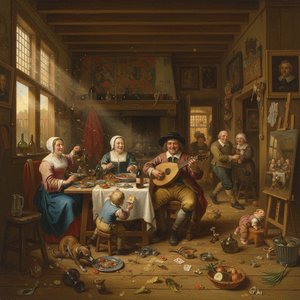
Step into a world brimming with boisterous merriment and subtle social commentary—Jan Havickszoon Steen’s “Twelfth Night,” painted in 1668, offers an unparalleled glimpse into the heart of Dutch Golden Age domestic life. More than just a festive scene, this painting is a meticulously crafted microcosm of society, capturing the energy, humor, and even a touch of moral reflection that defined the era. Steen’s genius lies not in grand historical narratives or idealized portraits, but in his ability to distill the complexities of human interaction into a single, vibrant tableau.
Baroque Drama and the Dutch Golden Age
Painted during the height of the Dutch Golden Age, “Twelfth Night” exemplifies the Baroque style’s dramatic flair. Steen masterfully employs a dynamic composition—a crowded interior bursting with figures engaged in diverse activities: music-making, feasting, playful arguments, and even a hint of clandestine romance. The perspective is subtly flattened, a characteristic of the period that creates a sense of depth while maintaining an energetic, almost chaotic feel. Light, seemingly emanating from multiple sources, illuminates different areas unevenly, adding to the painting’s lively dynamism. The rich colors—deep reds, vibrant blues, and earthy browns—are layered with meticulous brushwork, creating textures that invite close inspection.
A Window into Dutch Society
Beyond its aesthetic appeal, “Twelfth Night” offers a fascinating window into 17th-century Dutch society. The scene depicts a family enjoying the festivities of Twelfth Night—a tradition marking the end of Christmas and celebrating the arrival of the Magi. The painting’s details reveal much about the era's social customs: the elaborate musical performance, the abundance of food and drink, and the playful rivalry between the characters. Notably, Steen subtly critiques societal norms through his portrayal of vanity, greed, and foolishness—elements that were prevalent in Dutch bourgeois life. The inclusion of a stagecoach, for example, hints at the growing importance of travel and commerce during this period.
Symbolism and Human Nature
Steen’s work is renowned for its psychological insight and subtle moral lessons. “Twelfth Night” is no exception. The characters are not simply decorative elements; they represent a range of human traits—greed, vanity, foolishness, generosity, and affection. The painting's central theme revolves around the fleeting nature of pleasure and the importance of moderation. The boisterous revelry masks underlying tensions and anxieties, suggesting that even in moments of apparent joy, social pressures and personal desires can lead to conflict. The painting’s enduring appeal lies in its ability to capture the complexities of human behavior with both humor and empathy.
Collecting a Masterpiece – Reproduction Options
OriginalUniqueArt offers high-quality reproductions of Jan Steen's “Twelfth Night,” allowing you to bring this iconic work into your home or office. Choose from a range of sizes and materials, including canvas prints and framed editions, ensuring that the artwork’s vibrant colors and intricate details are faithfully reproduced. Explore our options for custom sizing and framing to perfectly complement your space. Browse the collection today!
질의응답
얀 스테인의 "Twelfth Night"을(를) 홈 데코에 어떻게 활용할 수 있을까요?
얀 스테인의 "Twelfth Night"은(는) Statement(을)를 위해 추천되며, Living Room에 배치하기에 가장 이상적입니다. 용도와 공간 정보를 함께 참고하여 작품의 위치를 결정해 보세요.
"Twelfth Night"은(는) 어느 작가의 작품인가요?
"Twelfth Night"의 작가는 얀 스테인입니다.
얀 스테인의 "Twelfth Night"의 전반적인 색조는 무엇인가요?
"Twelfth Night"은(는) Amber to Saffron 톤에 가깝습니다.
More about this painting
 실제 크기로 보기
 보내기
보내기 공유하기
공유하기
 상세 보기
상세 보기 가이드 보기

 이미지 다운로드
 유사 작품 더 보기
 X-레이
X-레이 슬라이드 쇼 보기
 Q&A
Q&A 통계 정보
통계 정보