

 실제 크기로 보기
 보내기
보내기 공유하기
공유하기
 상세 보기
상세 보기 가이드 보기

 이미지 다운로드
 유사 작품 더 보기
 X-레이
X-레이 슬라이드 쇼 보기
 통계 정보
통계 정보The Drawing Lesson


 상세 보기
상세 보기
지클레 / 아트 프린트
빠른 제작과 다양한 마감 옵션을 선택할 수 있는 박물관 수준의 지클레이 및 캔버스 프린트. ( 수작업 채색 복제본 주문하기 디지털 이미지 판매 채널로 전환)




P118B ₩10

P118H ₩10

P118W ₩10

P438Z ₩10

P508JH ₩12

P508YH ₩12

P805H ₩10

P805Z ₩10

P919BZ ₩10

P919G ₩10

P919XJ ₩10

P959ZH ₩10

P968JZ ₩12

W106C ₩8

W218G ₩10

W218JH ₩8

W218Y ₩10

W307PJ ₩10

W316G ₩10

W316PJ ₩8

W316Y ₩10

W398PJ ₩8

W4111J ₩10

W500HY ₩15

W500JH ₩15

W692G ₩12

W849H ₩8

W940BG ₩15

W953PJ ₩8




작품의 원본 비율을 그대로 유지하는 프리셋 사이즈 중에서 선택해 보세요.

액자나 벽면 크기에 맞춰 필요한 가로와 세로 길이를 입력해 주세요. 프린트는 원본 이미지보다 크게 제작할 수 없으며 오직 자르는 것만 가능하므로, 비율이 다른 사이즈를 선택할 경우 이미지의 일부가 잘려 나갈 수 있습니다. 인쇄 작업에 들어가기 전, 최종 확인을 위해 디지털 목업을 보내드립니다. 이 페이지에 표시된 이미지는 실제 잘리는 영역을 나타내지 않으며, 오직 목업을 통해서만 정확한 확인이 가능합니다.


 유리 옵션은 110cm 미만 크기에서만 선택 가능합니다.

The Drawing Lesson
지클레 / 아트 프린트
복제본 규격
-


총 결제 금액
₩ 108744
A Window into Dutch Domesticity
In the quiet, sun-dappled corners of a seventeenth-century Dutch home, Jan Havickszoon Steen captures a moment that feels both profoundly intimate and timelessly universal. The Drawing Lesson is not merely a depiction of an instructional afternoon; it is a masterful snapshot of domestic life, where the boundaries between education, leisure, and family connection blur into a single, harmonious scene. As we gaze upon this composition, we are invited into a room filled with the warmth of togetherness, watching as a father guides his children through the delicate art of sketching. The atmosphere is thick with a sense of quiet purpose, yet there is an underlying vitality—a pulse of life that prevents the scene from feeling static or overly formal.
Steen, a true master of the human comedy, had an unparalleled ability to find the extraordinary within the ordinary. While his contemporaries often reached for the grandiosity of mythological legends or the stiff dignity of royal portraits, Steen turned his gaze toward the kitchen, the tavern, and the schoolroom. In this work, he utilizes the textures of everyday objects—the smooth surface of a wooden table, the delicate curve of a ceramic bowl, and the weathered grain of a violin—to ground the viewer in a tangible reality. For the collector or the interior designer, this painting offers more than just visual beauty; it provides a narrative anchor, a piece of history that breathes life into a room through its depiction of shared human experience.
Technique and the Art of Light
The technical brilliance of Steen’s approach lies in his ability to manipulate light and shadow to create psychological depth. Though he was known for his vibrant palettes, his mastery of tonal gradations allows The Drawing Lesson to possess a sculptural quality. He employs a sophisticated understanding of light to illuminate the faces of the learners, drawing our eyes toward the focal point of the instruction. This interplay of light does more than just reveal form; it creates a sense of atmosphere, suggesting the soft, diffused glow of a northern afternoon filtering through a window.
One cannot discuss Steen without acknowledging his innovative use of texture and volume. Through careful layering, he achieves an illusion of depth that makes the objects on the table—the books, the cup, and the scattered art materials—appear almost within reach. This tactile quality is essential for anyone seeking a reproduction that commands attention in a modern space. The painting does not merely sit upon a wall; it interacts with the light of its environment, offering subtle shifts in mood depending on the time of day. It is this technical rigor, paired with his approachable aesthetic, that makes Steen’s work so enduringly captivating for those who appreciate the fine details of Baroque mastery.
Symbolism and Emotional Resonance
Beyond the surface level of a family activity, The Drawing Lesson is rich with the subtle moralizing characteristic of the Dutch Golden Age. In the seventeenth century, the act of learning was often viewed as a metaphor for the cultivation of the soul. The careful guidance of the child mirrors the societal importance of discipline, patience, and the transmission of knowledge across generations. Every element in the room—from the presence of music, suggested by the violin, to the scholarly weight of the books—serves to elevate the domestic scene into a meditation on the virtues of a well-ordered life.
Yet, despite these underlying lessons, the emotional impact of the piece remains profoundly accessible. There is no heavy-handedness here; instead, there is a gentle, rhythmic beauty found in the way the figures lean toward one another. For an art lover, the painting offers a sense of nostalgia for a simpler, more connected era. For an interior designer, it serves as a sophisticated element of storytelling, capable of evoking feelings of warmth, stability, and intellectual curiosity. To possess a reproduction of this work is to bring a piece of the Dutch Golden Age's heart into one's own home, celebrating the enduring beauty of life’s most quiet, instructional moments.
질의응답
"The Drawing Lesson"과(와) 유사한 작품이 더 있을까요?
얀 스테인의 "The Drawing Lesson"과(와) 유사한 작품들은 해당 작품의 유사한 작품 페이지에서 확인하실 수 있습니다.
"The Drawing Lesson"은(는) 얀 스테인의 반복되는 주제들 사이에서 어떤 위치를 차지하고 있나요?
얀 스테인의 반복되는 주제에는 dutch realism, baroque tradition, moral lessons, family values, artistic originality가 포함되어 있으며, "The Drawing Lesson"은 family life, domestic scene, drawing lesson, everyday life, baroque painting, dutch golden age, genre painting에 초점을 맞추고 있습니다.
얀 스테인의 "The Drawing Lesson"은 어떤 분위기와 감정을 전달하나요?
얀 스테인의 "The Drawing Lesson"은(는) 전반적인 Calm 분위기 속에서 Reflective한 느낌을 전달합니다.
작가 소개
삶의 여정과 예술적 기원
얀 하픽손 스테인(Jan Havickszoon Steen, 1626 – 1679)은 네덜란드 황금시대 회화의 독특한 목소리로 자리매김했습니다. 그는 신화적인 이야기나 역사적 초상화에 집중하기보다는 평범한 일상의 생생함과 유머를 포착하는 데 전념했습니다. 농가 가족, 선술집 모임, 교실 장면을 묘사하며 심리 통찰력과 미묘한 도덕적 교훈을 담아냈습니다. 이러한 독특한 접근 방식은 그를 동시대 작가들과 차별화시키고 바로크 미술에 깊은 영향을 미쳤습니다. 네덜란드 레이덴에서 태어난 스테인은 당시로서는 다소 관례적이지 않은 예술 훈련을 받았습니다. 그는 초상화와 풍경화를 전문으로 한 화가인 헨드릭 야콥손 스토펠스에게 도제 수업을 받았으며, 기본적인 기술을 습득하는 동시에 나중에 자신의 독특한 스타일에 영향을 미칠 스타일 전통에 노출되었습니다. 그러나 스테인은 빠르게 독립적인 비전을 발전시키고, 보다 권위 있는 주제보다 떠오르는 예술 운동인 장르 회화를 우선시했습니다. 이러한 결정은 현실주의를 중시하고 관련성 있는 맥락에서 인간 관계의 복잡성을 묘사하는 광범위한 문화적 변화를 반영합니다.예술 세계와 독창적인 스타일
스테인의 작품은 캔버스에 감정적인 영향을 높이고 깊이를 만드는 극명한 조명 기법인 *키아로스쿠로*의 능숙한 사용으로 특징지어집니다. 그는 의복, 가구, 표정 등 일상의 세부 사항을 놀라운 정확성으로 면밀히 관찰했습니다. 그러나 스테인은 현실을 단순히 기록하는 데 그치지 않았습니다. 그는 시각적 단서를 사용하여 도덕적인 메시지를 전달하는 데 능숙했습니다. 그의 그림은 종종 스키틀 게임 선수, 농부가 밭을 가꾸는 등 사소해 보이는 활동에 참여한 인물을 묘사하지만 이러한 장면에는 신앙심, 어리석음, 인간 행동의 결과와 같은 상징적인 의미가 담겨 있습니다. “선술집 안에서 스키틀 게임을 하는 사람들”(1663)을 예로 들어보겠습니다. 소박한 실내를 배경으로 활기찬 게임이 펼쳐지면서 절제와 사회적 책임의 중요성을 은연중에 상기시켜 줍니다. 스테인의 영향력은 그의 동료 예술가들을 넘어 유럽 전역, 특히 감정적으로 강렬한 구성을 만드는 기법을 포용했던 프랑스에까지 미쳤습니다. 니콜라스 수스트리스와 렘브란트와 같은 예술가들은 단순해 보이는 장면에서 심리적 뉘앙스를 전달하는 스테인의 능력을 존경했습니다. 브뤼헤의 Musée Memling은 스테인의 그림 컬렉션을 소장하고 있어 방문객들에게 그의 예술적 성취의 폭과 깊이를 감상할 수 있는 비교할 수 없는 기회를 제공합니다.주요 작품과 예술적 업적
스테인의 가장 유명한 작품 중에는 “세례 요한 설교”(1653)와 “엄격한 선생님”(1668)이 있습니다. "세례 요한 설교"는 빛과 색채의 극적인 사용을 보여주며, 강렬한 감정으로 중요한 성경 장면을 포착합니다. 이 그림은 태양 광선이라는 시각적 은유로 신성한 계시를 나타내면서 세례 요한의 설교에 귀 기울이는 마을 사람들의 무리를 묘사합니다. 마찬가지로 “엄격한 선생님”은 긴장감과 유머가 넘치는 교실 장면을 묘사하며 교육자가 젊은 마음을 형성하는 데 직면하는 어려움을 강조합니다. 스테인의 세심한 주의와 심리적 사실주의는 이 평범해 보이는 주제를 인간 본성과 도덕적 책임에 대한 깊은 성찰로 끌어올립니다. 스테인은 종종 일상적인 장면에서 유머와 풍자를 사용하여 관객의 참여를 유도했습니다. 그의 그림에는 종종 숨겨진 의미와 사회적 논평이 담겨 있어 작품을 다층적으로 만듭니다. 스테인의 예술적 기교는 단순한 묘사를 넘어 인간 행동과 도덕적 가치에 대한 통찰력을 제공하는 데 있었습니다.바로크 미술사에서의 유산
얀 스테인의 유산은 오늘날 진정성과 감정적인 공명을 추구하는 예술가들에게 영감을 주고 있습니다. 그는 네덜란드 예술 혁신의 상징으로 남아 있으며, 일상의 아름다움과 복잡성을 기념하면서도 귀중한 도덕적 교훈을 전달하여 바로크 미술사에서 가장 영향력 있는 인물 중 한 사람으로서의 입지를 확고히 했습니다. 스테인의 작품은 인간 본성에 대한 깊은 이해와 삶의 유머를 포착하는 능력으로 인해 시대를 초월한 매력을 지니며, 관객에게 지속적인 감동과 성찰을 선사합니다. 그의 그림은 단순한 예술적 표현이 아니라 인간 경험에 대한 심오한 탐구이며, 네덜란드 황금시대 회화의 풍부한 유산을 보여주는 증거입니다. 얀 스테인은 바로크 미술의 걸작으로 남아 있습니다. 그의 작품은 오늘날에도 계속해서 감동과 영감을 주고 있습니다.
얀 스테인
1626 - 1679 , 네덜란드
작가 정보 요약
- Artistic Movement Or Style: 네덜란드 황금기 장르화
- Artists Or Movements Influenced By This Artist: 바로크 미술
- Artists Who Influenced This Artist: ['헨드릭 야콥스조온 스토펠스']
- Date Of Birth: 1626년
- Date Of Death: 1679년
- Full Name: 얀 하빅손 스틴
- Nationality: 네덜란드인
- Notable Artworks:
- 세례 요한 설교
- 선술집 앞의 스키틀 선수들
- 엄격한 선생님
- Place Of Birth (City And Country): 네덜란드 레이덴
관련 기사

Mastering the Mundane: An Art Historian's Guide to the Intimacy of Dutch Golden Age Genre Painting
Explore the profound beauty of Dutch Golden Age genre painting. From Vermeer to Metsu, learn how masters captured the extraordinary within the ordinary through light, texture, and intimate domestic scenes. Discover museum-quality oil reproductions for your collection.
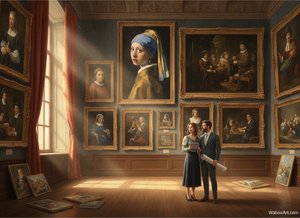
10 Iconic Masterpieces That Defined the Dutch Golden Age
Journey through the Dutch Golden Age with 10 iconic masterpieces. From Rembrandt's light to Vermeer's elegance, explore the stories behind these timeless oil paintings and find museum-quality reproductions for your decor. Discover all masterpieces on OriginalUniqueArt.com.

Golden Light & Dutch Skies: The Timeless Magic of Dutch Golden Age Landscapes
Discover the breathtaking beauty of Dutch Golden Age landscapes. Explore the mastery of light, chiaroscuro, and 17th-century realism through an expert art history lens, celebrating the enduring legacy of the Dutch Masters for discerning collectors and art lovers.

네덜란드 황금 시대 예술의 정수를 담은 10대 걸작 탐구
렘브란트, 베르메르의 걸작부터 할스의 인물화까지! 네덜란드 황금시대 미술의 10대 명품을 만나보세요. 예술적 깊이와 아름다움을 담은 작품들을 OriginalUniqueArt에서 감상하고, 고품질 아트 프린트로 당신의 공간에 특별함을 더하세요. 지금 바로 OriginalUniqueArt.com에서 모든 걸작을 발견하세요!

10 Iconic Masterpieces That Defined the Dutch Golden Age
Immerse yourself in the luminous mastery of the Dutch Golden Age. From Rembrandt’s dramatic shadows to Vermeer’s serene light, explore 10 iconic masterpieces and find museum-quality art reproductions to elevate your decor. Discover all masterpieces on OriginalUniqueArt.com.
