프린트 판매로 전환
 상세 보기
상세 보기







































 가로 또는 세로 중 어느 한 면이라도 105cm(약 41인치)를 초과하는 작품이나 복제화의 경우, 프레임은 분해된 키트 형태로 배송됩니다. 이는 안전한 배송을 보장하고 운송 중 발생할 수 있는 손상을 방지하기 위함입니다.


A Timeless Encounter with the Dutch Golden Age
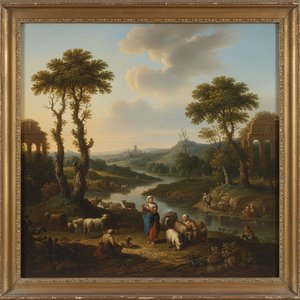
In the quiet depths of Jan Baptist Weenix’s 1647 masterpiece, "The Ford in the River," one finds much more than a mere landscape; one discovers a portal into the soul of the Dutch Golden Age. This monumental canvas, currently preserved within the hallowed halls of the Hermitage Museum, serves as a breathtaking testament to an era where art began to bridge the gap between the rugged reality of Northern Europe and the idealized grandeur of the Italian Renaissance. As your eyes wander across the textured surface, you are immediately swept into a scene of pastoral vitality, where the rhythmic pulse of rural life meets the enduring stillness of antiquity.
The composition is a masterclass in narrative depth, presenting a world teeming with anecdotal detail and human connection. At the heart of the river crossing, figures engage in the humble, everyday rituals of 17th-century existence—a horseman pauses in conversation, while nearby, the subtle movements of travelers and livestock create a sense of spontaneous motion. Weenix does not merely observe; he orchestrates a symphony of movement, where the glistening surface of the water and the heavy, brooding clouds above suggest a fleeting moment captured in the amber of time. For the discerning collector or interior designer, this painting offers an unparalleled sense of gravitas, bringing a sophisticated historical weight to any curated space.
The Alchemy of Light and Italianate Vision
What truly elevates Weenix above his contemporaries is his audacious embrace of the Italianate style. Having traveled through Rome, the artist infused the Dutch landscape with a sense of classical majesty that was revolutionary for its time. The presence of architectural ruins—majestic pillars that hint at a lost, glorious past—transforms a simple river ford into a stage for epic contemplation. This juxtaposition of the ephemeral (the flowing water and passing travelers) against the eternal (the stone ruins) invites the viewer to reflect on the cyclical nature of civilization and the persistence of beauty amidst decay.
Technically, the painting is a triumph of chiaroscuro. Weenix utilizes a dramatic interplay between light and shadow to sculpt the landscape, creating a three-dimensional relief that feels almost tactile. The way the late afternoon light catches the white coat of a prominent horse or illuminates the folds of a traveler's garment demonstrates a profound understanding of tonal richness. Through his meticulous use of oil on canvas, Weenix achieves a textural nuance—from the translucent ripples of the river to the coarse texture of animal hides—that continues to captivate the modern eye. To possess a reproduction of such a work is to invite this masterful manipulation of light into one's own environment, fostering an atmosphere of warmth, depth, and intellectual intrigue.
An Emotional Resonance for the Modern Collector
Beyond its technical brilliance, "The Ford in the River" resonates on a deeply emotional level. It evokes a profound sense of tranquility juxtaposed with endeavor. There is a nostalgic pull to the scene, a longing for a world where the pace of life was dictated by the movement of the seasons and the flow of the river. For those seeking to decorate a sanctuary or a professional study, this artwork provides a focal point that is both stimulating and calming. It does not demand attention through loud colors, but rather earns it through its intricate layers of meaning and its ability to transport the viewer to a different century.
Whether you are an art historian drawn to its stylistic evolution or an interior enthusiast looking for a piece that embodies classical elegance, Weenix’s vision remains strikingly relevant. The painting stands as a bridge between eras, blending the scientific realism of the Dutch tradition with the poetic idealism of the South. It is a piece that rewards repeated viewing, revealing new details—a hidden figure, a shift in the cloudscape, a subtle glint of light—each time it is encountered, making it an enduring investment for any collection dedicated to the heights of European art history.
질의응답
에르미타주 박물관에 소장된 "The Ford in the River"의 복제권 범위는 어떻게 되나요?
에르미타주 박물관에 소장된 얀 바프티스트 비닉의 "The Ford in the River"은(는) 퍼블릭 도메인 - 저작권 보호 기간이 만료되었습니다 상태입니다. 이 상태에 따라 해당 이미지의 복제 가능 여부가 결정됩니다.
구매하기 전에 얀 바프티스트 비닉의 "The Ford in the River"을(를) 제 벽에 미리 배치해 볼 수 있나요?
얀 바프티스트 비닉의 "The Ford in the River"의 AR 미리보기 페이지에서는 증강 현실(AR) 기술을 사용하여 호환 가능한 기기를 통해 작품이 사용자의 공간에 배치된 모습을 미리 확인할 수 있습니다.
"The Ford in the River"의 재료와 화풍은 무엇인가요?
"The Ford in the River"은(는) Oil On Canvas 기법을 사용하여 Dutch Golden Age 양식으로 제작되었습니다.
More about this painting
 실제 크기로 보기
 보내기
보내기 공유하기
공유하기
 상세 보기
상세 보기 가이드 보기

 이미지 다운로드
 유사 작품 더 보기
 X-레이
X-레이 슬라이드 쇼 보기
 Q&A
Q&A 통계 정보
통계 정보