프린트 판매로 전환
 더 보기
더 보기







































 가로 또는 세로 중 어느 한 면이라도 105cm(약 41인치)를 초과하는 작품이나 복제화의 경우, 프레임은 분해된 키트 형태로 배송됩니다. 이는 안전한 배송을 보장하고 운송 중 발생할 수 있는 손상을 방지하기 위함입니다.


A Descent into Surreal Horror: The Visionary World of James Ensor
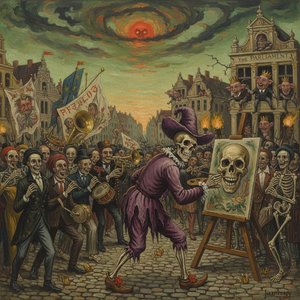
In the quiet, unsettling depths of 1891, James Ensor birthed a masterpiece that would forever haunt the corridors of Belgian Expressionism. "The Frightful Musicians" is not merely a painting; it is a visceral descent into a fever dream, a chilling testament to the burgeoning influence of Surrealist thought long before the movement officially took flight. Executed with the meticulous precision of tempera pigments on canvas, this diminutive work—measubling just 16 x 21 cm—possesses an expansive, psychological weight that defies its small scale. The texture is rich and matte, inviting the viewer to lean in closer, only to find themselves ensnared by a scene of profound disorientation and existential dread.
The composition functions as a claustrophobic stage where the boundaries between reality and nightmare dissolve. At the heart of this unsettling gathering stands a man, his hands poised with a violin, yet he is far from a traditional performer. He is surrounded by a disconcerting troupe of musicians whose very forms seem to morph into grotesque, monstrous entities. Faces peer from behind instruments with an predatory intensity, suggesting that the music being played is not one of harmony, but of primal fear. Ensor deliberately disrupts conventional perspective, layering elements in a way that creates a disorienting sense of depth, forcing the eye to wander through a landscape of shadows and distorted features.
Symbolism and the Unseen Subconscious
Beyond the immediate shock of the grotesque, Ensor weaves a complex tapestry of symbols that speak to the human condition. A stark white wall dominates much of the background, punctuated by a solitary clock—a recurring motif in Ensor’s oeuvre that serves as a grim reminder of the relentless march of time and the inevitability of doom. Scattered throughout this chaotic assembly are birds, creatures that represent both the fragile yearning for freedom and the inescapable vulnerability of life. Their presence adds a layer of ethereal tension to the scene, acting as silent witnesses to the unfolding madness.
The inclusion of masks—a fascination born from Ensor’s childhood spent in his parents' Ostend souvenir shop—further complicates the narrative. These masks represent the duality of identity and the deceptive nature of the persona, suggesting that beneath every civilized exterior lies something much more primal and frightening. For the collector or the lover of fine art, this piece offers more than aesthetic beauty; it offers a profound intellectual engagement with the themes of disguise, mortality, and the subconscious mind.
An Essential Addition to the Discerning Collection
For interior designers and art enthusiasts seeking to infuse a space with character and narrative depth, "The Frightful Musicians" provides an unparalleled emotional anchor. Its dark, evocative atmosphere makes it a striking centerpiece for a gallery wall or a sophisticated study, where its intricate details can be contemplated in moments of quiet reflection. A high-quality reproduction of this work allows the rich, matte textures and the haunting palette of Ensor’s vision to breathe within a modern setting.
Owning a piece that captures such a pivotal moment in art history is an opportunity to possess a fragment of the avant-garde spirit. Whether you are drawn to its historical significance as a precursor to Surrealism or moved by its raw, expressive power, this painting remains a timeless exploration of the shadows that dwell within us all. It is an invitation to look past the surface and confront the beautiful, terrifying complexity of the human soul.
질의응답
제임스 엔서의 "The Frightful Musicians"의 재료와 크기는 어떻게 되나요?
"The Frightful Musicians"은(는) Tempera 기법으로 제작되었으며, 원작의 크기는 16 x 21 cm입니다.
제 방에 "The Frightful Musicians"을(를) 어떤 사이즈로 프린트하는 것이 좋을까요?
제임스 엔서의 "The Frightful Musicians"을(를) 위한 추천 조합: Living Room 공간에 어울리는 Small 사이즈 프린트입니다.
제임스 엔서의 "The Frightful Musicians"을(를) 홈 데코에 어떻게 활용할 수 있을까요?
"The Frightful Musicians"은(는) Accent 용도로 추천하며, Living Room 공간에 배치하기 좋습니다.
이 작품에 대해 더 알아보기
 미리보기
미리보기
 공유하기
공유하기 공유하기
공유하기
 상세 정보
상세 정보 가이드 보기

 다운로드
다운로드
 유사 작품 더 보기
 X-레이
X-레이 슬라이드 쇼 보기
 질의응답
질의응답 통계 정보
통계 정보