프린트 판매로 전환
 더 보기
더 보기







































 가로 또는 세로 중 어느 한 면이라도 105cm(약 41인치)를 초과하는 작품이나 복제화의 경우, 프레임은 분해된 키트 형태로 배송됩니다. 이는 안전한 배송을 보장하고 운송 중 발생할 수 있는 손상을 방지하기 위함입니다.


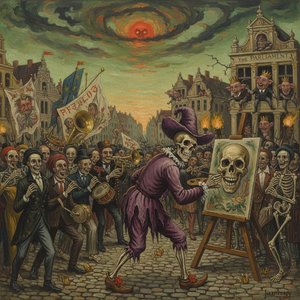
La Mangeuse d' Huitres: A Glimpse into James Ensor’s Unsettling World
James Ensor’s *La Mangeuse d’Huitres* (The Oyster Eater), painted around 1888, is not merely a depiction of a woman enjoying her meal; it’s a carefully constructed tableau brimming with psychological tension and social commentary—a quintessential example of the artist's unique and profoundly unsettling vision. The painting immediately draws the viewer in with its vibrant, almost jarring palette: deep reds, blues, and yellows clash dramatically against the muted tones of the dining table and background. This deliberate discord reflects Ensor’s broader artistic philosophy – a rejection of academic realism in favor of expressing raw emotion and challenging conventional perceptions. The subject herself, seated at a richly appointed but slightly decaying table, is rendered with an unsettling ambiguity. Her expression is difficult to decipher; is she truly enjoying her meal, or does a subtle hint of unease flicker beneath the surface? This deliberate vagueness is key to understanding Ensor’s work – he rarely offers easy answers, preferring instead to provoke contemplation and discomfort. The presence of scattered books suggests an intellectual pursuit, yet their disarray hints at a mind struggling with conflicting ideas.A Masterclass in Symbolism and Masked Reality
Ensor's fascination with masks is central to interpreting *La Mangeuse d’Huitres*. The oyster shells scattered across the table are not simply decorative elements; they function as visual metaphors for concealment, deception, and the hidden aspects of human nature. His childhood spent amidst the exotic wares of his parents’ souvenir shop in Ostend, filled with carnival masks and peculiar objects, undoubtedly fueled this obsession. These masks weren't just theatrical props; they represented a way to escape identity, to embody different roles, and to explore the darker corners of the psyche. The woman herself could be seen as wearing a mask – a carefully constructed facade designed to conceal her true feelings or intentions. Furthermore, the background figure, partially obscured by the main scene, adds another layer of mystery and suggests an unseen presence, perhaps representing societal judgment or the weight of expectation.The Expressionist Roots of a Troubled Vision
*La Mangeuse d’Huitres* firmly places Ensor within the burgeoning movement of Expressionism, predating its formal recognition by decades. His use of distorted forms, exaggerated colors, and emotionally charged imagery anticipates the key tenets of this artistic approach. Unlike traditional portraiture which aimed to capture a likeness, Ensor prioritized conveying an internal state – a sense of anxiety, alienation, and perhaps even madness. The painting’s composition is deliberately claustrophobic, drawing the viewer into the confined space of the dining room and intensifying the feeling of unease. The brushwork itself is loose and expressive, contributing to the overall sense of dynamism and unrest. It's a deliberate departure from the smooth, polished surfaces favored by academic painters of the time.Historical Context and Lasting Influence
Painted during a period of significant social and political upheaval in Europe – the late 19th century – *La Mangeuse d’Huitres* can be interpreted as a commentary on Victorian society's rigid conventions and its hypocrisy. Ensor, a fiercely independent artist who often challenged societal norms with his provocative work, used his art to expose the darker side of human existence. His rejection of academic tradition and his embrace of unconventional subject matter made him a controversial figure during his lifetime, but today he is recognized as one of the most important and influential artists of the 20th century. Reproductions of *La Mangeuse d’Huitres* continue to resonate with viewers because they tap into universal themes of identity, deception, and the complexities of human relationships – a testament to Ensor's enduring artistic vision. OriginalUniqueArt offers exceptional hand-painted reproductions that capture the full intensity and unsettling beauty of this remarkable masterpiece.질의응답
제임스 엔서의 "La Mangeuse d' huitres"은(는) 퍼블릭 도메인인가요?
저작권과 관련하여, "La Mangeuse d' huitres"은(는) 퍼블릭 도메인 - 저작권 보호 기간이 만료되었습니다 상태입니다.
"La Mangeuse d' huitres"의 Portrait 형식은 어디에 전시하는 것이 가장 좋을까요?
제임스 엔서의 "La Mangeuse d' huitres"의 작품 형태(Portrait)와 추천 공간(Dining Room)은 이 작품을 위한 두 가지 배치 정보입니다.
제임스 엔서의 "La Mangeuse d' huitres"은(는) 회화인가요, 드로잉인가요, 아니면 판화인가요?
"La Mangeuse d' huitres"은(는) WallArt 작품입니다.
이 작품에 대해 더 알아보기
 미리보기
미리보기
 공유하기
공유하기 공유하기
공유하기
 상세 정보
상세 정보 가이드 보기

 다운로드
다운로드
 유사 작품 더 보기
 X-레이
X-레이 슬라이드 쇼 보기
 질의응답
질의응답 통계 정보
통계 정보