프린트 판매로 전환
 상세 보기
상세 보기







































 가로 또는 세로 중 어느 한 면이라도 105cm(약 41인치)를 초과하는 작품이나 복제화의 경우, 프레임은 분해된 키트 형태로 배송됩니다. 이는 안전한 배송을 보장하고 운송 중 발생할 수 있는 손상을 방지하기 위함입니다.


A Glimpse into the Soul of Expressionism
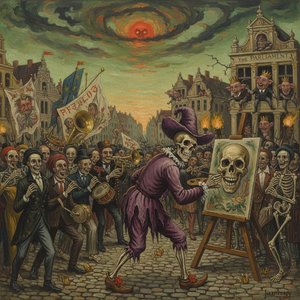
To encounter James Ensor’s "Ensor with Flowered Hat" is to step directly into a psychological landscape where the boundaries between reality and masquerade begin to dissolve. Painted in 1908, this striking portrait serves as more than a mere likeness; it is a profound exploration of the anxieties simmering beneath the surface of early 20th-century Europe. Ensor, a master of capturing the unseen, utilizes the subject's gaze to pierce through the viewer, inviting us into a world defined by psychological complexity and a deliberate sense of unease. The painting transcends traditional portraiture, acting as a window into an era grappling with profound societal upheaval and the burgeoning mysteries of the human subconscious.
The subject, captured with a characterful beard and mustache, wears a hat adorned with flowers—a whimsical element that stands in stark, almost jarring, contrast to the underlying tension of the composition. This juxtaposition is quintessential Ensor; he often utilized theatrical imagery and carnival-like motifs to mirror the hidden emotions and suppressed desires of humanity. As the eye wanders across the canvas, one might notice the presence of other figures lurking in the periphery, their placement contributing to a sense of claustrophobic isolation. The vibrant red background acts as a dramatic stage, pushing the subject forward while simultaneously creating a visual friction that keeps the viewer's pulse quickened.
Technique and the Beauty of Distortion
Ensor’s technical mastery lies in his refusal to adhere to the polished, academic perfection of his predecessors. Instead, he embraced a textured impasto technique, applying oil paints with a vigor that captures movement and palpable emotion. This tactile quality gives the work a life of its own, where every brushstroke contributes to the painting's rhythmic energy. His style is unmistakably Expressionist, characterized by a bold use of color where saturated hues are strategically juxtaposed against more muted, somber tones to create a dramatic visual tension.
The artist deliberately manipulates form, employing exaggerated proportions and distorted features to convey inner turmoil rather than an idealized reality. By flattening the perspective, Ensor removes the comfort of depth, forcing the viewer to confront the subject in a space that feels both intimate and unsettling. For the collector or interior designer, this piece offers a commanding presence; its heavy textures and bold color palette make it a centerpiece capable of injecting intellectual depth and artistic drama into any sophisticated space.
A Legacy of Masks and Shadows
The historical resonance of "Ensor with Flowered Hat" is deeply rooted in the artist's own biography. Growing up in Ostend, Belgium, amidst a souvenir shop filled with carnival masks and peculiar curiosities, Ensor developed a lifelong fascination with the concept of the mask. To him, the mask was not just a tool for disguise, but a symbol of the social hypocrisies and the fragmented identities of modern life. This preoccupation with the theatrical and the grotesque allows the painting to function as a powerful piece of social commentary, reflecting the disillusionment of a world on the brink of massive industrial and political transformation.
Owning a high-quality reproduction of this masterpiece is an opportunity to possess a fragment of art history's most provocative era. It is a work that invites conversation, challenging those who gaze upon it to look past the surface and contemplate the layers of identity beneath. Whether placed in a curated gallery setting or as a bold statement in a contemporary living space, Ensor’s vision remains as hauntingly relevant and visually arresting today as it was over a century ago.
질의응답
제임스 엔서의 "Ensor with Flowered Hat"은 미술사에서 어떤 위치를 차지하고 있나요?
역사적으로 "Ensor with Flowered Hat"은(는) 더 넓은 의미의 Modern 시대에 속하는 Expressionist Painting 작품입니다.
"Ensor with Flowered Hat"은(는) 제임스 엔서의 주제 및 화풍과 어떻게 맞닿아 있나요?
"Ensor with Flowered Hat"은(는) 제임스 엔서의 다른 작품들과 마찬가지로 Expressionist Painting 양식과 더불어 expressionist style, belgian identity, mask imagery, carnival spectacle, artist’s vision라는 작가의 반복되는 주제 의식을 공유합니다.
"Ensor with Flowered Hat"은(는) 어떤 감정과 관련이 있나요?
제임스 엔서의 "Ensor with Flowered Hat"은(는) Melancholic 감성을 전달합니다.
More about this painting
 실제 크기로 보기
 보내기
보내기 공유하기
공유하기
 상세 보기
상세 보기 가이드 보기

 이미지 다운로드
 유사 작품 더 보기
 X-레이
X-레이 슬라이드 쇼 보기
 Q&A
Q&A 통계 정보
통계 정보