Symbolism · 1917
pytia (자크 말체브스키, 1917)
자크 말체브스키 (1854–1929) 작가의 pytia 1917년에 제작되었습니다. Symbolism 운동에 속합니다. Oil On Canvas(으)로 제작되었습니다. Kielce, Poland에 위치한 National Museum in Kielce에 소장되어 있습니다.
- 1917
- Oil On Canvas
- National Museum in Kielce

 미리보기

 수작업 유화 작품
 공유하기
 공유하기
 학습용 요약본


 다운로드
 유사 작품 더 보기
 X-레이
 슬라이드 쇼 보기
 질의응답

 통계 정보
pytia 요약
- 제목
- pytia
- 작가
- 자크 말체브스키 (1854–1929)
- 작가 출생지
- 라돔, 폴란드
- 제작 연도
- 1917
- 매체
- Oil On Canvas
- 전시 장소
- National Museum in Kielce, Kielce, Poland
- 운동성
- Symbolism
- 제작 시기
- Modern
- 주제
- solitary figure, contemplation, melancholy, antiquity, classical, reflection
pytia은(는) 무엇을 묘사하고 있나요?
Visual Composition and Subject Matter
In the painting pytia by Jacek Malczewski, the composition is centered around a solitary female figure. This young woman is seated upon a dark wooden bench, her body positioned in the middle ground of the frame. She gazes pensively into the distance, her expression directed away from the viewer toward an unseen point beyond the immediate scene. The arrangement of the figure against the background creates a sense of stillness and quietude.
The setting is defined by architectural elements visible in the background that suggest an ancient Greek environment. These structures recede into a hazy distance, utilizing atmospheric perspective to establish a shallow sense of depth. The subject matter focuses entirely on the woman, whose presence dominates the visual field. The overall effect of the arrangement is one of quiet beauty and emotional resonance.
Technique and Artistic Style
This oil painting is executed in a style leaning towards classical realism. The artist employs a technique of building up layers of color and texture through visible brushstrokes. These strokes create a sense of movement within the composition. The use of lines is predominantly soft and flowing, particularly evident in the treatment of the drapery. Organic shapes define the figure and the folds of the fabric, contrasting with the architectural elements in the background.
The texture of the work appears rich and layered. This effect is achieved through impasto techniques, which are most apparent in the highlights and shadows across the figure and the surrounding environment. Lighting is diffused and warm, casting gentle shadows that define the volume and form of the subject. The perspective remains somewhat shallow, focusing the viewer's attention on the immediate foreground while the background recedes into a hazy, muted area through atmospheric perspective.
pytia은(는) 어느 미술관에 소장되어 있나요?
National Museum in Kielce
Kielce, Poland
Origins and History of the Institution The National Museum in Kielce was established in 1908. At its inception, the institution functioned as a community-run organization belonging to the Kielce Division of the Polish Nature and Heritage Society. Its primary purpose was to document the local archaeological history, nature, and wildlife of the region.


pytia의 고해상도 이미지
자크 말체브스키, pytia (1917), National Museum in Kielce. 퍼블릭 도메인
pytia에 관한 질문과 답변
자크 말체브스키의 "pytia"의 원화는 어디에서 감상할 수 있나요?
자크 말체브스키의 "pytia"은(는) National Museum in Kielce, Kielce, Poland에 전시되어 있습니다. 박물관 목록은 복제품이 아닌 원작을 기준으로 합니다.
자크 말체브스키의 "pytia"은(는) 언제 제작되었나요?
자크 말체브스키의 "pytia"에는 어떤 기법이 사용되었나요?
자크 말체브스키의 "pytia"에는 어떤 소재가 등장하나요?
"pytia"은(는) 저작권으로부터 자유로운가요?
자크 말체브스키의 "pytia"은(는) 어떤 미술 사조에 속하나요?
"pytia"은(는) 자크 말체브스키의 예술적 발전 단계 중 어느 시기를 나타냅니까?
아티스트 자크 말체브스키 소개
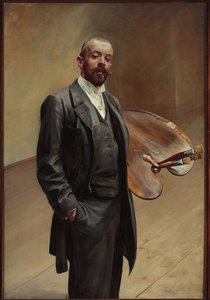
1854–1929, 폴란드
자크 말체브스키
폴란드의 갈망으로 물든 삶 1854년, 당시 러시아의 지배 아래 있던 폴란드 공로스(Congress Poland)의 도시 라돔에서 태어난 야첵 말체브스키는 단순한 화가 그 이상이었습니다. 그는 폴란드 민족 정체성을 시각적으로 구현한 존재였으며, 자결권을 갈망하던 한 국가의 깊은 목소리였습니다. 그의 삶의 궤적과 예술적 비전은 독립을 향한 로맨틱한 이상과 불가분하게 연결되어 있었습니다. 이러한 정신은 그의 아버지 유리아 말체브스키로부터 깊이 심어졌는데, 그는 헌신적인 애국자로서 어린 야첵에게 폴란드의 문화와 문학, 그리고 역사에 대한 변함없는 사랑을 길러주었습니다.
자크 말체브스키의 다른 작품들
 Self-portrait in armor with violin.1908
 Madonna and Children1897
 Portrait of artist's sister Helene with lute1906
 The Artist's death1909
pytia 관련 에세이
 Polish artworks of the 1900sPolish Symbolism in the 1900s features masterpieces by Jacek Malczewski, Olga Boznańska, and Józef Mehoffer. View the full collection at Or…
 19th century Polish painters19th-century Polish art comes alive through the masterpieces of Jan Matejko and Jacek Malczewski. View the full collection online at Origin…
 Mastering the Stroke: The Ultimate Guide to Oil Painting Texture, Impasto, and Artistic Depth for the Modern CollectorUnlock the secrets of oil painting texture. From the sculptural power of impasto to the luminous depth of glazing, our expert guide explore…