

 실제 크기로 보기
 보내기
보내기 공유하기
공유하기
 상세 보기
상세 보기 가이드 보기

 이미지 다운로드
 유사 작품 더 보기
 X-레이
X-레이 슬라이드 쇼 보기
 통계 정보
통계 정보Golden autumn
 Oil On Canvas
- WallArt
- Impressionistic Landscape
 1895
1895- 19th Century
 82.0 x 126.0 cm
 트레티야코프 미술관
 상세 보기
상세 보기
지클레 / 아트 프린트
빠른 제작과 다양한 마감 옵션을 선택할 수 있는 박물관 수준의 지클레이 및 캔버스 프린트. ( 수작업 채색 복제본 주문하기 디지털 이미지 판매 채널로 전환)




P118B $10

P118H $10

P118W $10

P438Z $10

P508JH $12

P508YH $12

P805H $10

P805Z $10

P919BZ $10

P919G $10

P919XJ $10

P959ZH $10

P968JZ $12

W106C $8

W218G $10

W218JH $8

W218Y $10

W307PJ $10

W316G $10

W316PJ $8

W316Y $10

W398PJ $8

W4111J $10

W500HY $15

W500JH $15

W692G $12

W849H $8

W940BG $15

W953PJ $8




작품의 원본 비율을 그대로 유지하는 프리셋 사이즈 중에서 선택해 보세요.

특정 프레임이나 공간에 맞춰 직접 치수를 입력하실 수 있습니다. 선택하신 사이즈가 원본 이미지의 비율과 일치하지 않을 경우, 작품을 크롭(자르기)하거나 이미지를 대칭 또는 단색 채우기로 확장하여 제작합니다. 제작 시작 전, 최종 확인을 위해 디지털 목업이 전송됩니다.
화면상의 미리보기는 실제 크롭이나 확장 상태를 반영하지 않으므로, 최종 구도는 오직 목업을 통해서만 정확하게 확인하실 수 있습니다.
맞춤 사이즈 제작도 가능하지만, 원본 비율을 유지하기 위해서는 사전 정의된 목록에서 치수를 선택하시는 것을 권장합니다.


 유리 옵션은 110cm 미만 크기에서만 선택 가능합니다.

Golden autumn
지클레 / 아트 프린트
복제본 규격
-


총 결제 금액
$ 80
A Symphony of Autumnal Melancholy
In the hallowed halls of the Tretyakov Gallery in Moscow, there exists a canvas that does more than merely depict a season; it captures the very soul of the Russian landscape. Isaak Ilyich Levitan’s Golden Autumn, painted in 1895, is a monumental achievement that transcends simple representation to become a profound meditation on beauty and transition. As the eye wanders across the 82 x 126 cm expanse, one is immediately drawn into a tranquil riverside scene where birch trees stand ablaze with autumnal hues. This vibrant tapestry of golds and yellows creates a striking contrast against the muted blues and greens of the background, inviting the viewer to step into a moment frozen in time—a moment where the warmth of summer begins its slow, graceful surrender to the approaching frost.
The painting presents an idyllic tableau of rural life, featuring a meandering river that weaves through a sun-drenched meadow. Scattered throughout this pastoral landscape are cows, grazing peacefully near the water's edge, adding a sense of quiet vitality to the scene. A nearby bridge serves as a subtle anchor to the human element within this vast natural expanse, yet the true protagonist remains the atmosphere itself. For collectors and interior designers alike, this piece offers a unique ability to infuse a space with serenity and a sense of timelessness, making it an exquisite centerpiece for any curated collection.
Mastery of Light and Impressionistic Technique
Levitan’s artistic approach marks him as a master of the mood landscape, a genre he helped pioneer. While his roots lie in the Russian Realism of the Peredvizhniki movement, his technique breathes with the ethereal quality of Impressionism. Rather than relying on sharp, photographic delineations, Levitan employs loose, rhythmic brushstrokes and expertly blended pigments to capture the fleeting nuances of light and atmosphere. This soft-focus approach allows the colors to vibrate against one another, creating a shimmering effect that mimics the way sunlight filters through thinning autumn leaves.
The color palette is a masterclass in symbolic harmony. The deliberate juxtaposition between radiant gold and cool, contemplative blue serves as a visual metaphor for the duality of the season. The shimmering golds represent the peak of vitality and the warmth of life, while the deep, tranquil blues evoke the inevitable decline and the quietude of winter. This sophisticated use of color theory ensures that the painting remains emotionally resonant, offering a complex sensory experience that shifts depending on the light in which it is viewed.
A Legacy of Emotional Resonance
To understand Golden Autumn, one must understand the heart of Isaak Levitan. His life, marked by personal hardship and the profound loss of his parents, imbued his work with a characteristic sense of longing and poetic melancholy. He did not seek to paint topographical accuracy; instead, he sought to translate the emotional resonance of the land into visual form. This painting is the pinnacle of that quest—a work that finds peace within change and beauty within decay.
For those seeking to bring a piece of art history into their homes, a high-quality reproduction of this masterpiece offers more than just decoration. It provides an opportunity to live with a poem in paint, a window into the Russian soul that continues to inspire generations. Whether placed in a sunlit study or a grand living area, Golden Autumn serves as a constant reminder of the sublime beauty found in life's most transient moments.
작가 소개
A Symphony of the Russian Soul: The Life and Art of Isaak Ilyich Levitan
Isaak Ilyich Levitan, a name synonymous with the evocative power of Russian landscape painting, was more than just a chronicler of nature; he was a poet of the land, a translator of its moods into visual form. Born in 1860 in Kibarty (present-day Lithuania) to a Jewish family who later settled in Moscow, Levitan’s life was marked by both profound hardship and an unwavering dedication to his art. The early loss of his mother and father instilled within him a sensitivity that would permeate his canvases with a melancholic beauty. This sense of longing, coupled with the restrictions imposed upon Jewish communities in Tsarist Russia, fueled a desire to find solace and expression in the natural world. He entered the Moscow School of Painting, Sculpture and Architecture in 1873, where he came under the tutelage of Alexei Savrasov, whose influence would prove pivotal in shaping Levitan’s artistic vision. It was Savrasov who nurtured his student's innate ability to capture not merely the appearance of nature, but its very essence—its atmosphere, its emotional resonance.The Birth of a ‘Mood Landscape’
Levitan quickly distinguished himself as an artist capable of conveying profound emotion through landscape. He wasn’t interested in topographical accuracy for its own sake; rather, he sought to imbue his paintings with a sense of *mood*, a feeling that resonated deep within the viewer's soul. This approach earned him the title of pioneer of the “mood landscape,” a genre that moved beyond simple representation to explore the spiritual connection between humanity and nature. His palette was often subdued, favoring naturalistic colors and poetic elements over vibrant displays. He masterfully employed light and shadow, creating atmospheric effects that evoked feelings of tranquility, solitude, or even quiet despair. Works like *Autumn Day. Sokolniki* (1879), painted when he was just nineteen years old, already demonstrated this remarkable ability to capture the subtle nuances of the Russian countryside. The painting’s muted tones and delicate rendering of light create a sense of wistful nostalgia, hinting at the transience of beauty and the inevitability of change. Later masterpieces such as *The Vladimirka Road* (1892) and *Eternal Rest* (1894), prominently displayed in the Tretyakov Gallery, further solidified his reputation as a master of emotional landscape painting.Influences and Artistic Kinships
While deeply indebted to Savrasov’s influence, Levitan was also receptive to other artistic currents. He collaborated with fellow artists like Konstantin Korovin, Mikhail Nesterov, and Nikolai Chekhov—the brother of the renowned playwright Anton Chekhov, who became a lifelong friend. This circle fostered an environment of creative exchange and mutual support. Though he briefly experimented with Impressionistic techniques, Levitan never fully embraced the movement, maintaining a uniquely Russian sensibility in his work. He found inspiration not only in the visual world but also in music and literature, seeking to translate their emotional power into his paintings. His designs for scenery for Savva Mamontov’s private Russian Opera demonstrate his versatility and willingness to explore different artistic mediums. The influence of these collaborations and experiences can be seen in works like *Spring Flood*, *Stormy Day*, *Vesper Chimes* and *Silent Cloister*, each a testament to his evolving style and deepening understanding of the emotional landscape.Major Achievements and Recognition
Levitan’s ascension to prominence within the Russian art world was marked by several significant milestones. Elected to the Imperial Academy of Arts in 1897, he achieved international acclaim for his artistic talent and unwavering commitment to his craft. This honor underscored the profound respect accorded to him by his peers and critics alike. Furthermore, Levitan’s role as head instructor at Moscow School of Painting, Sculpture and Architecture ensured that his stylistic innovations would continue to inspire generations of aspiring artists. His dedication to nurturing young talent solidified his legacy as a champion of Russian landscape painting and contributed substantially to its enduring artistic significance.Legacy and Enduring Resonance
Isaak Ilyich Levitan’s paintings remain a testament to the enduring power of art to evoke emotion, inspire contemplation, and connect us to the beauty and mystery of the natural world. His untimely death in 1900 at the age of forty left a void in the art world, but his legacy endures as a master of atmospheric landscape painting and a profound interpreter of the Russian soul. In 1941, a poignant tribute was paid to his memory when his remains were moved to the Novodevichy Cemetery in Moscow, where he rests beside Anton Chekhov—a symbolic union of two artistic kindred spirits who captured the essence of their time and place with unparalleled sensitivity and grace.
이삭 이리히 레비탄
1860 - 1900 , 리투아니아
작가 정보 요약
- Artistic Movement Or Style: 분위기 풍경화
- Artists Who Influenced This Artist:
- 알렉세이 사브라스오프
- 바실리 페로프
- 바실리 폴레노프
- Date Of Birth: August 30, 1860
- Date Of Death: July 22, 1900
- Full Name: Isaak Ilyich Levitan
- Nationality: 러시아
- Notable Artworks:
- 가을 날. 소콜니키
- 블라디미르카 로드
- 영원한 안식
- 봄 홍수
- 폭풍 날
- 저녁 종소리
- Place Of Birth: Kibarty, Lithuania
관련 기사

Golden Hues & Crimson Leaves: Capturing the Magic of Autumn Colors in Fine Art
Embark on a visual journey through the golden hues of autumn fine art. Discover how masters like Van Gogh capture seasonal magic through vibrant oil landscapes and explore expert tips for collecting timeless autumnal masterpieces.

Konstantin Korovin: A Master of Russian Impressionism & Evocative Light
Explore the captivating world of Konstantin Korovin, a leading Russian Impressionist painter renowned for his vibrant landscapes & innovative theater designs. Discover his life, legacy, and enduring artistic impact.

Victor Vasnetsov: Myth, Nationalism & the Revival of Russian Fairy Tale Painting
Explore the captivating world of Victor Vasnetsov, a co-founder of Russian folklorist painting. Discover his iconic works, influence on national identity, and lasting legacy in this expert guide.
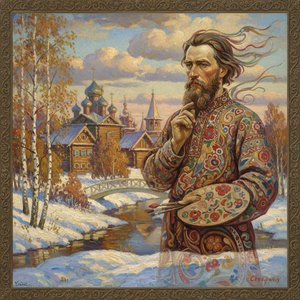
Igor Grabar: Bridging Impressionism & National Identity in Russian Modern Art
Explore the life & art of Igor Grabar, a pivotal figure in Russian Modernism. Discover his Impressionist landscapes, crucial role in art history, and legacy at the Tretyakov Gallery. A deep dive into a master painter & scholar.

Ivan Bilibin: A Synthesis of Folklore, Modernism & National Identity in Russian Illustration
Explore the enchanting world of Ivan Bilibin, a master Russian illustrator who synthesized folklore, Art Nouveau & national identity. Discover his iconic fairy tale illustrations and legacy with OriginalUniqueArt.
