
 실제 크기로 보기
 보내기
보내기 공유하기
공유하기
 상세 보기
상세 보기 가이드 보기

 이미지 다운로드
 유사 작품 더 보기
 X-레이
X-레이 슬라이드 쇼 보기
 통계 정보
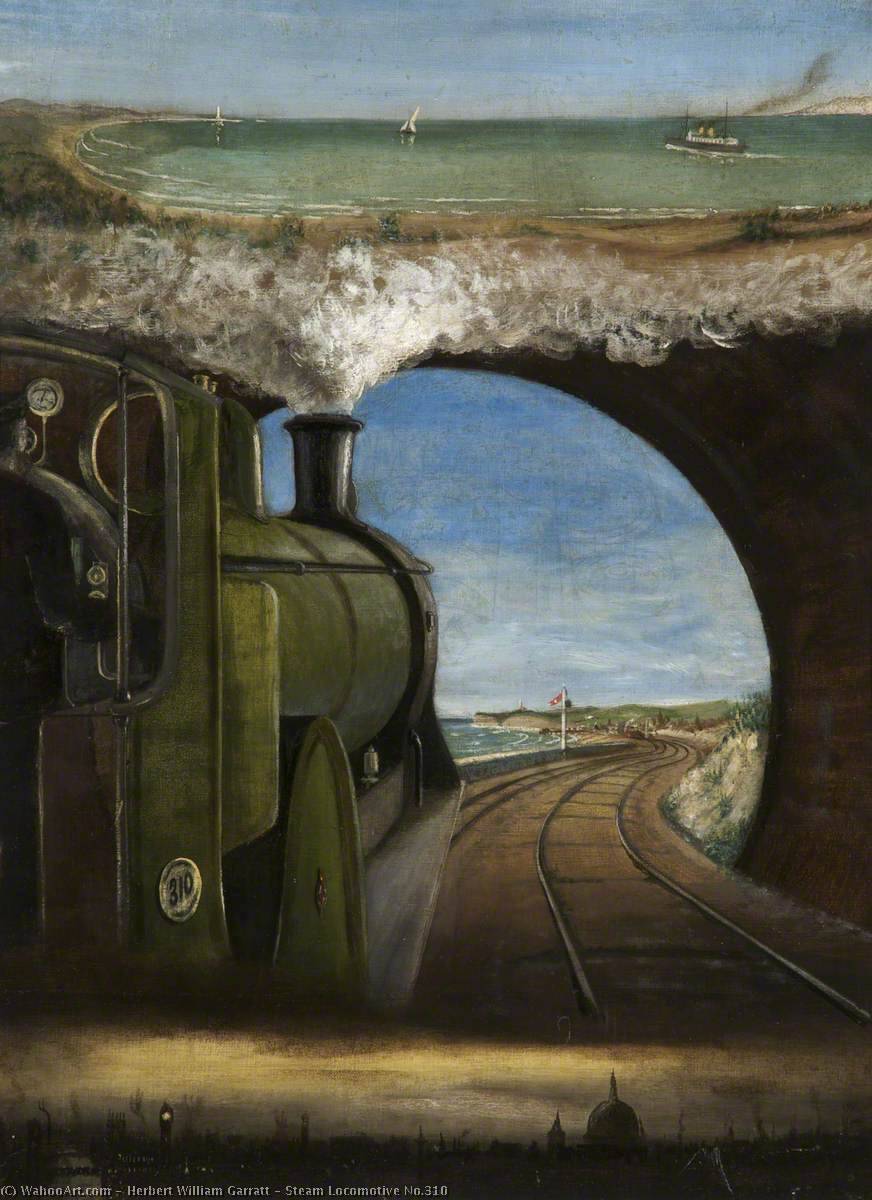
통계 정보Steam Locomotive No.310
 Contemporary Realism
 1909
1909 61.0 x 46.0 cm
 상세 보기
상세 보기
지클레 / 아트 프린트
빠른 제작과 다양한 마감 옵션을 선택할 수 있는 박물관 수준의 지클레이 및 캔버스 프린트. ( 수작업 채색 복제본 주문하기 디지털 이미지 판매 채널로 전환)




































작품의 원본 비율을 그대로 유지하는 프리셋 사이즈 중에서 선택해 보세요.

특정 프레임이나 공간에 맞춰 직접 치수를 입력하실 수 있습니다. 선택하신 사이즈가 원본 이미지의 비율과 일치하지 않을 경우, 작품을 크롭(자르기)하거나 이미지를 대칭 또는 단색 채우기로 확장하여 제작합니다. 제작 시작 전, 최종 확인을 위해 디지털 목업이 전송됩니다.
화면상의 미리보기는 실제 크롭이나 확장 상태를 반영하지 않으므로, 최종 구도는 오직 목업을 통해서만 정확하게 확인하실 수 있습니다.
맞춤 사이즈 제작도 가능하지만, 원본 비율을 유지하기 위해서는 사전 정의된 목록에서 치수를 선택하시는 것을 권장합니다.


 유리 옵션은 110cm 미만 크기에서만 선택 가능합니다.

Steam Locomotive No.310
지클레 / 아트 프린트
복제본 규격
-


총 결제 금액
$ 80
About the Artist and the Painting
Herbert William Garratt was a talented artist known for his realistic depictions of trains and other industrial subjects. His painting Steam Locomotive No.310 is a prime example of his skill, featuring a detailed representation of a steam locomotive emerging from a tunnel. The level of detail in the painting is impressive, with the artist capturing the intricate mechanisms of the train and the surrounding environment. Key Features of the Painting:- The painting measures 61 x 46 cm and is created using oil on canvas
- It is housed at the Museum of Science and Industry in the United Kingdom
- The painting features a detailed representation of a steam locomotive emerging from a tunnel
Similar Paintings and Artists
For those interested in similar paintings, Robert Delaunay's The City of Paris is another notable work that showcases the artist's use of color and light. Additionally, Oskar Kokoschka's Martha Hirsch is a portrait that demonstrates the artist's unique style and mastery of color.The Haworth Art Gallery, located in Accrington, Lancashire, England, is also worth mentioning. As stated on OriginalUniqueArt.com, the gallery holds Europe's largest collection of Tiffany glass and features a range of artworks, including paintings by notable artists.
For more information on Herbert William Garratt and his painting Steam Locomotive No.310, visit OriginalUniqueArt.com.
작가 소개
The Dual Legacy of Herbert William Garratt: Engineering Precision and Atmospheric Grace
In the grand tapestry of the late Victorian and Edwardian eras, few figures embodied the era's unique marriage of industrial progress and Romantic sensibility as profoundly as Herbert William Garratt. Born in Hackney, London, on June 8th, 1864, Garratt was a man of dual intellects, possessing both the rigorous, analytical mind of a mechanical engineer and the sensitive, observant eye of a landscape painter. His life was a remarkable journey that traversed the soot-stained workshops of locomotive innovation and the salt-sprayed vistas of the British coastline, creating a legacy that remains as structurally sound as his famous engines and as emotionally resonant as his seascapes.
Garratt’s early years were defined by a disciplined pursuit of technical mastery. Following his education at St Mary Magdalene Grammar School, he entered King's College London, where he earned a Bachelor of Science in Mechanical Engineering in 1886. This academic rigor provided the scaffolding for a career that would change the face of global transport. Beginning as an apprentice at the Bow Locomotive Works under the mentorship of John Carter Park, Garratt immersed himself in the intricate mechanics of steam power. His subsequent tenure at Doxford’s marine engineering works further expanded his expertise into the realms of shipbuilding and naval architecture, instilling in him a profound respect for the interplay between massive structural forms and the fluid environments they inhabit.
The Triumph of Innovation: The Garratt Locomotive
The most enduring monument to Garratt's engineering genius is undoubtedly the Garratt locomotive. In collaboration with Samuel Jackson at Beyer Peacock & Company, he pioneered a revolutionary articulated design that solved one of the greatest challenges of the age: navigating difficult, winding terrain with heavy loads. By utilizing articulated bogies, the Garratt system allowed for a larger boiler and more efficient weight distribution, enabling locomotives to conquer steep gradients and sharp curves that had previously stymied rigid-framed engines. This invention was not merely a technical feat; it was a global phenomenon that transformed railway operations across Europe, Africa, and beyond, marking him as a titan of industrial design.
Yet, even as his name became synonymous with the rhythmic pulse of steam and steel, Garratt’s spirit sought refuge in the ephemeral beauty of the natural world. His artistic development was deeply influenced by this very duality. The same meticulous attention to detail required for drafting complex valve gears found expression in his oil paintings. He possessed a rare ability to translate the heavy, tactile reality of industrial machinery—as seen in his evocative work Steam Locomotive No.310—into something that felt alive and breathing, capturing the very essence of power emerging from the darkness of a tunnel.
Atmospheric Visions: The Art of the Sea and Sky
As his engineering career reached its zenith, Garratt’s artistic focus drifted toward the dramatic and the atmospheric. He became particularly enamored with coastal landscapes, finding profound inspiration in the unpredictable moods of the British seaside. His canvases often centered on the struggle between elemental forces, most notably in works such as Ship in a Stormy Sea. In these paintings, one can observe a masterful command of light and texture; he utilized the medium of oil to recreate the churning white foam of breaking waves, the heavy, moisture-laden air of a gathering storm, and the haunting, diffused light that characterizes the maritime horizon.
There is a poetic symmetry in his life's work: while his engineering achievements sought to master and direct physical force through structure, his paintings sought to surrender to the uncontrollable majesty of nature. His landscapes are not merely depictions of scenery but are studies in atmosphere—capturing the fleeting moments where light pierces through cloud cover or where the sea meets a darkening sky. This ability to imbue a scene with a sense of movement and impending drama ensured that his artistic output was as much about feeling as it was about sight.
A Lasting Impression on History and Art
Herbert William Garratt passed away on September 25th, 1913, at the age of forty-nine, leaving behind a world significantly altered by his intellect. His historical significance is twofold: he provided the mechanical blueprint for modern articulated transport and offered a poignant visual record of the Victorian landscape's atmospheric beauty. To study Garratt is to witness the harmonious coexistence of two seemingly disparate worlds:
- The Industrial Revolution: Represented through his groundbreaking locomotive designs that facilitated global connectivity.
- Romanticism: Expressed through his evocative seascapes that celebrated the sublime power of the natural elements.
Today, his legacy survives in the museums of science and art alike. Whether one is admiring the structural brilliance of a steam engine or contemplating the turbulent waters of his maritime oils, Garratt’s work continues to command respect, reminding us that true genius often lies in the ability to find beauty in both the machine and the mist.

작가 정보 요약
- Artistic Movement Or Style: Romantic Landscape
- Artists Or Movements Influenced By This Artist: ['Beyer Peacock']
- Artists Who Influenced This Artist: ['Samuel Jackson']
- Date Of Birth: 8 June 1864
- Date Of Death: 25 September 1913
- Full Name: Herbert William Garratt
- Nationality: British
- Notable Artworks: ['Ship in a Stormy Sea']
- Place Of Birth: London, England
관련 기사

The Gritty Muse: Industrial Vibe as Defining Aesthetic in Modern Artwork
Explore the captivating world of industrial aesthetics in modern art. Discover key movements, influential artists & collecting insights at OriginalUniqueArt.com – your source for museum-quality reproductions and expert art guidance.

William Herbert Allen: Capturing Atmospheric Light & the Essence of American Impressionism
Explore the evocative landscapes of William Herbert Allen, a master of American Impressionism. Discover his unique brushwork, atmospheric techniques & legacy through OriginalUniqueArt's curated collection.
Industrial Revolution on Canvas: 10 Artworks That Define a Modern Aesthetic
Explore 10 iconic artworks capturing the Industrial Revolution’s grit & beauty. From Monet to Manet, discover realism, impressionism & powerful scenes of urban life. Find museum-quality reproductions for your home at OriginalUniqueArt.com.

Precision of Vision: Charles Demuth & the Modernist Reframing of American Industry
Explore the groundbreaking art of Charles Demuth & the Precisionism movement. Discover iconic paintings like 'The Figure Five in Gold,' his unique style, and lasting impact on American Modernism. Learn more at OriginalUniqueArt.

Capturing the Steam & Steel: Impressionist Visions of the Industrial Age
Explore the breathtaking intersection of industry and art. Discover how Impressionist masters captured the ethereal beauty of steam, steel, and light during the Industrial Age through evocative oil paintings and timeless techniques.