Contemporary Realism · 1957
Falling Warrior (헨리 무어, 1957)
헨리 무어 (1898–1986) 작가의 Falling Warrior 1957년에 제작되었습니다. Contemporary Realism 운동에 속합니다. Bronze(으)로 제작되었습니다. Liverpool, United Kingdom에 위치한 National Museums Liverpool에 소장되어 있습니다. 크기는 48 × 147 cm입니다.
- 1957
- Bronze
- 48 × 147 cm
- National Museums Liverpool

 수작업 유화 작품
 공유하기
 공유하기
 학습용 요약본


 다운로드
 유사 작품 더 보기
 슬라이드 쇼 보기
 질의응답

 통계 정보
Falling Warrior 요약
- 제목
- Falling Warrior
- 작가
- 헨리 무어 (1898–1986)
- 작가 출생지
- 캐슬퍼드, 영국
- 제작 연도
- 1957
- 매체
- Bronze
- 크기
- 48 × 147 cm
- 전시 장소
- National Museums Liverpool, Liverpool, United Kingdom
- 제작 시기
- Modern
- 주제
- bronze sculpture, female figure, reclining pose, minimalism, organic form, tranquility
Falling Warrior은(는) 무엇을 묘사하고 있나요?
A Symphony of Bronze and Bone: The Essence of Falling Warrior
In the quiet halls of Tate Britain, there exists a moment of profound stillness captured in bronze—a masterpiece that breathes with the weight of history and the lightness of spirit. Henry Moore’s “Falling Warrior,” created between 1956 and 1957, is far more than a mere sculpture; it is a meditation on the very nature of existence. As one approaches this monumental work, the eye is immediately drawn to the fluid, undulating lines that define the female form. The figure lies horizontally, her body a landscape of soft curves and deliberate voids, evoking a sense of both immense strength and heartbreaking vulnerability. It is a piece that does not merely occupy space but commands it, inviting the viewer into a silent dialogue about resilience in the face of inevitable decline.
The brilliance of Moore’s technique lies in his ability to marry the tactile reality of metal with the ethereal quality of movement. Through a masterful process of modeling clay and subsequent bronze casting, Moore achieved a surface texture that feels alive. One can trace the subtle depressions and ridges that mimic the contours of flesh and bone, creating a rhythmic vitality that suggests the figure is caught in a single, breathless moment of transition. His pioneering use of negative space—the intentional piercing of the form—allows light to pass through the sculpture, integrating the surrounding environment into the artwork itself. This interplay of solid mass and hollow void creates a dynamic tension, making the bronze appear deceptively supple, as if the warrior might stir at any moment.
Modernism Rooted in the Earth
To understand the soul of “Falling Warrior,” one must look to the rugged landscapes of Yorkshire, where Henry Moore first learned to see the world. The rolling hills and weathered stones of his youth are echoed in the organic abstractions of this piece. While the sculpture sits firmly within the mid-century movements of Abstract Expressionism and Surrealism, it avoids the coldness often associated with pure abstraction. Instead, Moore utilizes a semi-abstract language to explore deep psychological states. The pose—a female figure with an arm outstretched in what could be interpreted as either defiance or surrender—serves as a universal symbol for the human condition. It captures the duality of our existence: the struggle to remain upright and the eventual, graceful acceptance of our own mortality.
For the discerning collector or interior designer, “Falling Warrior” represents an unparalleled opportunity to introduce a sense of timelessness and intellectual depth into a space. A high-quality reproduction of this work brings with it the prestige of British Modernism and the calming influence of organic form. Whether placed in a sunlit gallery, a sophisticated study, or as a focal point in a contemporary living space, the sculpture’s presence is transformative. It offers more than decoration; it provides a window into a profound aesthetic experience, where the boundaries between the human body and the natural world dissolve into a single, hauntingly beautiful expression of life.
Falling Warrior은(는) 어느 미술관에 소장되어 있나요?
National Museums Liverpool
Liverpool, United Kingdom
시간과 캔버스에 새겨진 유산: 내셔널 뮤지엄 리버풀을 만나다 활기 넘치는 도시 리버풀의 심장부에 자리 잡은 내셔널 뮤지엄 리버풀(National Museums Liverpool)은 단순한 유물 보관소를 넘어선, 머지사이드 지역의 진화를 증언하고 수천 년에 걸친 인간 창조성의 깊이를 기리는 살아있는 연대기입니다. 런던 문화권의 주변부에 머무르는 중앙 집중식 박물관과는 달리 NML은 북서부 지역의 강인한 정신에 뿌리를 두고 모든 이에게 접근성을 약속하며 독특한 지역적 정체성을 꽃피웁니다. 1851년 한 귀족의 자연사 열정에서 시작된 더비 뮤지엄을 기원으로, 빠르게 여덟 개의 기관으로 확장되어 각 기관은 인간 경험과 문화 발전에 대한 고유한 관점을 제공합니다.


Falling Warrior의 고해상도 이미지

Protected by copyright: these files are for personal reference, not a licence to republish.
헨리 무어, Falling Warrior (1957), National Museums Liverpool.
Falling Warrior에 관한 질문과 답변
"Falling Warrior"의 원작은 어느 박물관에 소장되어 있나요?
헨리 무어의 "Falling Warrior"의 원작은 National Museums Liverpool, Liverpool, United Kingdom에 소장되어 있습니다. 복제화를 통해 이 작품을 집에서도 감상하실 수 있습니다.
헨리 무어의 "Falling Warrior"은(는) 언제 제작되었나요?
헨리 무어의 "Falling Warrior"은(는) 1957년에 제작되었습니다.
헨리 무어의 "Falling Warrior"에는 어떤 기법이 사용되었나요?
헨리 무어은(는) "Falling Warrior" 작품에 Bronze 기법을 사용했습니다. 이 기법은 원작의 재료적 특성을 잘 보여줍니다.
원작 헨리 무어의 "Falling Warrior"의 크기는 어떻게 되나요?
원작 헨리 무어의 "Falling Warrior"의 크기는 147 x 48 cm입니다.
헨리 무어의 "Falling Warrior"에는 어떤 모습이 담겨 있나요?
"Falling Warrior"에 담긴 소재는 bronze sculpture, female figure, reclining pose, minimalism, organic form, tranquility, monumental art입니다.
헨리 무어의 "Falling Warrior"의 이미지를 자유롭게 복제할 수 있나요?
헨리 무어의 "Falling Warrior"의 저작권 정보: 해당 작품은 저작권 보호 대상입니다 상태입니다. 이는 이미지 복제 가능 여부를 결정하는 기준이 됩니다.
"Falling Warrior"의 작가는 누구인가요?
"Falling Warrior"은(는) 헨리 무어의 작품입니다. 이 페이지의 정보는 헨리 무어의 원작에 대해 설명합니다.
헨리 무어의 "Falling Warrior"은(는) 어떤 미술 사조에 속하나요?
헨리 무어의 "Falling Warrior"과(와) 관련된 미술 사조는 Contemporary Realism입니다. 이러한 분류를 통해 해당 작품을 관련 작가 및 예술 작품들과 함께 파악할 수 있습니다.
Falling Warrior은(는) 헨리 무어의 예술적 여정 중 어느 시기의 작품인가요?
"Falling Warrior"은(는) 헨리 무어의 Mature Period를 잘 보여주는 작품입니다.
아티스트 헨리 무어 소개

1898–1986, 영국
헨리 무어
형태로 빚어낸 삶: 헨리 무어의 세계 1898년 영국 요크셔의 광산 마을 캐슬퍼드에서 태어난 헨리 스펜서 무어는 20세기 영국을 대표하는 가장 중요하고 국제적인 조각가로 떠올랐습니다. 미천한 시작에서 세계적인 명성에 이르기까지 그의 여정은 예술적 탐구에 대한 흔들림 없는 헌신, 그리고 인간의 형상과 자연 세계 사이의 깊은 유대감을 보여주는 증거입니다. 독학으로 배움을 이어간 열정적인 분이었던 무어의 아버지는 교육의 힘을 믿으며 아들이 광부의 삶 대신 정규 교육을 받을 수 있도록 이끌었습니다. 어린 시절부터 무어는 점토를 빚고 나무를 깎는 데 타고난 재능을 보였으며, 이는 훗날 그의 예술적 행보를 예견하는 듯했습니다.
헨리 무어의 다른 작품들
 Reclining Figure
 Sculptural Objects (Cramer 47)
 Sheep 1
 A Miner at Work1942
Falling Warrior 관련 에세이
 Romantic Realism's Finest: 10 Masterpieces for Your Home | OriginalUniqueArtExplore 10 defining masterpieces of Romantic Realism! Discover Courbet, Millet & Daumier's powerful paintings—capturing emotion and social …
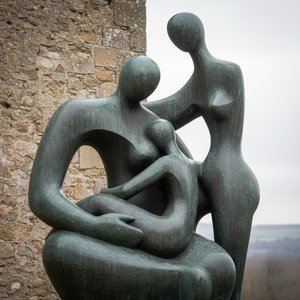 Henry Moore: Sculpting Modernity – Form, Emotion & the Human ConditionExplore the revolutionary sculptures of Henry Moore – abstract forms, reclining figures & powerful expressions of the human condition. Disc…
 Cubist Expressionism's 10 Defining Masterpieces | Art for Your HomeExplore 10 defining Cubist Expressionism masterpieces by Picasso, Braque & more. Discover the stories behind these bold, geometric painting…