

 미리보기
미리보기
 프린트 구매
 공유하기
공유하기 공유하기
공유하기
 상세 정보
상세 정보

 다운로드
다운로드
 유사 작품
유사 작품 X-레이
X-레이 슬라이드 쇼
Nono and a guitar
 Oil On Canvas
- WallArt
- Post-Impressionism
 1910
1910- 19th Century
 65.0 x 81.0 cm
 더 보기
더 보기




P118B $10

P118H $10

P118W $10

P438Z $10

P508JH $12

P508YH $12

P805H $10

P805Z $10

P919BZ $10

P919G $10

P919XJ $10

P959ZH $10

P968JZ $12

W106C $8

W218G $10

W218JH $8

W218Y $10

W307PJ $10

W316G $10

W316PJ $8

W316Y $10

W398PJ $8

W4111J $10

W500HY $15

W500JH $15

W692G $12

W849H $8

W940BG $15

W953PJ $8




작품의 원본 비율을 유지하는 미리 설정된 크기 중에서 선택하세요.

특정 프레임이나 공간에 맞도록 직접 크기를 입력할 수 있습니다. 선택하신 크기가 원본 이미지의 비율과 일치하지 않는 경우, 작품을 자르거나 추가적인 손으로 그린 요소를 사용하여 그림을 확장합니다. 제작 시작 전 승인을 위해 디지털 목업을 보내드립니다.
화면 미리 보기는 실제 자르기 또는 확장을 반영하지 않습니다. 최종 구성은 목업을 통해서만 정확하게 확인하실 수 있습니다.
맞춤 크기 제작도 가능하지만, 원본 비율을 유지하기 위해 사전 정의된 목록에서 크기를 선택하시는 것을 권장합니다.
주문 후 OriginalUniqueArt.com 팀에서 상세 안내를 위해 고객님께 이메일을 보내드리며, 미리보기 시안을 제공해 드립니다.


 유리 옵션은 110cm 미만 크기에서만 선택 가능합니다.

Nono and a guitar
재현 기법
복제본 크기
-


최종 결제 금액
$ 300
A Moment Suspended in Time: Exploring Nono and a Guitar
To gaze upon Henri Lebasque's "Nono and a Guitar" is to step through the soft veil of memory and into an afternoon steeped in quiet artistry. This 1910 oil on canvas does more than merely depict a scene; it captures the very essence of leisure, intimacy, and the gentle passage of time. The composition centers around a woman seated upon a richly colored, old-fashioned couch, her focus entirely absorbed by the melody emanating from the guitar cradled in her lap. Yet, the narrative depth extends beyond this central figure. The presence of other individuals, subtly placed near the edges of the frame—one in the upper left and another in the lower right—suggests a shared moment, an audience to this private musical communion.
The Warmth of Post-Impressionist Domesticity
Lebasque, a master of capturing the quotidian beauty of Parisian life, situates us firmly within the tradition of late 19th and early 20th-century French painting. His style, while echoing the detailed observation found in artists like Paul Cezanne, possesses its own unique warmth—a palpable sense of domestic tranquility. The technique employed is masterful; Lebasque utilizes soft lighting and a palette dominated by warm hues that seem to emanate from within the canvas itself. This careful handling of light imbues the entire scene with an almost golden serenity. It speaks to a time when life, even in its most mundane moments, was considered worthy subject matter for high art.
Symbolism of Music and Connection
The guitar itself functions as the emotional anchor of the piece. Music, in art, is rarely just sound; it is emotion made visible. Here, the instrument symbolizes storytelling, connection, and perhaps a yearning for something beautiful to articulate unspoken feelings. The woman holding her cup while playing suggests a contemplative state—a moment where thought and artistry merge seamlessly. Furthermore, the inclusion of multiple figures transforms what could be a simple portrait into a tableau vivant, suggesting that even in moments of personal absorption, we are always observed, always connected to the lives around us.
Bringing History Home: Reproducing Artistry
For those who wish to invite this palpable sense of peace and historical elegance into their own living spaces, acquiring a high-quality reproduction of "Nono and a Guitar" is an act of curatorial devotion. These reproductions are crafted with meticulous care, aiming not just for visual likeness but for the very spirit that Lebasque imbued into his oils. Whether adorning a formal drawing-room or lending character to a cozy nook, owning this piece allows one to participate in the enduring conversation between art history and contemporary life. It is an investment in atmosphere, a tangible echo of Parisian grace.
작가 약력
A Painter of Joy and Light: The Life and Art of Henri Lebasque
Henri Lebasque, a name perhaps less immediately recognized than some of his Post-Impressionist contemporaries, nevertheless occupies a significant place in the artistic landscape of early 20th-century France. Born in Champigné, Maine-et-Loire, in 1865, Lebasque’s journey toward becoming a celebrated painter was one marked by diligent study, evolving influences, and an unwavering commitment to capturing beauty in everyday life. His early education at the École régionale des beaux-arts d'Angers provided a foundational grounding, but it was his move to Paris in 1886 that truly ignited his artistic development. There, under the tutelage of Léon Bonnat and through assisting Ferdinand Humbert with decorative murals at the Panthéon, he honed his technical skills while immersing himself in the vibrant Parisian art scene. This period proved crucial, bringing him into contact with pivotal figures like Camille Pissarro and Auguste Renoir, whose emphasis on light and color would profoundly shape his aesthetic sensibilities.Embracing Intimacy: Influences and Artistic Development
Lebasque’s artistic trajectory wasn't solely defined by the established masters; it was equally influenced by a younger generation of artists pushing the boundaries of painting. His association with Les Nabis, particularly Édouard Vuillard and Pierre Bonnard, proved transformative. These Intimist painters prioritized domestic scenes and intimate moments, fostering in Lebasque a similar inclination toward capturing the quiet poetry of everyday existence. The Nabis’ emphasis on flattened forms, decorative patterns, and subtle color harmonies resonated deeply with his own artistic inclinations. Simultaneously, exposure to the theories of Georges Seurat and Paul Signac introduced him to the principles of Chromoluminarism – the scientific application of complementary colors to create luminous effects. This knowledge became a cornerstone of his technique, allowing him to imbue his canvases with an extraordinary vibrancy and sense of light. He wasn’t merely replicating what he saw; he was interpreting it through a lens of color and emotion, creating scenes that felt both familiar and dreamlike. Lebasque's artistic vision centered around portraying the beauty found in ordinary life—a deliberate departure from the grand narratives favored by earlier movements. His fascination with domestic interiors and portraits of families stemmed from a desire to capture genuine human connection and tenderness. Influenced heavily by Impressionists like Renoir and Pissarro, Lebasque adopted their technique of layering thin washes of color to achieve luminous effects – a method he perfected through meticulous observation and experimentation. He meticulously studied the interplay of light and shadow, striving to convey not just what was visible but also what lay beneath the surface—the emotions and sensations experienced by his subjects.A Palette of Serenity: Themes and Techniques
The hallmark of Lebasque's work lies in its serene atmosphere and harmonious palette. He found inspiration in the simple pleasures of life – family portraits, leisurely moments in gardens, landscapes bathed in sunlight. His paintings are not grand historical narratives or dramatic allegories; instead, they offer glimpses into intimate domesticity and the beauty of the natural world. Madame Lebasque and Her Daughters exemplifies his ability to capture a tender moment with remarkable grace and sensitivity. The figures are rendered with soft brushstrokes and bathed in warm light, creating an atmosphere of peaceful contentment. He skillfully employed complementary color pairings – blues and oranges, reds and greens – to create visual excitement while maintaining an overall sense of harmony. Works like Rest on the Banks of the Yaudet demonstrate his mastery of landscape painting, capturing the tranquility of nature with a delicate touch. Lebasque’s dedication to detail—particularly in rendering fabrics and textures—further distinguished him from many of his contemporaries. He painstakingly recreated surfaces using subtle gradations of color and brushstrokes, creating an illusion of depth that enhanced the realism of his compositions. This meticulous approach reflects Lebasque's belief that art should strive for accuracy while simultaneously conveying emotion – a balance he achieved with exceptional skill.Legacy and Recognition: A Lasting Impression
Throughout his career, Lebasque enjoyed considerable success, participating in prestigious exhibitions such as the Salon d’Automne – which he helped found alongside Henri Matisse – and the Salon des Indépendants. He even received commissions for decorative projects, including work at the Champs-Élysées theatre and on transatlantic liners. His paintings are now held in numerous prominent museum collections, including the Musée d’Orsay in Paris, the Petit Palais in Geneva, and museums in Lille and Nantes, attesting to his enduring artistic significance. While perhaps not as widely celebrated as some of his more avant-garde contemporaries, Henri Lebasque's contribution to Post-Impressionism is undeniable. He offered a unique vision – one that prioritized beauty, harmony, and the quiet joys of everyday life. His paintings continue to resonate with viewers today, offering a welcome respite from the complexities of the modern world and reminding us of the enduring power of art to uplift and inspire.
헨리 레바스케
1865 - 1937 , 프랑스
주요 정보
- Artistic Movement Or Style: 후기 인상주의
- Artists Or Movements Influenced By This Artist: ['레 나비스 그룹']
- Artists Who Influenced This Artist:
- 카밀 피사로
- 오귀스트 레노이
- Date Of Birth: 1865년 9월 25일
- Date Of Death: 1937년 8월 7일
- Full Name: Henri Lebasque
- Nationality: 프랑스인
- Notable Artworks:
- 라 시가렛트
- 유자드 강변의 휴식
- Place Of Birth: 프랑스 Champigné
관련 기사 더 보기

빛과 색채를 넘어: 감각주의 인상주의와 후기인상주의, 안목 있는 수집가를 위한 심층 탐구
빛과 색채를 넘어선 감각주의 인상주의와 후기인상주의 작품 세계 심층 탐구. OriginalUniqueArt.com에서 전문가 컨설팅 및 맞춤 제작 서비스를 통해 안목 있는 수집가를 위한 최고의 미술 경험을 제공합니다.

Impressionism vs. Post-Impressionism: A Masterclass in the Revolution of Light, Color, and Emotion
Master the nuances of Impressionism vs. Post-Impressionism with our expert guide. Explore the revolutionary shift from Monet’s fleeting light to Van Gogh’s emotional depth. Discover how these iconic movements continue to inspire fine art collectors and modern interiors today.

The Enduring Legacy of Oil on Canvas: Technique, History & Aesthetic Impact
Explore the rich history & techniques of oil painting – from Renaissance masters to Impressionism. Discover pigments, layering methods, and why this timeless medium endures. Expert insights for artists & art enthusiasts.

Beyond Impressionism: How Post-Impressionism Revolutionized Modern Art through Emotion and Structure
Explore the profound evolution of art from Impressionism to Post-Impressionism. Discover how masters like Van Gogh revolutionized color and emotion, shaping modern art history through structural innovation and expressive technique.
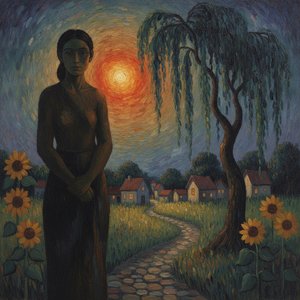
Beyond the Light: Discovering the Soul and Emotional Depth of Post-Impressionism
Embark on a cultural journey through Post-Impressionism. Discover the profound emotional depth of masters like Van Gogh and Cézanne, exploring how they moved beyond light to capture the very soul of human experience through vibrant color and symbolic form.


