

 실제 크기로 보기
 보내기
보내기 공유하기
공유하기
 상세 보기
상세 보기 가이드 보기

 이미지 다운로드
 유사 작품 더 보기
 X-레이
X-레이 슬라이드 쇼 보기
 통계 정보
통계 정보Mercurius
 Oil On Canvas
- WallArt
- Northern Mannerism
 1611
1611 214.0 x 120.0 cm
 프란스 할스 미술관
 상세 보기
상세 보기
핸드메이드 유화 복제화
작가가 직접 캔버스에 손으로 그린 유화 작품으로, 원하는 크기와 액자로 맞춤 제작해 드립니다. ( 프린트 판매로 전환 디지털 이미지 판매 채널로 전환)




P118B ₩10

P118H ₩10

P118W ₩10

P438Z ₩10

P508JH ₩12

P508YH ₩12

P805H ₩10

P805Z ₩10

P919BZ ₩10

P919G ₩10

P919XJ ₩10

P959ZH ₩10

P968JZ ₩12

W106C ₩8

W218G ₩10

W218JH ₩8

W218Y ₩10

W307PJ ₩10

W316G ₩10

W316PJ ₩8

W316Y ₩10

W398PJ ₩8

W4111J ₩10

W500HY ₩15

W500JH ₩15

W692G ₩12

W849H ₩8

W940BG ₩15

W953PJ ₩8




작품의 원본 비율을 그대로 유지하는 프리셋 사이즈 중에서 선택해 보세요.

액자나 벽면 크기에 맞춰 필요한 가로와 세로 길이를 입력해 주세요. 본 작품은 수작업으로 제작되므로, 요청하신 비율에 따라 작가가 그림의 가장자리를 조금 더 넓게 그리거나 일부를 조정하여 작업할 수 있습니다. 작업 시작 전, 최종 확인을 위해 디지털 목업 이미지를 보내드립니다. 이 페이지에 표시된 이미지는 실제 결과물과 다를 수 있으며, 오직 목업 이미지만이 정확한 결과물을 보여줍니다.
주문 완료 후 OriginalUniqueArt.com 팀에서 상세 안내를 위해 고객님께 이메일을 보내드리며, 미리보기 시안을 함께 제공해 드립니다.


 유리 옵션은 110cm 미만 크기에서만 선택 가능합니다.

Mercurius
재현 매체
복제본 규격
-


총 결제 금액
₩ 409430
The Enigmatic Trio: Mercurius by Hendrik Goltzius
For centuries, the painting “Mercurius” – alongside its companions, Minerva and Hercules – existed as an inseparable trio, a testament to the humanist ideals of knowledge, skill, and virtue. Created in 1611 by the masterful Dutch printmaker Hendrick Goltzius, this work transcends mere portraiture; it’s a carefully constructed allegory, a visual embodiment of intellectual pursuits and their practical application. The painting, now residing at the Frans Hals Museum in Haarlem, offers a captivating glimpse into the artistic and philosophical landscape of early Baroque Netherlands.
Goltzius, born in Braunschweig (modern-day Germany) around 1558, was a pivotal figure in the transition from Mannerism to Baroque art. His training under Dirck Volckertszoon Coornhert instilled in him a profound understanding of engraving technique, but it was his own innovative approach – particularly his “swelling line” – that truly set him apart. This subtle manipulation of the burin allowed him to create lines of varying thickness and density, imbuing his prints with an unprecedented sense of depth and tonal complexity. "Mercurius," therefore, is a prime example of Goltzius’s technical brilliance, showcasing his mastery of line and shadow.
A Mythological Trinity: Symbolism and Interpretation
The painting's subject matter – the figures of Mercury, Minerva, and Hercules – draws directly from classical mythology. Mercury, the swift-footed messenger god, is depicted holding a paintbrush, instantly establishing his association with the arts. His caduceus, entwined with a snake, subtly references both commerce (the serpent’s tail) and healing—a potent symbol of knowledge and its transformative power. Minerva, the goddess of wisdom and strategic warfare, stands as a pillar of intellect and authority, her helmet and shield representing reason and defense against ignorance. Finally, Hercules, the hero renowned for his strength and virtue, embodies practical skill and the triumph over adversity – a direct reflection of the humanist ideal that linked theoretical knowledge with tangible achievement.
The arrangement of these figures is deliberate and symbolic. Minerva’s upright posture and commanding presence suggest leadership and guidance, while Hercules' youthful vigor represents the application of learned principles to real-world challenges. The inclusion of the young Johan Colterman Junior, likely modeled for Hercules, underscores the painting’s connection to the educational aspirations of its commissioning family – a lineage dedicated to both intellectual pursuits and civic responsibility.
A Window into Haarlem's Artistic World
“Mercurius” was created during a period of remarkable artistic flourishing in Haarlem, a vibrant center for printmaking and painting. The Colterman family’s patronage played a crucial role in fostering this environment, attracting artists like Goltzius and contributing to the city's reputation as a hub of innovation. The painting itself reflects the prevailing humanist values of the era – an emphasis on classical learning, civic engagement, and the pursuit of virtue through both intellectual understanding and practical action.
Interestingly, the painting’s history is intertwined with its physical dimensions. Slightly smaller than the earlier Minerva and Mercury works, it suggests a deliberate shift in scale or perhaps a variation in the model's proportions. The original frame also differed slightly from later iterations, adding another layer of intrigue to this already compelling artwork.
A Legacy of Skill and Symbolism
“Mercurius” by Hendrick Goltzius is more than just a beautiful painting; it’s a profound meditation on the relationship between knowledge, skill, and virtue. Through his masterful technique and carefully considered symbolism, Goltzius created an enduring image that continues to resonate with viewers today. Its presence at the Frans Hals Museum serves as a reminder of Haarlem's rich artistic heritage and the lasting impact of this remarkable trio of figures – Mercury, Minerva, and Hercules.
질의응답
"Mercurius"은 전체적으로 밝은 편인가요, 아니면 어두운 편인가요?
헨드릭 골트지우스의 "Mercurius"의 밝기는 shadow로 기록되었으며, 휘도는 Soft Shadow입니다.
1611년에 "Mercurius"을(를) 제작할 당시 헨드릭 골트지우스의 나이는 몇 세였나요?
1611년에 "Mercurius"이(가) 제작되었을 당시, 1558년에 태어난 헨드릭 골트지우스의 나이는 53세였습니다.
"Mercurius"은(는) 저작권 보호 대상이 아닌가요?
헨드릭 골트지우스의 "Mercurius"의 저작권 정보: 해당 작품은 퍼블릭 도메인 - 저작권 보호 기간이 만료되었습니다 상태입니다. 이는 이미지 복제 가능 여부를 결정하는 기준이 됩니다.
작가 소개
초기 생애와 교육
독일 태생의 네덜란드 판화가이자 드로잉 작가, 화가인 헨드릭 골트지우스는 1558년 1월 또는 2월에 태어났습니다. 그는 초기 바로크 시대, 즉 북부 매너리즘을 이끈 네덜란드의 대표적인 판화가로, 정교한 기술과 구도의 "풍성함"으로 찬사를 받았습니다. 미술사학자 A. 하얏트 메이어에 따르면, 골트지우스는 "훌륭한 화가의 권위로 그림을 그렸던 마지막 전문 판화가였으며, 다른 이들이 모방할 수 있도록 수많은 도상을 창조해낸 마지막 예술가"였습니다. 골트지우스의 가족은 그가 3살 때 뒤스부르크로 이주하였고, 그는 아버지 밑에서 유리 채색화를 공부한 후 네덜란드의 박학다식한 학자 디르크 볼커테르스존 코른헤르트로부터 판화 기술을 전수받았습니다.예술적 경력
1577년, 골트지우스는 코른헤르트와 함께 네덜란드 공화국의 하를렘으로 이주하여 그곳에서 생애 마지막까지 활동했습니다. 그는 또한 필립 갈레의 의뢰를 받아 루크레티아 이야기를 다룬 판화 세트를 제작하기도 했습니다. 흥미로운 점은 골트지우스가 어린 시절 화재로 인해 오른손이 기형적으로 변했다는 사실인데, 이것이 오히려 뷰린(burin)을 쥐기에 매우 적합한 형태였다는 것입니다. 이러한 독특한 신체적 특징 덕분에 그는 압도적인 선의 움직임을 마스터할 수 있었고, 그의 판화는 매우 독보적인 색채를 띠게 되었습니다. 헨드릭 골트지우스는 뷰린을 조절하여 선의 굵기를 변화시킴으로써 멀리서도 명암 효과를 느낄 수 있게 하는 "팽창하는 선(swinting line)" 기법을 전례 없는 수준으로 끌어올렸습니다.기법과 스타일
골트지우스는 크로스해칭으로 만들어진 마름모꼴 공간 중앙에 점을 찍어 명암의 계조를 더욱 정교하게 다듬는 "점과 마름모(dot and lozenge)" 기법의 선구자였습니다. 그의 뷰린 조절 능력은 뒤러와 견줄 만하다고 평가받으며, 그는 바르톨로메우스 스프랑에르의 회화를 판화로 제작하여 스프랑에르와 자신의 명성을 동시에 높였습니다. 골트지우스는 42세가 되어서야 본격적으로 회화를 시작하였으며, 그의 작품 중 일부는 현재 빈에서 찾아볼 수 있습니다. 또한 그는 몇 점의 키아로스쿠로 목판화도 제작하였습니다.공공 컬렉션과 유산
보이만스 판 뵈닝언 미술관, 암스테르담 국립미술관, 그리고 메트로폴리탄 미술관을 포함한 세계 주요 판화실에는 골트지우스의 수많은 판화 작품들이 소장되어 있습니다. 그의 유산은 북부 매너리즘 판화의 거장인 자크 벨랑주와 같은 다른 예술가들의 작품 속에서도 뚜렷하게 나타납니다. 골트지우스의 판화와 회화는 오늘날까지도 예술 애호가와 학자들에게 영감을 주고 있으며, 그의 작품은 OriginalUniqueArt.com과 그의 생애를 다룬 위키백과 문서를 통해 만나볼 수 있습니다.- 골트지우스의 주요 작품에는 다음이 포함됩니다: 주피터, 미네르바, 그리고 예언자 바룩
- 그의 작품을 소장한 미술관: 로스앤젤레스 카운티 미술관, 필라델피아 미술관, 그리고 대영 박물관
- 골트지우스가 사용한 기법: "팽창하는 선" 및 "점과 마름모" 기법

헨드릭 골트지우스
1558 - 1617 , 이탈리아
작가 정보 요약
- Artistic Movement Or Style: 북부 매너리즘 및 바로크 판화
- Artists Or Movements Influenced By This Artist: ['자크 벨랑']
- Artists Who Influenced This Artist:
- 디르크 볼커츠존 코른헤르트
- 바르톨로메우스 스프랑거
- Date Of Birth: 1558년 1월 또는 2월
- Full Name: 헨드릭 골치우스
- Nationality: 네덜란드
- Notable Artworks:
- 목자들의 경배
- 아르카디아 풍경
- 세이렌의 머리
- 카쿠스를 죽이는 헤라클레스
- 데모고르곤과 신들
- 아폴로 벨베데레
- 최후의 만찬
- 프레데릭 드 브리스 (1613년 사망)
- Place Of Birth: 이탈리아, 브라운슈바이크
관련 기사

바로크의 드라마: 현대 인테리어에 풍요로움과 감동을 불어넣기
바로크 예술의 풍요로운 세계를 탐험하고, 현대 인테리어에 감동을 불어넣는 방법을 OriginalUniqueArt에서 만나보세요. 카라바조, 렘브란트 등 거장들의 작품과 키아로스쿠로 기법 활용 노하우를 공개합니다.
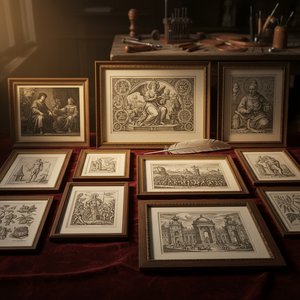
Engraving's Golden Age: 10 Masterpieces That Redefined Art | OriginalUniqueArt
Journey through art history with our Top 10 Legendary Engravings! Explore masterpieces by Dürer, Rembrandt & Goya. Discover the stories behind these iconic prints and find museum-quality reproductions for your home at OriginalUniqueArt.com.

Drama and Distortion: A Definitive Guide to the Mastery of Mannerism and Baroque Art
Explore the dramatic evolution from Mannerist distortion to Baroque grandeur. Discover how light, shadow, and emotion redefined art history through a masterclass in technical mastery and religious fervor.

Hendrick Goltzius: Master Engraver & the Flourishing of Dutch Mannerism
Explore the life & art of Hendrick Goltzius, a master engraver of Dutch Mannerism. Discover his innovative techniques, iconic engravings like 'Jahel', and lasting influence on Baroque art. Learn about collecting Goltzius today.

Engraving: A Historical Survey of Technique, Artistic Expression & Enduring Legacy
Explore the rich history of engraving with OriginalUniqueArt. Discover techniques, iconic artists like Dürer & Callot, collecting tips, and expert guidance for preserving your art investment. Learn about intaglio printing & more!