

 미리보기
미리보기
 공유하기
공유하기 공유하기
공유하기
 상세 정보
상세 정보

 다운로드
다운로드
 유사 작품
유사 작품 X-레이
X-레이 슬라이드 쇼
 통계 정보
통계 정보New York (Two Boys on Steps)


 더 보기
더 보기
지클레 / 아트 프린트
빠른 제작과 다양한 마감 옵션을 제공하는 박물관 품질의 지클레이 또는 캔버스 프린트. ( 손으로 그린 그림 구매 디지털 이미지로 전환)




P118B $10

P118H $10

P118W $10

P438Z $10

P508JH $12

P508YH $12

P805H $10

P805Z $10

P919BZ $10

P919G $10

P919XJ $10

P959ZH $10

P968JZ $12

W106C $8

W218G $10

W218JH $8

W218Y $10

W307PJ $10

W316G $10

W316PJ $8

W316Y $10

W398PJ $8

W4111J $10

W500HY $15

W500JH $15

W692G $12

W849H $8

W940BG $15

W953PJ $8




작품의 원본 비율을 유지하는 미리 설정된 크기 중에서 선택하세요.

특정 프레임이나 공간에 맞춰 직접 치수를 입력하실 수 있습니다. 선택하신 사이즈가 원본 이미지의 비율과 일치하지 않을 경우, 작품을 크롭(자르기)하거나 이미지를 대칭 또는 단색 채우기로 확장하여 제작합니다. 제작 시작 전, 최종 확인을 위해 디지털 목업이 전송됩니다.
화면상의 미리보기는 실제 크롭이나 확장 상태를 반영하지 않으므로, 최종 구도는 오직 목업을 통해서만 정확하게 확인하실 수 있습니다.
맞춤 사이즈 제작도 가능하지만, 원본 비율을 유지하기 위해서는 사전 정의된 목록에서 치수를 선택하시는 것을 권장합니다.


 유리 옵션은 110cm 미만 크기에서만 선택 가능합니다.

New York (Two Boys on Steps)
지클레 / 아트 프린트
복제본 크기
-


최종 결제 금액
$ 80
A Snapshot of Urban Childhood: Helen Levitt's "New York (Two Boys on Steps)"
Helen Levitt, a pivotal figure in the development of street photography, possessed an extraordinary ability to capture the quiet poetry of everyday life within the bustling metropolis of New York City. Her work wasn’t about grand pronouncements or sweeping narratives; instead, she meticulously documented the ephemeral moments—a child's game, a fleeting interaction, a glimpse into the rhythms of urban existence. “New York (Two Boys on Steps),” created around 1940, exemplifies this approach perfectly, offering a poignant and intimate portrait of childhood play amidst the city’s concrete landscape.
The photograph immediately draws the viewer in with its grayscale palette, evoking a timeless quality reminiscent of early documentary photography. The absence of color forces us to focus on form, texture, and composition—elements that Levitt masterfully manipulates to create a powerful visual narrative. Strong vertical lines dominate the frame, established by the imposing building and the steps themselves, while the more fluid shapes of the two young boys provide a delightful counterpoint. This interplay between structure and spontaneity is central to Levitt’s aesthetic – she sought to find harmony within apparent chaos.
The Grain of Memory: Technique and Historical Context
Levitt's choice of film photography—likely utilizing a Leica camera, known for its portability and responsiveness—contributes significantly to the photograph’s distinctive character. The grainy texture inherent in silver gelatin prints from that era isn’t merely an artifact of aging; it actively enhances the image’s authenticity and immediacy. It feels like a captured memory, imbued with the tactile quality of the photographic process itself. The slightly angled perspective adds a subtle dynamism, drawing the eye towards the boys and suggesting a sense of movement within the static frame.
To understand “New York (Two Boys on Steps),” it’s crucial to consider Levitt's broader context as an observer of post-war America. Her work frequently explored themes of urban poverty, social inequality, and the resilience of children in challenging environments. The photograph subtly reflects this – the boys are engaged in a simple game, yet their presence within the architectural grandeur of New York City hints at the complexities of their lives and the city’s broader social fabric. The image speaks to a time when childhood was often overshadowed by economic hardship and societal pressures.
Symbolism and Emotional Resonance
Beyond its technical merits, “New York (Two Boys on Steps)” resonates deeply through its symbolic layers. The boys themselves represent the innocence and vitality of youth against the backdrop of a rapidly changing city. Their playful interaction—one standing at the bottom of the steps, the other perched above—creates a dynamic visual metaphor for aspiration and connection. The stairs, acting as a vertical axis, can be interpreted as pathways to opportunity or barriers to social mobility – themes that were particularly relevant in post-war New York.
Furthermore, the photograph’s quiet intimacy invites viewers to contemplate the fleeting nature of childhood moments and the enduring power of simple pleasures. Levitt doesn't offer a grand statement; instead, she presents a small, perfectly framed scene that evokes a sense of nostalgia and reminds us to appreciate the beauty found in everyday life. The image is not just a photograph; it’s a captured feeling—a testament to Levitt’s remarkable ability to translate emotion into visual form.
A Legacy of Observation: Helen Levitt's Enduring Influence
Helen Levitt’s work continues to inspire photographers and artists today. Her commitment to capturing authentic, unscripted moments within the urban landscape established a new standard for street photography, emphasizing empathy, observation, and a deep understanding of human behavior. Her legacy lies not in grand pronouncements but in her quiet, perceptive gaze—a reminder that even the most ordinary scenes can hold profound meaning.
작가 약력
A Quiet Observer of the Urban Stage
Helen Levitt, a name perhaps less instantly recognizable than some of her photographic contemporaries, nevertheless occupies a pivotal position in the history of 20th-century photography. Born in Brooklyn in 1913 and passing away in 2009 at the age of 95, she dedicated nearly seven decades to documenting the vibrant, often overlooked moments of everyday life in New York City. Levitt wasn’t interested in grand narratives or sweeping statements; her vision was focused on the ephemeral poetry found within the ordinary—children playing stickball, chalk drawings adorning sidewalks, fleeting interactions between strangers. She possessed a remarkable ability to blend into the urban landscape, becoming an almost invisible observer who captured scenes with a disarming intimacy and spontaneity. Her work wasn’t about *showing* life; it was about *feeling* its pulse.From Portrait Studio to Poetic Accident
Levitt's path to photography wasn’t predetermined. Dropping out of high school during the Depression, she initially found employment as a darkroom assistant at J. Florian Mitchell’s commercial portrait studio in the Bronx. This practical experience provided her with a foundational understanding of photographic technique, but it was an encounter with the work of Henri Cartier-Bresson that truly ignited her artistic passion. Seeing his photographs at the Julien Levy Gallery proved transformative; she realized photography could be more than just documentation—it could be art. She acquired a 35mm Leica, mirroring Cartier-Bresson’s favored tool, and began to explore the streets of New York with a newfound purpose. Simultaneously, her involvement with the Photo League exposed her to a community of socially conscious photographers, but Levitt ultimately forged her own distinct path, one less concerned with overt social commentary and more attuned to the aesthetic qualities of urban life. She also developed a close working relationship with Walker Evans, who recognized her unique talent early on, even collaborating with her on subway photography in 1938-39. He famously stated that among his contemporaries, only Cartier-Bresson and Levitt possessed truly original voices.The Chalk Drawings and the Children of the Streets
In the late 1930s, while teaching art classes to children in New York City, Levitt became captivated by the ephemeral chalk drawings that blossomed on sidewalks throughout the city’s neighborhoods. These transient works of art—hopscotch grids, games, messages—became a recurring motif in her work. She meticulously documented these creations and the children who brought them to life, capturing their imaginative play and the fleeting nature of childhood itself. This project culminated in *In the Street: Chalk Drawings and Messages, New York City 1938–1948*, published in 1987, a book that cemented her reputation as a master of street photography. Her approach was characterized by a remarkable sensitivity to her subjects; she rarely intervened or directed them, preferring instead to capture authentic moments as they unfolded. This resulted in images that feel remarkably unposed and natural, offering a glimpse into the lives of ordinary people without judgment or sentimentality. She wasn’t simply photographing *at* people, but rather *with* them, creating a sense of shared experience.Color, Loss, and Enduring Legacy
While Levitt is best known for her black-and-white photographs, she also embraced color photography in the late 1950s, receiving Guggenheim Fellowships to explore its possibilities. Sadly, much of this early color work was stolen during a burglary in 1970, a devastating loss that set back the recognition of this aspect of her artistry. It wasn’t until the publication of *Slide Show: The Color Photographs of Helen Levitt* in 2005 that these vibrant images finally received widespread attention. They revealed a different facet of her vision—a heightened sense of color and light, capturing the energy and dynamism of New York City with renewed intensity. Despite facing personal challenges – including Meniere’s syndrome and a bout of pneumonia – Levitt remained dedicated to her craft throughout her life. She was a fiercely independent spirit who shunned publicity and preferred to let her work speak for itself. Her influence on subsequent generations of photographers is undeniable, inspiring countless artists to look beyond the iconic landmarks and grand narratives and find beauty in the everyday moments that often go unnoticed. Helen Levitt’s legacy lies not just in the photographs she created, but in the way she taught us to see—to appreciate the poetry hidden within the ordinary, and to recognize the humanity in every face and every street corner.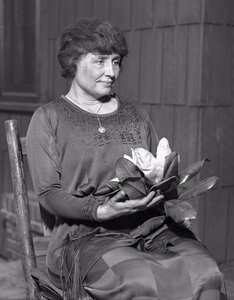
Helen Levitt
1913 - 2009 , United States of America
주요 정보
- Artistic Movement Or Style: Street photography
- Artists Who Influenced This Artist:
- Henri Cartier-Bresson
- Walker Evans
- Date Of Birth: 1913
- Date Of Death: 2009
- Full Name: Helen Levitt
- Nationality: American
- Notable Artworks:
- Mexico City (Boys in School Yard)
- New York City
- New York
- Place Of Birth: Brooklyn, USA
관련 기사 더 보기

Witnessing History Through Lens & Light: Documentary Photography's Enduring Legacy
Explore the powerful history of documentary photography – from its origins to contemporary masters like Gordon Parks & W. Eugene Smith. Discover how this art form shapes our understanding of society and witness pivotal moments in time.

Pictorialism: A Search for Artistic Photography's Soul – Aesthetics, Techniques & Legacy
Explore the captivating world of Pictorialism – a pivotal movement that transformed photography into fine art. Discover key artists like Stieglitz & Käsebier, techniques, and collecting tips from experts.
Berenice Abbott: Documenting a Changing America Through Photographic Vision
Explore the groundbreaking work of Berenice Abbott, a pioneer of documentary photography. Discover her iconic images of New York City, portraits, and scientific studies. Learn about her unique style & lasting legacy at OriginalUniqueArt.

Monochrome Visions: Exploring the Aesthetic & Historical Significance of Black & White Photography
Explore the rich history & artistic power of black and white photography. From early techniques to iconic masters like Ansel Adams, discover why monochrome continues to captivate art lovers today. Expert insights for collectors.

Beyond the Lens: Photography's Enduring Influence on Modern & Contemporary Art
Explore photography's pivotal role in shaping modern & contemporary art. Discover key movements, influential artists like Stieglitz, and expert collecting advice from OriginalUniqueArt.