 실제 크기로 보기
 보내기
보내기 공유하기
공유하기
 상세 보기
상세 보기 가이드 보기

 이미지 다운로드
 유사 작품 더 보기
 X-레이
X-레이 슬라이드 쇼 보기
 Q&A
Q&A 통계 정보
통계 정보Night-Shining White


 상세 보기
상세 보기
이 페이지에 표시된 작품은 저작권법의 보호를 받으며, 이에 따라 동일한 복제품을 제작하거나 판매하는 것은 법으로 금지되어 있습니다. 이러한 권리 보호는 다음과 같은 국제 협약에 따라 시행됩니다. 베른 협약 또한 다음에서 명시하는 법률을 포함한 국내법에 의해 보호됩니다. 미국 저작권법 제17조.
이 방식은 저작권 보호를 받는 예술 작품을 복제하거나 그대로 재현하는 것이 아니기에 저작권 규정을 완벽히 준수합니다. 대신, 이는 창의적인 재해석의 과정을 거칩니다. 즉, 원작에서 영감을 받되 원작과 동일하지 않은 새로운 회화 작품을 의미합니다.
지클레 / 아트 프린트
빠른 제작과 다양한 마감 옵션을 선택할 수 있는 박물관 수준의 지클레이 및 캔버스 프린트. ( 수작업 채색 복제본 주문하기 디지털 이미지 판매 채널로 전환)




P118B ₩10

P118H ₩10

P118W ₩10

P438Z ₩10

P508JH ₩12

P508YH ₩12

P805H ₩10

P805Z ₩10

P919BZ ₩10

P919G ₩10

P919XJ ₩10

P959ZH ₩10

P968JZ ₩12

W106C ₩8

W218G ₩10

W218JH ₩8

W218Y ₩10

W307PJ ₩10

W316G ₩10

W316PJ ₩8

W316Y ₩10

W398PJ ₩8

W4111J ₩10

W500HY ₩15

W500JH ₩15

W692G ₩12

W849H ₩8

W940BG ₩15

W953PJ ₩8




작품의 원본 비율을 그대로 유지하는 프리셋 사이즈 중에서 선택해 보세요.

액자나 벽면 크기에 맞춰 필요한 가로와 세로 길이를 입력해 주세요. 프린트는 원본 이미지보다 크게 제작할 수 없으며 오직 자르는 것만 가능하므로, 비율이 다른 사이즈를 선택할 경우 이미지의 일부가 잘려 나갈 수 있습니다. 인쇄 작업에 들어가기 전, 최종 확인을 위해 디지털 목업을 보내드립니다. 이 페이지에 표시된 이미지는 실제 잘리는 영역을 나타내지 않으며, 오직 목업을 통해서만 정확한 확인이 가능합니다.


 유리 옵션은 110cm 미만 크기에서만 선택 가능합니다.

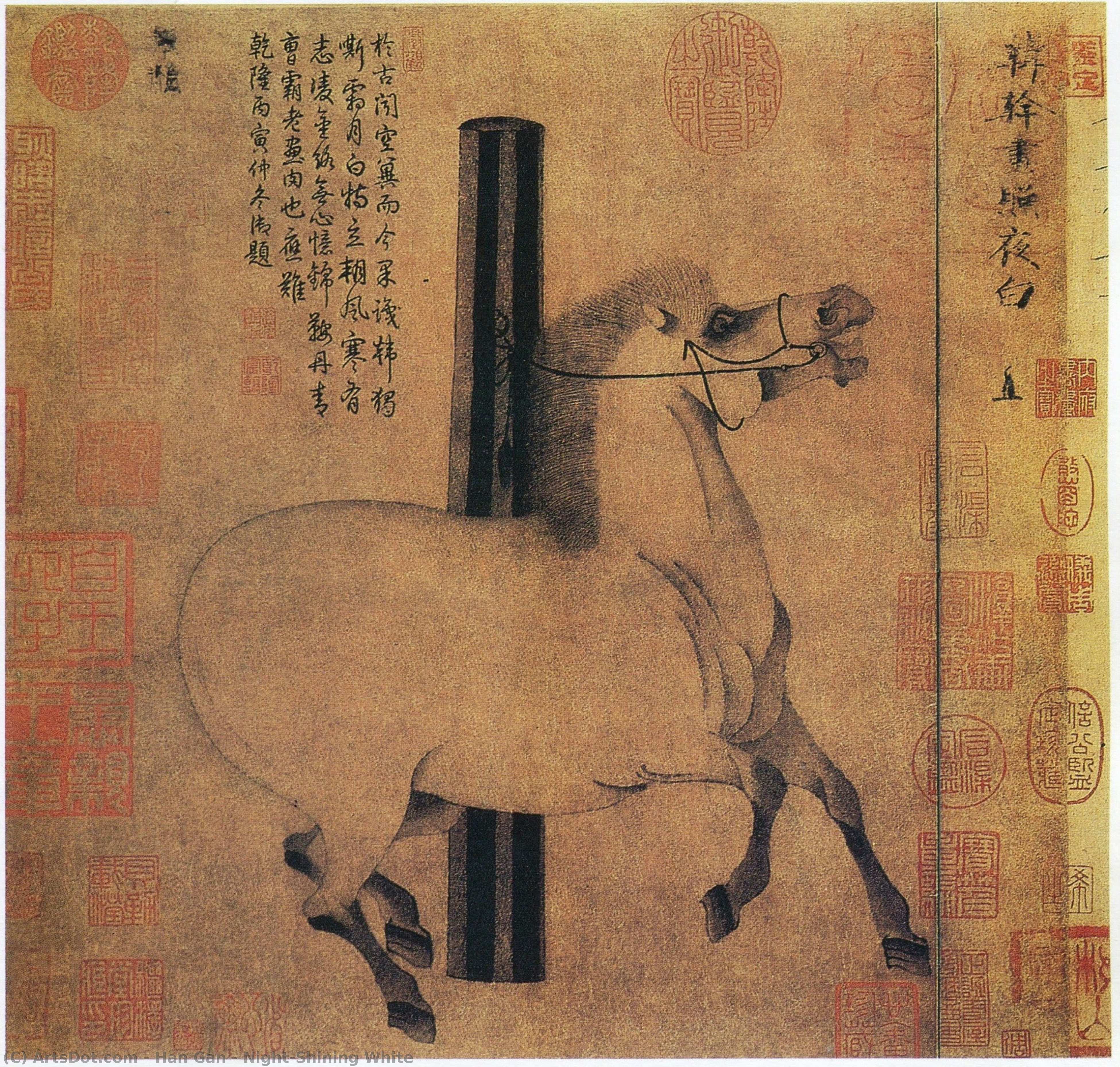
Night-Shining White
지클레 / 아트 프린트
복제본 규격
-


총 결제 금액
₩ 107587
The Majesty of the Tang Steed: Capturing Motion in Night-Shining White
To gaze upon Han Gan’s depiction of Night-Shining White is to be transported directly into the opulent, spirited heart of the Tang Dynasty. This painting is not merely a portrait of an animal; it is a vibrant testament to the cultural obsession with the horse during China's golden age. The Tang period saw horses elevated from mere modes of transport to symbols of imperial power, martial prowess, and aristocratic grace. Han Gan, whose mastery of equine anatomy became legendary, captured this very spirit—the raw, untamed energy barely contained within a painted frame.
The subject itself is breathtaking: Moonlight White, the magnificent steed belonging to Emperor Xuanzong. The artist has managed to imbue this powerful creature with an almost palpable life force. Observe how the horse is depicted in a moment of spirited struggle, whinnying and rearing against its bonds. It is a dynamic tableau where muscle meets spirit, all rendered with astonishing vitality.
A Masterclass in Brushwork and Technique
What elevates this work beyond mere representation is Han Gan’s unparalleled technical skill. The description speaks of how the painter achieved such lifelike quality with seemingly few strokes—a testament to an intuitive understanding of form. While the structure might be outlined swiftly, the subsequent polishing of the body suggests hours of meticulous refinement, building volume and sheen into the coat. The contrast between the sturdy musculature and the delicate suggestion of movement is masterful. For collectors considering a reproduction, this piece showcases the pinnacle of Chinese animal painting: an ability to convey immense weight and explosive energy using only ink and pigment.
Historical Echoes and Enduring Appreciation
The provenance surrounding Night-Shining White adds layers of historical romance to its surface. The fact that it was inscribed by the poet emperor Li Yu, and later appreciated by giants like Mi Fu, transforms the painting into a cultural artifact passed through generations of connoisseurs. It speaks volumes about the enduring appeal of Han Gan’s vision. While the photo description suggests a scene with a cart and men, the core power remains rooted in that magnificent, struggling horse—a focal point around which human activity orbits.
Symbolism and Emotional Resonance for the Modern Home
For the contemporary art lover or interior designer, this piece offers more than just decoration; it offers narrative depth. The horse, across countless cultures, symbolizes freedom, nobility, and unstoppable forward momentum. Placing a reproduction of Night-Shining White in a space is to infuse it with an aura of spirited grandeur. It suggests a connection to history's greatest epochs—a reminder that even the most powerful beings are subject to moments of beautiful, energetic struggle. The black and white tonality lends it an antique gravitas, allowing its inherent drama to speak softly yet profoundly within any curated setting.
질의응답
Han Gan의 "Night-Shining White"의 미술사적 위치는 무엇인가요?
역사적으로 "Night-Shining White"은(는) 더 넓은 의미의 Early Medieval 시대에 속하는 Tang Dynasty Art 작품입니다.
"Night-Shining White"의 미리보기를 어디에서 볼 수 있나요?
"Night-Shining White"의 미리보기 페이지에서는 주문 전 작품을 미리 확인할 수 있습니다.
Han Gan의 "Night-Shining White"의 수작업 복제화를 어디에서 구매할 수 있나요?
"Night-Shining White" 작품은 리넨 캔버스 위에 손으로 직접 그린 유화 복제화로 만나보실 수 있습니다. 주문은 수작업 유화 복제화 페이지에서 가능하며, 다양한 사이즈를 선택하실 수 있습니다.
작가 소개
A Life Dedicated to the Noble Steed: The World of Han Gan
Han Gan, a name synonymous with equine majesty in the annals of Chinese art history, flourished during the vibrant Tang Dynasty (c. 706–783). His origins remain somewhat shrouded in mystery—accounts place his birth in either Chang’an, the imperial capital now known as Xi'an; Lantian, also within Shaanxi province; or Daliang, present-day Kaifeng in Henan. This humble beginning belies the extraordinary artistic journey that would see him rise to become the most celebrated horse painter of his era. Born into a family facing hardship, young Han Gan demonstrated an innate talent for drawing, sketching figures in the sand with remarkable skill. His potential did not go unnoticed; Wang Wei, a towering figure as both poet and artist, recognized the spark within him and generously sponsored Han’s artistic education.
This patronage proved pivotal, leading to Han Gan's tutelage under Cao Ba, a respected court painter already renowned for his depictions of horses. However, it was not merely technical skill that defined Han Gan’s path. He immersed himself in the very essence of his subject matter—the imperial stables themselves. Rather than relying on established conventions or the works of predecessors, he dedicated countless hours to observing these magnificent animals firsthand, meticulously studying their anatomy, movement, and temperament. This commitment to direct observation would become the hallmark of his style, setting him apart from earlier artists and revolutionizing horse portraiture in China.
From Court Artist to Master of Equine Representation
Han Gan’s dedication earned him a position as a painter within the Tang court. While he undertook commissions for portraits and paintings with Buddhist and Daoist themes, it was his depictions of horses that truly captured the attention—and ultimately, the imagination—of the empire. He wasn't simply recording physical likeness; Han Gan sought to portray the *spirit* of the horse, its power, nobility, and untamed energy. He achieved this through a distinctive technique characterized by tautly controlled lines, precise anatomical rendering, and carefully balanced compositions. His brushwork conveyed not just form but also a sense of vitality and inner life.
The horses Han Gan painted were more than mere animals; they embodied the strength and prestige of the Tang Dynasty itself. Central Asian breeds, newly introduced to China during this period, possessed an imposing presence that captivated the imperial court. These powerful steeds were often likened to mythical creatures—celestial beings breathing fire and possessing dragon-like qualities. Han Gan masterfully captured this aura of awe and wonder in his work, elevating the horse to a symbol of imperial power and cultural significance.
Legacy and Lasting Influence
Han Gan’s reputation quickly eclipsed that of his teacher, Cao Ba. He became the definitive standard for horse painting, with subsequent generations of artists studying his techniques and emulating his style. His influence extended far beyond his own lifetime, shaping the course of Chinese equine art for centuries to come. Li Gonglin, a prominent painter of the Song Dynasty, continued the tradition of depicting horses as central subjects, building upon Han Gan’s foundation. Zhao Mengfu, during the Yuan Dynasty, also drew inspiration from his work.
Even today, Han Gan's legacy endures. His most famous painting, Night-Shining White, a portrait of Emperor Li Longji’s beloved steed, remains an iconic masterpiece, admired for its exquisite detail and evocative portrayal of equine grace. A testament to his enduring impact, a crater on Mercury bears his name—a fitting tribute to the artist who captured the spirit of these magnificent creatures and immortalized them in art. His work continues to inspire awe and admiration, reminding us of the power of observation, dedication, and the timeless beauty of the natural world.
- Key Characteristics: Precise line work, anatomical accuracy, emphasis on the horse’s spirit and nobility.
- Influences: Wang Wei (patronage), Cao Ba (teacher).
- Notable Works: Night-Shining White, Horse and Groom.
- Historical Significance: Revolutionized Chinese horse painting; established a standard for future generations of artists.

Han Gan
China
작가 정보 요약
- Artistic Movement Or Style: Tang Dynasty Painting
- Artists Or Movements Influenced By This Artist:
- Li Gonglin
- Zhao Mengfu
- Artists Who Influenced This Artist:
- Wang Wei
- Cao Ba
- Date Of Birth: c. 706
- Date Of Death: 783
- Full Name: Han Gan
- Nationality: Chinese
- Notable Artworks:
- Night-Shining White
- Horse and Groom
- Place Of Birth: Xi'an, China
관련 기사
The Noble Steed: A Historical & Artistic Exploration of Equestrian Art Across Cultures
Explore the captivating history of equestrian art with OriginalUniqueArt. Discover masterpieces from Velázquez to Van Dyck & learn about collecting these timeless works. Expert insights for discerning connoisseurs.
The Noble Steed: A Historical and Artistic Exploration of Horses in Fine Art
Explore the rich history of horses in fine art! From ancient depictions to Renaissance masterpieces & beyond, discover iconic artworks and artists. Learn about symbolism, techniques, and find museum-quality reproductions at OriginalUniqueArt.

The Equine Muse: A Historical & Artistic Exploration of Horses in Painting
Explore the captivating history of horses in painting! Discover Renaissance masterpieces, Baroque grandeur & expert insights for collecting equestrian art. Learn about symbolism, techniques & lasting value with OriginalUniqueArt.
Timeless Elegance: A Visual Journey Through the Romance of Horse Carriage Artworks
Embark on a visual journey through the romantic world of horse carriage art. Discover the mastery of equestrian oil paintings, from Impressionist textures to classical realism, and learn how to bring timeless elegance into your home with museum-quality reproductions.

The Noble Steed on Canvas: A Historical & Artistic Exploration of Horse Painting Across Cultures
Explore the rich history of horse painting! Discover masterpieces from Stubbs to Munnings & learn about symbolism, techniques & artists. Find museum-quality reproductions at OriginalUniqueArt.