 미리보기
미리보기
 공유하기
공유하기 공유하기
공유하기
 상세 정보
상세 정보 가이드 보기

 다운로드
다운로드
 유사 작품 더 보기
 X-레이
X-레이 슬라이드 쇼 보기
 질의응답
질의응답 통계 정보
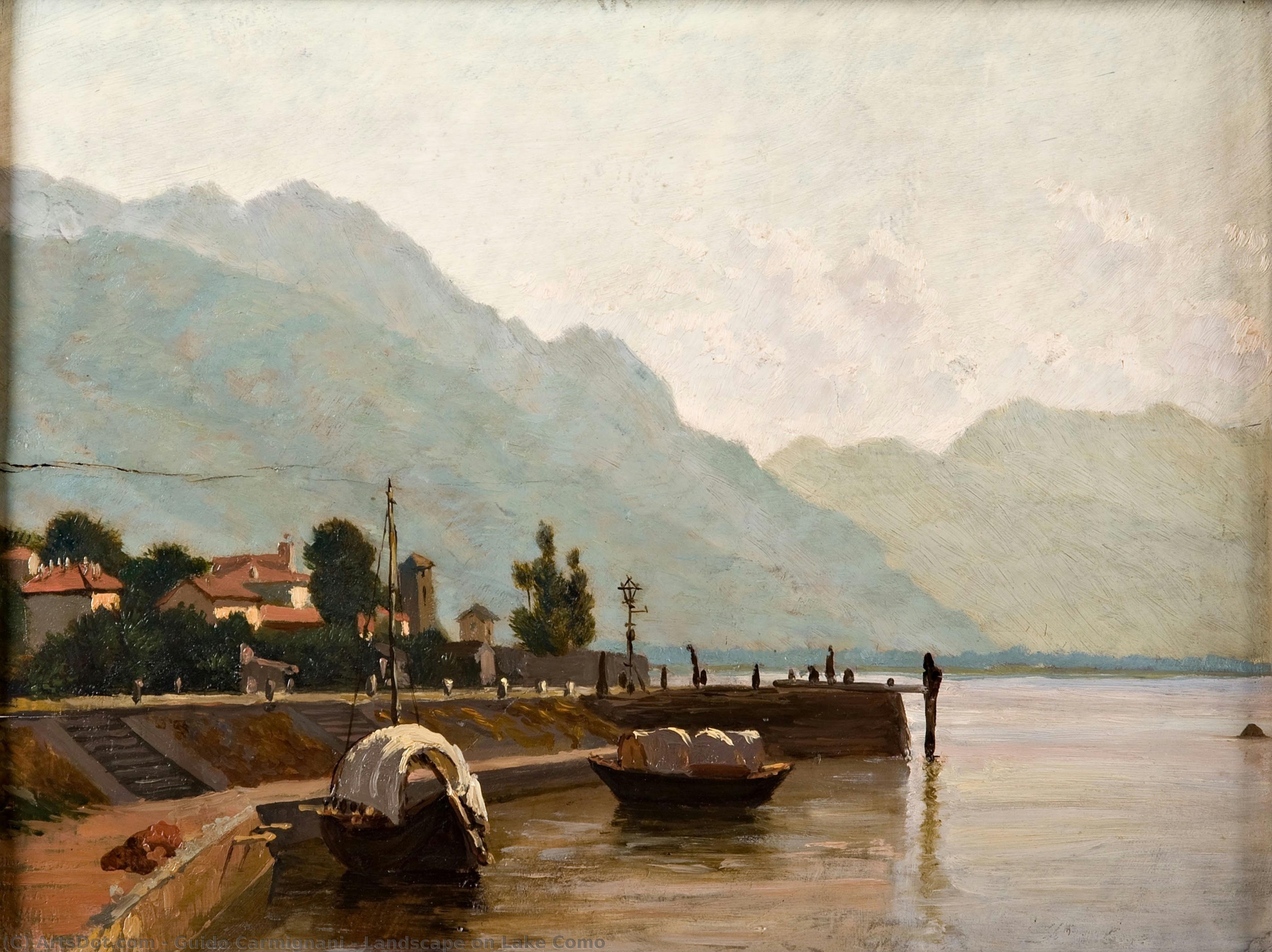
통계 정보Landscape on Lake Como


 더 보기
더 보기
지클레 / 아트 프린트
빠른 제작과 다양한 마감 옵션을 제공하는 박물관 수준의 지클레이 및 캔버스 프린트. ( 수작업 채색 복제본 주문하기 디지털 이미지로 전환)




































작품의 원본 비율을 그대로 유지하는 프리셋 사이즈 중에서 선택해 보세요.

액자나 벽면 크기에 맞춰 필요한 가로와 세로 길이를 입력해 주세요. 프린트는 원본 이미지보다 크게 제작할 수 없으며 오직 자르는 것만 가능하므로, 비율이 다른 사이즈를 선택할 경우 이미지의 일부가 잘려 나갈 수 있습니다. 인쇄 작업에 들어가기 전, 최종 확인을 위해 디지털 목업을 보내드립니다. 이 페이지에 표시된 이미지는 실제 잘리는 영역을 나타내지 않으며, 오직 목업을 통해서만 정확한 확인이 가능합니다.


 유리 옵션은 110cm 미만 크기에서만 선택 가능합니다.

Landscape on Lake Como
지클레 / 아트 프린트
복제본 크기
-


최종 결제 금액
₩ 108463
작가 정보
The Soul of the Italian Landscape: The Life of Guido Carmignani
Guido Carmignani (1838-1909) remains a profound, though perhaps understated, voice in the grand chorus of nineteenth-century Italian landscape painting. Born in the historic city of Parma, his very existence was woven into the fabric of artistic tradition. He was the son of Giulio Carmignani, a skilled typographer and painter whose early tutelage provided Guido with more than just technical instruction; he inherited a deep-seated reverence for the interplay of light and shadow. This foundational connection to his father’s craft ensured that from his earliest years, Carmignani viewed the world not merely as a collection of objects, but as a canvas of shifting atmospheric possibilities.
The trajectory of Carmignani's career was irrevocably altered by his journey to Paris in 1860. This period of immersion in the French capital allowed him to encounter the transformative energies of the era’s most influential masters. He found himself captivated by the delicate, poetic landscapes of Jean-Baptiste-Camille Corot and the meticulous academic precision of Jean-Léon Gérôme. From Corot, he learned the art of the subtle tonal gradation—the ability to capture a fleeting moment of dusk or the soft haze of a morning mist. This Parisian sojourn infused his Italian roots with a new, luminous sensibility, blending a rigorous dedication to realism with an almost Impressionistic pursuit of light.
Mastery of Light and the Italian Vedute
Upon returning to Italy, Carmignani’s work became a celebrated tribute to his native landscapes and the broader beauty of the Italian peninsula. He possessed a rare ability to render vedute—detailed views of cities and scenery—that felt both geographically accurate and emotionally resonant. His canvases often focused on the lush, verdant regions surrounding Parma and the serene, crystalline waters of Lake Como. In works such as “At the Bridge Dattaro near Parma,” one can witness his technical prowess; he does not merely paint a bridge or a river, but rather the way the golden afternoon sun strikes the stone and dances upon the moving water.
His technique was characterized by an effortless brushwork that never sacrificed detail. While he embraced a certain fluidity in his oil sketches, he remained committed to the precise depiction of textures—the roughness of a barge's wood, the weight of grain sacks, or the delicate movement of foliage. This balance between spontaneous expression and meticulous observation allowed him to capture the palpable essence of his subjects, making the viewer feel the warmth of the sun or the coolness of a mountain breeze.
A Legacy of Pedagogy and Influence
Beyond his individual contributions to the canvas, Carmignality played a vital role in shaping the next generation of Italian artists. His academic prestige led him to teach landscape painting at the Parma Academy beginning in 1862, and later, he achieved the esteemed position of professor at the Brera Academy in Milan in 1877. It is a testament to his influence that one of his most notable pupils was the celebrated painter Giovanni Segantini, who would go on to become a master of the Divisionist movement.
The historical significance of Guido Carmignani lies in his ability to bridge the gap between traditional academic realism and the burgeoning modern interest in atmospheric light. His work serves as a vital link in the evolution of Italian landscape art, preserving the dignity of the vedute tradition while embracing the emotive power of color and light. Today, his paintings remain cherished windows into a nineteenth-century Italy, offering a timeless glimpse into the quiet majesty of the natural world.
Guido Carmignani
1838 - 1909 , Italy
작가 정보 요약
- Full Name: Guido Carmignani
- Nationality: Italian
- Date Of Birth: 1838
- Date Of Death: 1909
- Place Of Birth: Parma, Italy
- Notable Artworks:
- At the bridge Dattaro near Parma
- The Ducal Garden in the mid-18th Century
- Landscape on Lake Como
- Artistic Movement Or Style: Landscape painting
- Artists Who Influenced This Artist:
- Alberto Pasini
- Corot
- Artists Or Movements Influenced By This Artist: ['Pier Giuseppe Ferrarini']