

 미리보기
미리보기
 공유하기
공유하기 공유하기
공유하기
 상세 정보
상세 정보

 다운로드
다운로드
 유사 작품
유사 작품 X-레이
X-레이 슬라이드 쇼
 통계 정보
통계 정보Grey Wind
 Contemporary Realism
 1952
1952 66.0 x 89.0 cm
 더 보기
더 보기
지클레 / 아트 프린트
빠른 제작과 다양한 마감 옵션을 제공하는 박물관 품질의 지클레이 또는 캔버스 프린트. ( 손으로 그린 그림 구매 디지털 이미지로 전환)




































작품의 원본 비율을 유지하는 미리 설정된 크기 중에서 선택하세요.

특정 프레임이나 공간에 맞춰 직접 치수를 입력하실 수 있습니다. 선택하신 사이즈가 원본 이미지의 비율과 일치하지 않을 경우, 작품을 크롭(자르기)하거나 이미지를 대칭 또는 단색 채우기로 확장하여 제작합니다. 제작 시작 전, 최종 확인을 위해 디지털 목업이 전송됩니다.
화면상의 미리보기는 실제 크롭이나 확장 상태를 반영하지 않으므로, 최종 구도는 오직 목업을 통해서만 정확하게 확인하실 수 있습니다.
맞춤 사이즈 제작도 가능하지만, 원본 비율을 유지하기 위해서는 사전 정의된 목록에서 치수를 선택하시는 것을 권장합니다.


 유리 옵션은 110cm 미만 크기에서만 선택 가능합니다.

Grey Wind
지클레 / 아트 프린트
복제본 크기
-


최종 결제 금액
$ 80
A Glimpse into City Life
"C Grey Wind" is a black and white artwork that depicts a city street scene with buildings in the background. The main focus of the painting is a person walking on the sidewalk, who appears to be wearing a suit. The street itself has a tiled surface, which adds texture and depth to the image. The buildings in the background vary in size and shape, creating an interesting urban landscape. Key Elements of the painting include the use of chiaroscuro, a strong contrast between light and dark, to create a sense of depth and volume. The artist's brushstrokes are bold and expressive, adding to the overall energy of the piece. The monochromatic color scheme gives the painting a sense of timelessness, allowing the viewer to focus on the composition and textures.Artist Background
Gregorio Prestopino was an American social realist painter, born in 1907 in Little Italy, New York City. He studied drawing at the National Academy of Design and later became interested in portraying everyday Manhattan and Harlem scenes. His work is characterized by its attention to detail and its ability to capture the essence of city life.- Visit https://OriginalUniqueArt.com to explore more artworks by Gregorio Prestopino
- Learn more about the Smithsonian American Art Museum and its collection on Wikipedia
The "Grey Wind" painting is a significant work by Gregorio Prestopino, showcasing his unique style and attention to detail. Its captivating depiction of city life makes it a must-see for anyone interested in American art.
작가 약력
The Soul of the City: The Life and Legacy of Gregorio Prestopino
In the vibrant, crowded streets of New York City’s Little Italy, a profound artistic vision began to take shape. Born in 1907 to Italian immigrants Antonino Prestopini and Letteria Rando, Gregorio Prestopino was destined to become one of the most poignant chroniclers of the American urban experience. His early years were marked by a precocious talent that earned him a scholarship to the prestigious National Academy of Design. It was here, under the mentorship of figures like Charles Hawthorne, that Prestopino developed a rigorous foundation in observation. This training did more than teach him how to render form; it instilled in him a deep reverence for the minute details of life, a quality that would later allow him to transform the mundane activities of city dwellers into profound meditations on the human condition.
As his style matured, Prestopino moved away from the soft edges of Impressionism toward the gritty, unvarnished truth of Social Realism. He found kinship with the Ashcan School, drawing inspiration from the unflinching depictions of laborers and marginalized communities seen in the works of Reginald Marsh. His canvases became windows into the heart of the Great Depression, capturing the heavy atmosphere of industrial life and the quiet dignity of the working class. In masterpieces such as Mill Workers, created in 1939, he utilized the textured depth of gouache to portray the collective spirit of those gathered outside factory gates, blending a sense of social urgency with an intimate, almost tender, observation of everyday struggle.
A Mastery of Light and Shadow
The trajectory of Prestopino’s career reached a transformative milestone in 1972 when he was awarded the prestigious Rome Prize. This period of immersion in European art history allowed him to refine his technical command, particularly through the study of chiaroscuro. By mastering the dramatic interplay between light and shadow, he infused his later works with a theatrical intensity that elevated his subjects beyond mere reportage. Whether painting a bustling street scene or a solitary figure, Prestopino used light to sculpt emotion, creating a sense of depth that was both physical and psychological.
His artistic evolution also saw him embracing more expressive modes, blending the boundaries between realism and modernism. In works like Brown Brook, one can witness a shift toward bolder colors and geometric forms, where the energy of Expressionism meets a structured, modern sensibility. This versatility allowed him to remain relevant across decades of shifting aesthetic trends, moving from the stark social commentary of the 1930s to the more complex, textured landscapes of his later years.
The Harlem Studio and Historical Significance
Perhaps the most evocative chapter of Prestopino’s life was his time spent in Harlem. Establishing a studio in this culturally rich neighborhood, he became an integral part of the local artistic fabric. His presence was so deeply felt that filmmakers John Hubley and Faith Elliot famously captured the immediacy of his process in the film Harlem Wednesday, documenting the artist as he worked directly before his canvases. This period solidified his reputation as a painter who did not merely observe the city from a distance but lived within its pulse, capturing the very essence of urban humanity.
Prestopino’s significance lies in his refusal to abandon the human image during an era when much of the art world was turning toward total abstraction. Alongside contemporaries like Ben Shahn and Philip Evergood, he championed a way of seeing that honored the figure and the social reality it inhabited. His legacy is preserved in the permanent collections of institutions such as the Smithsonian American Art Museum, where his works continue to resonate with their characteristic warmth, honesty, and enduring truth.

gregorio prestopino
1907 - 1984
주요 정보
- Artistic Movement Or Style: American Realism; Expressionism
- Artists Or Movements Influenced By This Artist:
- Ben Shahn
- Philip Evergood
- Artists Who Influenced This Artist:
- Charles Hawthorne
- French Impressionists
- Date Of Birth: June 21, 1907
- Date Of Death: December 19, 1984
- Full Name: Gregorio Prestopino
- Nationality: American
- Notable Artworks:
- Mill Workers
- Grey Wind
- Supper in Bethlehem
- Place Of Birth: New York City, United States
관련 기사 더 보기

White on Canvas: 10 Masterpieces & Timeless Elegance for Your Home Decor
Explore 10 iconic white paintings by Monet, Whistler & Rothko! Discover the stories behind these serene masterpieces and their impact on art history. Find museum-quality reproductions for your home decor at .

American Realism's Defining Works: 10 Masterpieces for Your Home
Explore 10 defining American Realism masterpieces – Hopper, Homer & more. Discover the stories behind these iconic paintings and bring timeless art to your home with OriginalUniqueArt's museum-quality reproductions. Explore the full collection online.

The Unvarnished Truth: A Cultural Journey Through the Soul of American Realism
Explore the profound beauty of American Realism. From the Ashcan School's urban grit to intimate portraits, discover how artists captured the authentic soul of a nation through unvarnished truth and masterful observation.
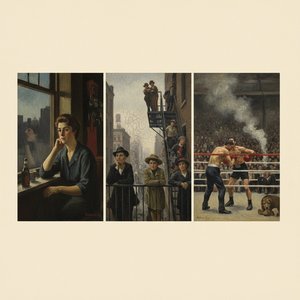
American Realism: Social Commentary & Artistic Representation in Early 20th-Century Painting
Explore the powerful social commentary & artistic representation of American Realism. Discover key artists like Bellows & Sloan, and understand the movement's lasting impact on 20th-century art history.

Dark Masterpieces: 10 Iconic Paintings Dominated by Black Tones |
Explore 10 iconic paintings dominated by black tones, from Rembrandt’s chiaroscuro to Goya's dark expressions. Discover the stories behind these masterpieces & find museum-quality art reproductions for your home at .