보내기
보내기 공유하기
공유하기
 상세 보기
상세 보기 가이드 보기

 이미지 다운로드
 유사 작품 더 보기
 슬라이드 쇼 보기
 통계 정보
통계 정보Untitled, Harlem, New York


 상세 보기
상세 보기
이 페이지에 표시된 작품은 저작권법의 보호를 받으며, 이에 따라 동일한 복제품을 제작하거나 판매하는 것은 법으로 금지되어 있습니다. 이러한 권리 보호는 다음과 같은 국제 협약에 따라 시행됩니다. 베른 협약 또한 다음에서 명시하는 법률을 포함한 국내법에 의해 보호됩니다. 미국 저작권법 제17조.
이 방식은 저작권 보호를 받는 예술 작품을 복제하거나 그대로 재현하는 것이 아니기에 저작권 규정을 완벽히 준수합니다. 대신, 이는 창의적인 재해석의 과정을 거칩니다. 즉, 원작에서 영감을 받되 원작과 동일하지 않은 새로운 회화 작품을 의미합니다.
지클레 / 아트 프린트
빠른 제작과 다양한 마감 옵션을 선택할 수 있는 박물관 수준의 지클레이 및 캔버스 프린트. ( 수작업 채색 복제본 주문하기 디지털 이미지 판매 채널로 전환)




































작품의 원본 비율을 그대로 유지하는 프리셋 사이즈 중에서 선택해 보세요.

액자나 벽면 크기에 맞춰 필요한 가로와 세로 길이를 입력해 주세요. 프린트는 원본 이미지보다 크게 제작할 수 없으며 오직 자르는 것만 가능하므로, 비율이 다른 사이즈를 선택할 경우 이미지의 일부가 잘려 나갈 수 있습니다. 인쇄 작업에 들어가기 전, 최종 확인을 위해 디지털 목업을 보내드립니다. 이 페이지에 표시된 이미지는 실제 잘리는 영역을 나타내지 않으며, 오직 목업을 통해서만 정확한 확인이 가능합니다.


 유리 옵션은 110cm 미만 크기에서만 선택 가능합니다.

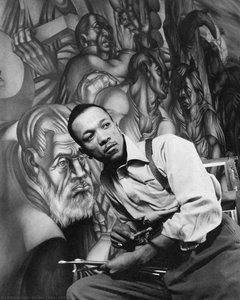
Untitled, Harlem, New York
지클레 / 아트 프린트
복제본 규격
-


총 결제 금액
₩ 108564
A Moment Frozen in Time: Gordon Parks’ “Untitled, Harlem, New York”
Gordon Parks' "Untitled, Harlem, New York," captured in 1952, isn’t merely a photograph; it’s a distilled essence of urban life—a quiet meditation on solitude, observation, and the unspoken narratives woven within a bustling city. This striking black-and-white image, now housed at The Art Institute of Chicago, immediately draws the viewer into a dimly lit interior space, dominated by a wall pulsating with the warm glow of strategically placed light bulbs. It’s a scene both familiar and profoundly unsettling, hinting at stories untold and lives lived in quiet contemplation.
The photograph's power lies not just in its composition—the carefully arranged furniture, the record players casting long shadows, and the central figure seated with an object held delicately in his hand—but also in Parks’ masterful use of light. The stark contrast between the deep blacks and brilliant whites creates a dramatic effect, highlighting textures and imbuing the scene with a palpable sense of mood. The lighting isn't simply decorative; it feels deliberate, almost theatrical, as if illuminating a private stage within an otherwise anonymous room.
A Window into the 1950s: Context and Technique
To fully appreciate “Untitled, Harlem, New York,” one must consider its historical context. Parks was working during a pivotal period in American history—the early 1950s—a time of burgeoning civil rights movements, economic disparity, and significant social change. His work for Life magazine, particularly his series documenting poverty in the South, brought these realities to a national audience with unflinching honesty. This Harlem image reflects that same commitment to portraying everyday life, albeit within a specific urban landscape.
Technically, the photograph is a testament to Parks’ skill as a photographer. It's a film print, likely developed and printed in a darkroom, showcasing a deliberate graininess that adds to the image’s authenticity and vintage feel. The composition utilizes strong diagonal lines—created by the furniture and the arrangement of light bulbs—to guide the viewer’s eye through the frame, leading towards the central figure. This dynamic interplay of lines contributes to the photograph's overall sense of movement and intrigue.
Decoding the Symbolism: Man, Light, and Observation
The central figure in the image is deliberately ambiguous. Dressed formally, he appears lost in thought, examining a small object with an expression that’s difficult to decipher—is it contemplation, concern, or perhaps simply boredom? He embodies a quiet dignity amidst an unconventional setting, suggesting a man seeking refuge from the surrounding chaos. The wall of light bulbs, a recurring motif in Parks' work, can be interpreted as representing both illumination and potential distraction – highlighting the individual while simultaneously emphasizing the overwhelming nature of urban life.
The placement of the light bulbs is particularly significant. They don’t simply provide illumination; they create patterns—a network of lines that subtly shift our perception of space and form. This deliberate manipulation of light elevates the photograph beyond a simple snapshot, transforming it into a carefully constructed visual statement. The record players, symbols of entertainment and connection, stand in stark contrast to the man's solitary state, further emphasizing his isolation.
An Enduring Legacy: Emotional Resonance and Artistic Impact
"Untitled, Harlem, New York" resonates deeply because it captures a universal human experience—the feeling of being alone within a crowd. It’s a photograph that invites introspection, prompting us to consider the stories behind the faces we see every day. Parks' ability to convey such complex emotions with such understated elegance is what makes this image so enduringly powerful.
Beyond its artistic merit, the photograph serves as a poignant reminder of the social realities faced by African Americans in mid-20th century America. It’s a testament to Parks’ commitment to documenting marginalized communities and giving voice to those often overlooked. Reproductions of this iconic image continue to be valued by collectors and interior designers alike, not just for their aesthetic appeal but also for their historical significance and emotional depth.
질의응답
고든 파크스의 "Untitled, Harlem, New York"의 작품 방향(가로/세로)은 어떻게 되나요?
고든 파크스의 "Untitled, Harlem, New York"은(는) Landscape 형식입니다. 이 형식은 작품 구성의 비율을 나타냅니다.
"Untitled, Harlem, New York"의 Documentary Social Realism에는 어떤 국가적 배경이 담겨 있나요?
Documentary Social Realism 양식의 작품 "Untitled, Harlem, New York"은 미국에서 태어난 작가에 의해 제작되었습니다.
"Untitled, Harlem, New York"의 고해상도 다운로드 버전을 구매할 수 있나요?
고든 파크스의 "Untitled, Harlem, New York"의 디지털 파일을 소장하시려면, 디지털 이미지 페이지에서 고해상도 디지털 이미지 다운로드을(를) 주문해 주세요.
작가 소개
생애 초기와 경력
고든 로저 알렉산더 부캐넌 파크스는 미국의 사진작가이자 음악가, 작가, 그리고 영화감독으로, 1912년 11월 30일 캔자스주 포트 스콧에서 태어났습니다. 그는 사라(본 성 로스)와 잭슨 파크스 사이에서 태어난 15명의 자녀 중 막내였습니다. 파크스의 어린 시절은 인종 격리라는 시대적 아픔과 맞닿아 있었으며, 그는 고향에서 그 차별을 몸소 경험하며 성장했습니다.독학으로 예술의 길을 개척한 파크스는 사진작가로서 커리어를 시작하여, 마침내 라이프(Life)와 보그(Vogue) 잡지에서 활동한 최초의 아프리카계 미국인이 되었습니다. 1940년대 연방 정부 프로젝트를 위해 촬영한 가난한 미국인들의 상징적인 사진들은 그의 탁월한 기술과 예술적 헌신을 보여주는 위대한 증거로 남아 있습니다.
주요 작품 및 업적
- 샤프트 (Shaft, 1971): 파크스가 감독한 영화로, 하나의 문화적 현상이 되었습니다.
- 러닝 트리 (The Learning Tree, 1969): 파크스의 감독 데뷔작이자 그의 자전적 요소가 담긴 영화입니다.
- 무기의 선택 (A Choice of Weapons, 1985): 파크스의 뛰어난 문학적 역량을 보여주는 회고록입니다.
- 라이프 잡지의 사진 에세이들은 저널리스트로서 파크스의 위상을 확고히 다져주었습니다.
박물관 및 소장처
- 멜빈 홈즈 컬렉션 (The Melvin Holmes Collection): 파크스의 방대한 작품군을 보유하고 있습니다. [https://www.holmesartgallery.com/gordonparks](https://www.holmesartgallery.com/gordonparks)
- 뉴욕 현대 미술관 (MoMA): 파크스의 인상적인 사진 컬렉션을 소장하고 있습니다. [https://www.moma.org/artists/8083](https://www.moma.org/artists/8083)
수상 및 유산
- NAACP 이미지 어워드 (2003)
- PGA 오스카 미쇼 상 (1993)
- 국립 예술 훈장 (1988)
- 스핑가른 메달 (1972)
고든 파크스의 유산은 그가 남긴 경이로운 작품 세계를 넘어, 후대 아프리카계 미국인 예술가들이 나아갈 길을 닦았다는 점에서 더욱 깊은 의미를 지닙니다. 사진 저널리즘, 영화 제작, 그리고 음악에 기여한 그의 업적은 오늘날의 예술가들에게도 끊임없는 영감과 영향을 주고 있습니다.
OriginalUniqueArt.com 엄선 작품
- 이머징 맨 (Emerging Man, 젤라틴 실버 프린트): 파크스의 기술적 정수를 보여주는 강렬한 사진입니다. [https://OriginalUniqueArt.com/d3xgfc-gordon-parks-emerging-man](https://OriginalUniqueArt.com/d3xgfc-gordon-parks-emerging-man)
- 루시 존슨 부인의 초상 (Portrait of Mrs. Lucy Johnson, 젤라틴 실버 프린트): 파크스의 서사적 능력을 돋보이게 하는 가슴 뭉클한 초상화입니다. [https://OriginalUniqueArt.com/d4dblu-gordon-parks-portrait-of-mrs-lucy-johnson](https://OriginalUniqueArt.com/d4dblu-gordon-parks-portrait-of-mrs-lucy-johnson)

고든 파크스
1912 - 2006 , 미국
작가 정보 요약
- Artistic Movement Or Style: 포토저널리즘, 사회적 사실주의
- Artists Or Movements Influenced By This Artist: 미래의 아프리카계 미국인 예술가들
- Date Of Birth: 1912년 11월 30일
- Date Of Death: 2006년 3월 7일
- Full Name: 고든 로저 알렉산더 부캐넌 파크스
- Nationality: 미국인
- Notable Artworks:
- 샤프트 (Shaft)
- 학습의 나무 (The Learning Tree)
- 떠오르는 인간 (Emerging Man)
- 할렘 갱 전쟁 (Harlem Gang Wars)
- 나이트 럼블 (Night Rumble)
- Place Of Birth: 미국 포트 스콧
관련 기사
Witnessing History Through Lens & Light: Documentary Photography's Enduring Legacy
Explore the powerful history of documentary photography – from its origins to contemporary masters like Gordon Parks & W. Eugene Smith. Discover how this art form shapes our understanding of society and witness pivotal moments in time.

White on Canvas: 10 Masterpieces & Timeless Elegance for Your Home Decor
Explore 10 iconic white paintings by Monet, Whistler & Rothko! Discover the stories behind these serene masterpieces and their impact on art history. Find museum-quality reproductions for your home decor at .
Shadow & Soul: Why Black & White Photography Remains the Ultimate Power Move in Modern Art
Discover why black & white photography remains a powerful force in contemporary art. Explore the impact of light, shadow, and texture through a visual journey of monochrome mastery and learn how to elevate your space with timeless grayscale aesthetics.

Monochrome Visions: Exploring the Aesthetic & Historical Significance of Black & White Photography
Explore the rich history & artistic power of black and white photography. From early techniques to iconic masters like Ansel Adams, discover why monochrome continues to captivate art lovers today. Expert insights for collectors.
Gordon Parks: A Poetic Lens on American Life – Photography, Social Justice & Storytelling
Explore the profound work of Gordon Parks, a groundbreaking photographer who documented American life with unparalleled empathy and artistry. Discover his iconic images & lasting impact on social justice through Life magazine & beyond.