프린트 판매로 전환
 더 보기
더 보기







































 가로 또는 세로 중 어느 한 면이라도 105cm(약 41인치)를 초과하는 작품이나 복제화의 경우, 프레임은 분해된 키트 형태로 배송됩니다. 이는 안전한 배송을 보장하고 운송 중 발생할 수 있는 손상을 방지하기 위함입니다.


A Venetian Enigma: Unveiling Giorgione’s “Moses’ Trial by Fire”
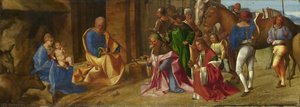
Giorgione’s “Moses’ Trial by Fire,” a painting shrouded in the mists of Venetian history and artistic mystery, is not merely a depiction of a biblical narrative; it's an invitation into a world of subtle emotion, atmospheric depth, and a nascent shift in Renaissance painting. Born Giorgio Barbarelli da Castelfranco in 1477, Giorgione’s tragically brief life – he died at just thirty-two or thirty-three – left behind a remarkably small body of work, each piece imbued with an almost haunting quality. “Moses’ Trial by Fire,” created around 1502-1505 and currently residing in the Uffizi Gallery in Florence, exemplifies this enigmatic genius. The painting draws its subject from Josephus's *Antiquities*, transforming a pivotal moment of faith and divine judgment into a profoundly contemplative scene.
The composition itself is deceptively simple yet remarkably powerful. Moses, rendered with an almost ethereal grace, stands at the center, not as a heroic figure of action, but as a man confronting an unknown future. He’s surrounded by a gathering – individuals whose faces are deliberately obscured, their identities subsumed into the painting's overall mood. The setting is equally evocative: a landscape bathed in a diffused light, suggesting neither day nor night, creating a timeless and otherworldly atmosphere. The trees, rendered with loose brushstrokes, seem to lean inwards, drawing the viewer into the scene, while distant mountains provide a dramatic backdrop, hinting at both earthly constraints and divine expanse.
The Language of Light and Shadow: Giorgione’s Venetian Innovation
What truly distinguishes “Moses’ Trial by Fire” is Giorgione's masterful manipulation of light and shadow. He eschews the sharp contrasts favored by earlier Renaissance painters, opting instead for a soft, atmospheric quality that became a hallmark of the Venetian school. This technique—often referred to as *sfumato*—blurs outlines and creates a sense of hazy depth, lending the scene an almost dreamlike quality. The light itself seems to emanate from within the painting, illuminating the figures with a gentle radiance rather than casting harsh shadows. This deliberate blurring wasn’t simply stylistic; it reflected Giorgione's interest in capturing not just what *was* seen, but also the *feeling* of being present at that moment – a core tenet of Venetian art.
Giorgione’s use of color is equally subtle and evocative. He employs muted earth tones—ochres, browns, and greens—to create a sense of harmony and tranquility. The absence of vibrant hues contributes to the painting's overall mood of quiet contemplation. Notice how he uses variations in tone to suggest texture – the rough bark of the trees, the folds of Moses’ garments, even the implied surface of the ground beneath his feet. This attention to detail elevates the scene beyond a simple illustration and transforms it into a richly textured visual experience.
Symbolism and Spiritual Resonance
Beyond its technical brilliance, “Moses’ Trial by Fire” is laden with symbolic meaning. The trial itself represents not just a test of Moses's faith but also a broader exploration of human vulnerability in the face of divine judgment. The obscured faces of the onlookers suggest that this event transcends individual identity and speaks to the shared experience of humanity before God. The crown, cast aside by Moses as an infant, symbolizes the rejection of worldly power and the embrace of spiritual authority – a potent image reflecting the core tenets of Christianity.
Furthermore, the painting’s ambiguous setting—neither clearly day nor night—can be interpreted as representing the liminal space between earthly existence and the realm of eternity. It's a moment suspended in time, inviting viewers to contemplate the mysteries of faith, destiny, and the enduring power of human spirit. The choice of depicting this pivotal event from Josephus’ *Antiquities* also highlights Giorgione’s engagement with classical sources and his desire to infuse biblical narratives with a distinctly Venetian sensibility.
Bringing “Moses’ Trial by Fire” Home: A Reproduction for the Soul
OriginalUniqueArt.com offers meticulously crafted, hand-painted oil reproduction of Giorgione's "Moses’ Trial by Fire," allowing you to experience the profound beauty and emotional resonance of this masterpiece in your own space. Our skilled artists replicate every nuance of Giorgione’s technique—the subtle sfumato, the atmospheric lighting, the delicate color palette—with unparalleled precision. A reproduction from OriginalUniqueArt.com is more than just a print; it's a tangible connection to one of the Renaissance’s most enigmatic and influential figures. It’s an opportunity to bring a touch of Venetian mystery and spiritual contemplation into your home, a testament to the enduring power of art.
질의응답
"Moses' Trial by Fire"에서 대비와 조화는 어떻게 어우러지나요?
조르지오네의 "Moses' Trial by Fire"의 색채 분석은 Statement한 대비와 Balanced Harmony한 조화를 보여줍니다.
"Moses' Trial by Fire"은 어떤 기법으로 제작되었나요?
"Moses' Trial by Fire"은(는) Oil On Panel 기법으로 제작되었습니다.
"Moses' Trial by Fire"은(는) 어떤 내용을 담고 있나요?
조르지오네의 "Moses' Trial by Fire"에 나타난 주제로는 moses, trial by fire, renaissance, josephus, venetian art, light, shadow, testament 등이 있습니다. 이들은 모여 작품의 소재를 요약해 보여줍니다.
이 작품에 대해 더 알아보기
 미리보기
미리보기
 공유하기
공유하기 공유하기
공유하기
 상세 정보
상세 정보 가이드 보기

 다운로드
다운로드
 유사 작품 더 보기
 X-레이
X-레이 슬라이드 쇼 보기
 질의응답
질의응답 통계 정보
통계 정보