프린트 판매로 전환
 더 보기
더 보기







































 가로 또는 세로 중 어느 한 면이라도 105cm(약 41인치)를 초과하는 작품이나 복제화의 경우, 프레임은 분해된 키트 형태로 배송됩니다. 이는 안전한 배송을 보장하고 운송 중 발생할 수 있는 손상을 방지하기 위함입니다.


A Masterpiece of Meticulous Realism
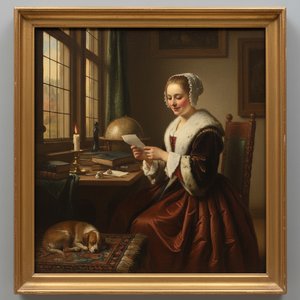
In the quiet, shadowed corners of the Dutch Golden Age, few artists captured the visceral intimacy of human experience quite like Gerrit Dou. His work, “The Extraction of Tooth,” painted circa 1630, serves as a profound window into a bygone era, where the boundaries between science, art, and daily struggle were inextricably linked. This captivating genre scene does not merely depict a medical procedure; it invites the viewer into a heavy, atmospheric moment of tension and vulnerability. As we gaze upon the scene, we find ourselves transported to a dimly lit workshop or apothecary, where the air feels thick with the scent of medicinal herbs and the palpable anxiety of the patient. It is a work that demands attention, not through grand scale, but through an almost supernatural level of detail that rewards the most discerning eye.
The composition is a masterclass in chiaroscuro, the dramatic interplay of light and shadow that defines the Baroque spirit. Dou utilizes a singular, flickering light source—perhaps a nearby candle—to sculpt the figures out of the darkness. This technique does more than provide visibility; it creates an illusionistic depth that pulls the observer into the immediate proximity of the surgeon’s instruments. One can almost feel the coldness of the forceps and the weight of the apothecary jars scattered across the surfaces. The light dances across glass vials and metallic tools, catching on the edges of a skull that rests ominously in the background, serving as both an anatomical reference and a memento mori—a poignant reminder of our shared mortality.
The Art of the Fijnschilder
To understand the allure of this piece for a modern collector or interior designer, one must appreciate the technical virtuosity of the Leiden fijnschilders, or "fine painters," of which Dou was a leading luminary. His approach was one of extreme patience and precision, involving the painstaking layering of translucent glazes to build up textures that feel almost tactile. In “The Extraction of Tooth,” this technique is evident in the way Dou renders the various surfaces: the smooth, reflective sheen of glass bottles, the rugged texture of the wooden furniture, and the soft, weathered skin of the man in the chair. For those seeking to adorn a space with art, such a reproduction offers more than mere decoration; it provides a focal point of immense complexity and intellectual depth.
Beyond the technical brilliance, the painting resonates emotionally through its storytelling. There is a profound sense of drama in the stillness—the way the patient’s mouth is held open, the focused intensity of the practitioner, and the cluttered environment that suggests a life lived amidst the tools of a trade. It captures a moment of transition, both physical and psychological. For an interior designer, this artwork acts as a sophisticated anchor, bringing a sense of historical gravity and narrative richness to a room. Whether placed in a study filled with books or a contemporary gallery-style living space, Dou’s mastery of light and shadow provides an enduring elegance that transcends the centuries, making it a timeless acquisition for any serious connoisseur of the Dutch Baroque.
질의응답
"The Extraction of Tooth"은 어떤 종류의 작품인가요?
"The Extraction of Tooth"은(는) WallArt 작품입니다.
"The Extraction of Tooth"은 전체적으로 밝은 편인가요, 아니면 어두운 편인가요?
게리트 도우의 "The Extraction of Tooth"의 측정된 수치는 다음과 같습니다: 밝기 deep_shadow, 휘도 Dark.
게리트 도우의 "The Extraction of Tooth"에서 예술 사조와 시대상은 어떻게 맞닿아 있나요?
게리트 도우의 "The Extraction of Tooth"은(는) 작가의 근세 초기 시대 중 Baroque realism 사조에 속합니다.
이 작품에 대해 더 알아보기
 미리보기
미리보기
 공유하기
공유하기 공유하기
공유하기
 상세 정보
상세 정보 가이드 보기

 다운로드
다운로드
 유사 작품 더 보기
 X-레이
X-레이 슬라이드 쇼 보기
 질의응답
질의응답 통계 정보
통계 정보