

 실제 크기로 보기
 보내기
보내기 공유하기
공유하기
 상세 보기
상세 보기 가이드 보기

 이미지 다운로드
 유사 작품 더 보기
 X-레이
X-레이 슬라이드 쇼 보기
 통계 정보
통계 정보The Visit
 Oil On Canvas
- WallArt
- Dutch Golden Age Genre
 78.0 x 74.0 cm
 Staatliches Museum
 상세 보기
상세 보기
핸드메이드 유화 복제화
작가가 직접 캔버스에 손으로 그린 유화 작품으로, 원하는 크기와 액자로 맞춤 제작해 드립니다. ( 프린트 판매로 전환 디지털 이미지 판매 채널로 전환)




P118B ₩10

P118H ₩10

P118W ₩10

P438Z ₩10

P508JH ₩12

P508YH ₩12

P805H ₩10

P805Z ₩10

P919BZ ₩10

P919G ₩10

P919XJ ₩10

P959ZH ₩10

P968JZ ₩12

W106C ₩8

W218G ₩10

W218JH ₩8

W218Y ₩10

W307PJ ₩10

W316G ₩10

W316PJ ₩8

W316Y ₩10

W398PJ ₩8

W4111J ₩10

W500HY ₩15

W500JH ₩15

W692G ₩12

W849H ₩8

W940BG ₩15

W953PJ ₩8




작품의 원본 비율을 그대로 유지하는 프리셋 사이즈 중에서 선택해 보세요.

액자나 벽면 크기에 맞춰 필요한 가로와 세로 길이를 입력해 주세요. 본 작품은 수작업으로 제작되므로, 요청하신 비율에 따라 작가가 그림의 가장자리를 조금 더 넓게 그리거나 일부를 조정하여 작업할 수 있습니다. 작업 시작 전, 최종 확인을 위해 디지털 목업 이미지를 보내드립니다. 이 페이지에 표시된 이미지는 실제 결과물과 다를 수 있으며, 오직 목업 이미지만이 정확한 결과물을 보여줍니다.
주문 완료 후 OriginalUniqueArt.com 팀에서 상세 안내를 위해 고객님께 이메일을 보내드리며, 미리보기 시안을 함께 제공해 드립니다.


 유리 옵션은 110cm 미만 크기에서만 선택 가능합니다.

The Visit
재현 매체
복제본 규격
-


총 결제 금액
₩ 409430
A Window Into Seventeenth-Century Domestic Life: Exploring Gerard Ter Borch’s “The Visit”
Gerard ter Borch, a pivotal figure in Dutch Golden Age art history, stands as a beacon of psychological realism and meticulous observation within the genre of domestic painting. Born in Zwolle in 1617, he embarked on an artistic journey that traversed Europe, absorbing influences from diverse artistic traditions – notably the Baroque – shaping his distinctive style and cementing his legacy as one of the era’s foremost masters. His sister, Gesina ter Borch, also pursued a career in painting, fostering a familial commitment to artistic excellence that would resonate throughout their lives. Ter Borch's oeuvre is characterized by an unparalleled sensitivity to capturing subtle emotions and nuanced interactions within seemingly commonplace settings—a hallmark that distinguishes him from many of his contemporaries.Composition and Technique: Mastering Light and Texture
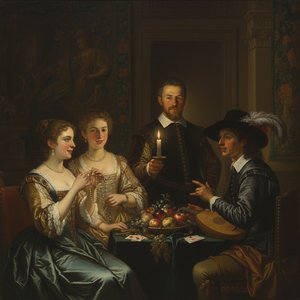
“The Visit,” painted circa 1655, exemplifies ter Borch’s masterful command of technique. Executed in oil on canvas – a medium favored for its ability to achieve remarkable luminosity and textural detail – the artwork presents four figures engaged in conversation within a richly furnished bedroom. The artist skillfully employs chiaroscuro—the dramatic interplay between light and shadow—to sculpt the forms of the women seated on a bench and the men standing nearby, creating an illusionistic depth that draws the viewer into the scene. Ter Borch’s meticulous brushwork captures the delicate weave of fabric, the sheen of polished surfaces, and the subtle nuances of skin tones with astonishing accuracy. This painstaking attention to detail underscores ter Borch's dedication to portraying reality as faithfully as possible—a cornerstone of his artistic philosophy.Symbolism Within Everyday Reality: Decoding Gestures and Expressions
Beyond its technical brilliance, “The Visit” is laden with symbolic significance. The bed draped in a scarlet blanket serves as a visual anchor, representing comfort, intimacy, and perhaps even unspoken desires. The postures and gestures of the figures convey a complex tapestry of emotions—ranging from polite cordiality to veiled apprehension—reflecting the psychological depth that ter Borch sought to achieve. Scholars have interpreted subtle facial expressions and glances as indicators of hidden agendas and unspoken feelings, prompting ongoing debate about the artwork’s intended message. Ter Borch's ability to transform ordinary domestic life into a vehicle for profound emotional exploration distinguishes him from many other artists of his time.Historical Context: Reflecting Dutch Society’s Values
“The Visit” emerged during a period of considerable social and intellectual ferment in Holland—the Dutch Golden Age (approximately 1648-1702). This era witnessed unprecedented economic prosperity, fueled by maritime trade and colonial expansion, fostering a vibrant cultural landscape characterized by artistic innovation and humanist ideals. Genre painting flourished as a response to the prevailing fascination with portraying the realities of everyday life—a deliberate departure from grand mythological narratives favored by earlier Baroque artists. Ter Borch’s work reflects the Dutch obsession with moral virtue and social decorum—values that underpinned the nation's reputation for stability and sophistication.Emotional Resonance: Capturing Transient Moments
Ultimately, “The Visit” transcends its formal qualities to evoke a powerful emotional response in the viewer. The artwork captures a fleeting moment of human connection—a conversation between friends or family members—rendered with breathtaking tenderness and sensitivity. Ter Borch’s masterful depiction of psychological realism invites contemplation about the complexities of human relationships and the enduring power of unspoken emotions. Like many of his contemporaries, ter Borch aimed to elevate genre painting beyond mere visual representation, transforming it into a medium for conveying profound truths about the human condition—a testament to his artistic genius and lasting influence on art history.Location: Staatliches Museum Schwerin
The Staatliches Museum Schwerin houses an impressive collection of artworks from various periods and styles. You can find more information about the museum on Wikipedia: https://en.wikipedia.org/wiki/Staatliches_Mus질의응답
게라르트 테르 보르흐의 "The Visit"의 휘도는 어느 정도인가요?
"The Visit"의 색상은 Dark 정도의 휘도를 나타냅니다.
"The Visit"은(는) 게라르트 테르 보르흐의 다른 작품들과 어떤 공통점을 지니고 있나요?
"The Visit"은(는) 게라르트 테르 보르흐의 Dutch Golden Age Genre 시기 작품으로, 이 작가의 주요 주제로는 domestic intimacy, psychological realism, genre painting style, dutch artistic heritage, symbolic interior space 등이 있습니다.
게라르트 테르 보르흐의 "The Visit"의 엑스레이(X-ray) 이미지를 볼 수 있을까요?
게라르트 테르 보르흐의 "The Visit"의 X선 분석 페이지는 엑스레이 스타일의 뷰를 포함하여 작품 이미지의 11개 광학 레이어를 슬라이드하며 살펴볼 수 있는 인터랙티브 뷰어를 제공합니다.
작가 소개
네덜란드 풍속화의 선구자
게라르트 테르 보르흐는 네덜란드 황금기를 대표하는 거장으로서, 일상의 순간을 담아낸 풍속화를 통해 미술사에 지울 수 없는 깊은 발자취를 남겼습니다. 1617년 12월에 태어나 1681년 12월 8일 생을 마감하기까지, 테르 보르흐의 삶은 그 자체로 예술적 기량과 열정의 증거였습니다.초기 생애와 예술적 영향
테르 보르바의 초기 생애에 대한 기록이 아주 상세하지는 않지만, 그는 런던, 독일, 프랑스, 스페인, 이탈리아를 포함한 유럽 전역을 폭넓게 여행하며 예술적 지평을 넓혔던 것으로 알려져 있습니다. 이러한 광범위한 경험은 그의 독창적인 화풍을 형성하는 밑거름이 되었습니다. 또한 그의 누이인 게시나 테르 보르흐 역시 화가로서의 길을 걸으며, 예술적 재능이 가문의 전통으로 깊게 뿌리내리는 데 기여했습니다.주요 작품과 업적
그의 작품 세계는 빛과 질감의 마술이라 불릴 만큼 정교합니다. 편지는 테르 보르흐가 사물의 질감과 빛을 포착해내는 탁월한 기술을 보여주는 불후의 명작입니다. 요한 게오르크 빌레가 판화로 제작한 정중한 대화는 인물 간의 미묘한 감정을 전달하는 그의 능력을 잘 보여줍니다. 또한, 1634년 작인 말을 탄 남자는 그의 초기 재능을 엿볼 수 있는 작품이며, 뮌스터에 도착한 아드리안 파우 (1646)는 화가로서의 서사적 표현 능력을 극명하게 드러내는 중요한 작품입니다.테르 보르흐의 작품을 만날 수 있는 박물관과 컬렉션
그의 예술적 가치는 세계적인 미술관들을 통해 오늘날까지 빛나고 있습니다. 에르미타주 미술관은 6점의 작품을 소장하며 가장 방대한 컬렉션 중 하나를 자랑합니다. 베를린 미술관 역시 6점의 작품을 통해 테르 보르흐의 국제적인 위상을 보여주며, 게티 센터 또한 3점의 소중한 작품을 품고 있습니다.유산과 영향력
테르 보르흐가 가브리엘 메추, 게리트 도우, 에글론 반 데르 네르, 그리고 요하네스 베르메르와 같은 네덜란드 화가들에게 끼친 영향은 미술사적으로 매우 잘 입증되어 있습니다. 풍속화를 향한 그의 혁신적인 접근 방식은 그를 미술사의 중심에 서게 만든 결정적인 요소였습니다.- 테르 보르흐의 삶과 작품에 대해 더 자세히 알고 싶다면 https://OriginalUniqueArt.com/@/gerard-ter-borch를 방문해 보세요.
- 테르 보르흐의 동시대 화가들을 만날 수 있는 네덜란드 보이만스 판 뵈닝언 미술관을 탐색해 보세요: https://OriginalUniqueArt.com/@@/a@d3arrk-museum-boijmans-van-beuningen-rotterdam-netherlands
- 네덜란드 황금기와 그 시대의 위대한 예술가들에 대해 더 알아보세요: https://en.wikipedia.org/wiki/dutch_golden_age

게라르트 테르 보르흐
1617 - 1681 , 네덜란드
작가 정보 요약
- Artistic Movement Or Style: 장르 회화
- Artists Or Movements Influenced By This Artist: ['디에고 벨라스케스']
- Artists Who Influenced This Artist:
- 가브리엘 메추
- 헤리트 도우
- 에글론 판 데르 네르
- 요하네스 베르메르
- Date Of Birth: 1617년 12월
- Date Of Death: 1681년 12월 8일
- Full Name: 게라르트 테르 보르흐
- Nationality: 네덜란드
- Notable Artworks:
- 편지
- 정중한 대화
- 말을 탄 남자
- 뮌스터에 도착한 아드리안 파우
- Place Of Birth: 네덜란드 즈볼로
관련 기사

Gerard ter Borch: Intimacy & Light in the Dutch Golden Age
Explore the captivating world of Gerard ter Borch, a master of Dutch Golden Age genre painting. Discover his intimate scenes, masterful light, and lasting influence on art history. Learn more at OriginalUniqueArt.

Golden Age Reflections: Dutch Baroque Painting & Cultural Innovation
Explore the Dutch Golden Age of painting! Discover key artists like Vermeer & ter Borch, their innovative techniques, and the rich cultural context behind these Baroque masterpieces. Learn about collecting & appreciating this iconic art period.
Gerard van Honthorst: Illuminating the Dutch Golden Age with Caravaggism & Courtly Grace
Explore the captivating world of Gerard van Honthorst, a Dutch Golden Age master renowned for his dramatic chiaroscuro & courtly portraits. Discover his life, art, and lasting influence on Baroque painting.

Chiaroscuro and Character: A Definitive Guide to Light and Shadow in the Dutch Baroque Era
Explore the dramatic mastery of the Dutch Baroque era. Discover how masters like Rembrandt used chiaroscuro to transform everyday life into timeless art. An expert guide for collectors and enthusiasts seeking to understand the profound interplay of light and shadow.

Dutch Baroque Masters: 10 Paintings That Shaped an Era | OriginalUniqueArt
Journey through the Golden Age with our guide to the Top 10 Dutch Baroque masterpieces! Explore iconic paintings by Rembrandt, Vermeer & Frans Hals. Find museum-quality art reproductions and elevate your home decor at OriginalUniqueArt.com.
