

 미리보기
미리보기
 공유하기
공유하기 공유하기
공유하기
 상세 정보
상세 정보

 다운로드
다운로드
 유사 작품
유사 작품 X-레이
X-레이 슬라이드 쇼
Red Amaryllis 2


 더 보기
더 보기
지클레 / 아트 프린트
빠른 제작과 다양한 마감 옵션을 제공하는 박물관 품질의 지클레이 또는 캔버스 프린트. ( 손으로 그린 그림 구매 이미지 구매)




P118B $10

P118H $10

P118W $10

P438Z $10

P508JH $12

P508YH $12

P805H $10

P805Z $10

P919BZ $10

P919G $10

P919XJ $10

P959ZH $10

P968JZ $12

W106C $8

W218G $10

W218JH $8

W218Y $10

W307PJ $10

W316G $10

W316PJ $8

W316Y $10

W398PJ $8

W4111J $10

W500HY $15

W500JH $15

W692G $12

W849H $8

W940BG $15

W953PJ $8




작품의 원본 비율을 유지하는 미리 설정된 크기 중에서 선택하세요.

특정 프레임이나 공간에 맞춰 직접 치수를 입력하실 수 있습니다. 선택하신 사이즈가 원본 이미지의 비율과 일치하지 않을 경우, 작품을 크롭(자르기)하거나 이미지를 대칭 또는 단색 채우기로 확장하여 제작합니다. 제작 시작 전, 최종 확인을 위해 디지털 목업이 전송됩니다.
화면상의 미리보기는 실제 크롭이나 확장 상태를 반영하지 않으므로, 최종 구도는 오직 목업을 통해서만 정확하게 확인하실 수 있습니다.
맞춤 사이즈 제작도 가능하지만, 원본 비율을 유지하기 위해서는 사전 정의된 목록에서 치수를 선택하시는 것을 권장합니다.


 유리 옵션은 110cm 미만 크기에서만 선택 가능합니다.

Red Amaryllis 2
지클레 / 아트 프린트
복제본 크기
-


최종 결제 금액
$ 80
The Radiance of Nature: A Study in Crimson and Gold
In the mesmerizing world of American Modernism, few images capture the raw, pulsating energy of life quite like Georgia O'Keeffe’s Red Amaryllis 2. This breathtaking composition serves as a profound meditation on the beauty of the natural world, inviting the viewer to step into an intimate encounter with a single, magnificent bloom. The painting presents a large, vibrant amaryllis that commands the canvas, its deep crimson petals unfolding with a sculptural grace. Set against a luminous, sun-drenched yellow background, the flower does not merely sit upon the surface; it emerges from a sea of light, creating a visual tension that is both soothing and electrifying. The interplay between the warm, saturated reds and the brilliant gold tones evokes the feeling of a summer afternoon, where the heat of the sun meets the velvet texture of a blooming garden.
The technique employed in this piece reflects the precision and soulful abstraction that defined O'Keeffe’s legendary career. While her work is often celebrated for its soft, flowing lines, Red Amaryllis 2 showcases a masterful command of form and detail. The artist utilizes a style reminiscent of Precisionism, where every curve of a petal and every subtle shift in color is rendered with intentional clarity. There is a deliberate focus on the structural anatomy of the flower, yet it remains far from a mere botanical study. Through delicate gradations of pigment, O'Keeffe breathes life into the organic matter, making the petals appear almost tactile, as if one could reach out and feel their silken weight. This meticulous approach ensures that the artwork possesses a timeless quality, bridging the gap between realistic observation and emotional expression.
A Legacy of Modernist Vision
To understand the profound impact of this work, one must look to the historical context of Georgia O'Keeffe’s evolution as an artist. Emerging from the traditions of her early studies in Chicago and Virginia, O'Keeffe broke free from the constraints of conventional realism to find a new language for the American spirit. Influenced by the principles of harmony, color, and line, she sought to magnify the small, often overlooked details of nature to reveal their hidden grandeur. In Red Amaryllis 2, we see the culmination of this journey—a piece that uses scale and color to force a confrontation with the sublime. The amaryllis becomes a symbol of resilience and vitality, its bold presence acting as a metaphor for the enduring strength found within the delicate structures of life.
For the discerning collector or interior designer, this painting offers more than just aesthetic pleasure; it provides a focal point of unparalleled emotional depth. The high-contrast palette makes it an extraordinary choice for modern living spaces, where it can serve as a bold statement piece in a minimalist setting or add a layer of warmth to a classic, traditional room. A high-quality reproduction of this masterpiece allows the light and energy of O'Keeffe’s vision to inhabit a home, transforming a simple wall into a window of botanical splendor. It is an investment in atmosphere, bringing the quiet, powerful pulse of the natural world into the heart of the domestic sanctuary.
작가 약력
Early Life and Artistic Foundations
Georgia Totto O’Keeffe, a name synonymous with American modernism, emerged from the unassuming landscape of Sun Prairie, Wisconsin, in 1887. Born into a family of Irish and Hungarian descent engaged in dairy farming, young Georgia displayed an artistic inclination early on, deciding by age ten that she would dedicate her life to art. This determination was nurtured through lessons with local watercolorist Sara Mann, followed by formal studies at the School of the Art Institute of Chicago from 1905 to 1906 and later at the University of Virginia. However, it was her encounter with Arthur Wesley Dow’s principles – emphasizing personal expression and a harmonious balance of color and line – that truly ignited her artistic path. Dow's teachings steered O’Keeffe away from strict realism toward a more subjective and emotionally resonant approach to art, an approach that would define her career. These formative years weren’t without their challenges; periods of illness and dissatisfaction led her to temporarily abandon painting, but the creative impulse always drew her back, evolving with each new experience and influence.New York and the Stieglitz Circle
A pivotal moment arrived in 1916 when O’Keeffe’s abstract charcoal drawings were discovered by Alfred Stieglitz, a renowned photographer and art dealer. He exhibited her work without her prior knowledge, sparking a dialogue that would profoundly shape both their lives and the course of American art. Stieglitz recognized an exceptional talent in O’Keeffe, one that resonated with his own modernist sensibilities. He invited her to New York City in 1918, providing not only professional support but also fostering a deep personal connection. Their relationship blossomed into marriage in 1924, creating a dynamic artistic partnership and intellectual exchange. Stieglitz championed O’Keeffe’s work, showcasing it at his gallery “291” and promoting her as a leading figure in the American avant-garde. During this period, she began to develop her signature style – bold, simplified forms and intensely saturated colors – initially expressed through depictions of New York skyscrapers and, most famously, magnified flower paintings. These floral works, often interpreted (though consistently denied by O’Keeffe herself) as veiled representations of female anatomy, challenged conventional notions of beauty and sexuality in art.The Allure of the Southwest
While New York provided a crucial platform for her early success, it was the landscapes of the American Southwest that truly captivated O’Keeffe’s imagination and profoundly influenced her artistic vision. Her first visit to New Mexico in 1929 marked the beginning of a lifelong love affair with the region’s stark beauty, vibrant colors, and unique cultural heritage. The vastness of the desert, the dramatic rock formations, and the ancient Pueblo architecture resonated deeply within her, inspiring a new series of paintings that reflected the spirit of the land. Works like *Cow’s Skull: Red, White, and Blue* (1931) and *Summer Days* (1936) are powerful testaments to this influence, transforming seemingly mundane objects into iconic symbols of the American West. She eventually settled permanently in New Mexico in 1949 following Stieglitz’s death in 1946, establishing a home and studio in Abiquiu that became integral to her artistic process and identity.Her Artistic Legacy
Georgia O’Keeffe's contribution to American art is undeniable. She bravely challenged societal expectations regarding women’s roles in the arts and asserted her own distinctive voice amidst male dominance—a feat remarkable for its time. Her paintings continue to inspire awe and contemplation, captivating audiences with their audacious simplicity, profound emotional depth, and evocative imagery. O’Keeffe's unwavering devotion to her craft cemented her position as one of the most important artists of the 20th century. She paved the way for subsequent generations of female painters, encouraging them to pursue artistic expression without constraint. Her enduring fascination with nature—particularly flowers and desert landscapes—remains a source of inspiration for artists globally. Moreover, O’Keeffe's pioneering use of abstraction revolutionized visual art, demonstrating that beauty could reside in forms stripped down to their essence. Her influence extends beyond her artistic output; she became an emblem of American individualism and self-reliance, motivating countless individuals with her steadfast commitment to creativity and her singular perception of the world. Her artwork continues to resonate powerfully today, reminding us of the transformative potential of art and celebrating the enduring splendor of our natural surroundings.Notable Achievements & Recognition
- Received the National Medal of Arts in 1985 for her lifetime accomplishments as an artist
- Awarded the Presidential Medal of Freedom in 1977 by President Jimmy Carter
- Honored with the Edward MacDowell Medal in 1972

조지아 오키프
1887 - 1986 , 미국
주요 정보
- Artistic Movement Or Style: 모더니즘
- Artists Who Influenced This Artist:
- 알프레드 도우
- 알프레드 스티글리스
- Date Of Birth: November 15, 1887
- Date Of Death: March 6, 1986
- Full Name: Georgia Totto O’Keeffe
- Nationality: 미국
- Notable Artworks:
- 코브 스컬 레드 화이트 앤 블루
- 동양의 포ppies
- 램 머리 흰 홀리호크 언덕
- Place Of Birth: Sun Prairie, USA
관련 기사 더 보기

Crimson Threads of Narrative: Exploring Symbolism & Representation in Artworks Featuring the Red Dress
Explore the rich symbolism of the red dress in art history! From ancient power displays to iconic portraits like Cézanne’s 'Madame Cezanne', discover the cultural and artistic significance behind this captivating color. Expert analysis & insights.

Golden Hues: 10 Masterpieces Dominated by Chrome Yellow | OriginalUniqueArt
Immerse yourself in golden light! Explore 10 famous paintings dominated by 'Chrome Yellow', from Van Gogh’s Sunflowers to Monet's Haystacks. Discover the stories behind these iconic Impressionist & Post-Impressionist masterpieces and find museum-quality art reproductions at OriginalUniqueArt.com.

The Golden Hue: Exploring Symbolism & Emotion in Yellow Art
Explore the rich symbolism & emotional power of yellow in art history! From Van Gogh to Kandinsky, discover how artists used this vibrant hue. Expert analysis & high-quality reproductions at OriginalUniqueArt.
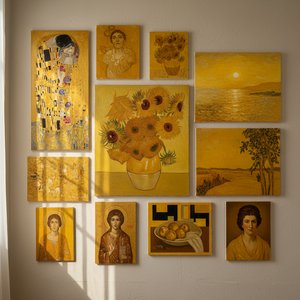
Golden Hues: Top 10 Paintings Dominated by Yellow Ochre |
Explore 10 iconic paintings bathed in golden yellow ochre! From Van Gogh's sunflowers to Monet’s haystacks, discover the stories behind these masterpieces. Find museum-quality art reproductions & elevate your home decor on .

마크 로스코 최고작 25선: 색채로 표현된 심오한 감정과 예술의 세계 | OriginalUniqueArt
마크 로스코 최고작 25선을 만나보세요. 추상 표현주의 거장의 색채로 표현된 심오한 감정과 예술의 세계를 탐험하고, OriginalUniqueArt에서 명화 복제본과 특별한 인테리어 아이디어를 찾아보세요. 지금 바로 컬렉션을 확인하세요!


