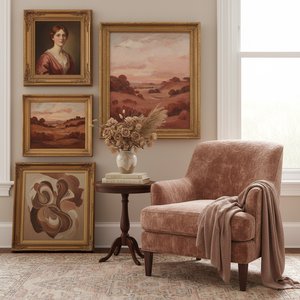
프린트 판매로 전환
 상세 보기
상세 보기







































 가로 또는 세로 중 어느 한 면이라도 105cm(약 41인치)를 초과하는 작품이나 복제화의 경우, 프레임은 분해된 키트 형태로 배송됩니다. 이는 안전한 배송을 보장하고 운송 중 발생할 수 있는 손상을 방지하기 위함입니다.


A Vision of Neoclassical Grace
In the quiet splendor of George Romney’s 1785 masterpiece, Lady in a Brown Robe, we encounter more than a mere portrait; we step into the refined atmosphere of the Georgian era. This exquisite work captures Miss Eliza Siddall, a woman celebrated for her beauty, not through flamboyant display, but through a profound sense of serenity and poise. As she gazates toward the viewer, there is an intimate connection established—a silent dialogue between the subject and the observer that has captivated audiences for centuries. The painting serves as a quintessential window into Neoclassical portraiture, a movement that sought to revive the dignified ideals of ancient Greece and Rome, stripping away excessive ornamentation to reveal the pure, sculptural essence of the human form.
The technical mastery displayed by Romney is nothing short of breathtaking. Utilizing the rich, luminous possibilities of oil on canvas, the artist achieves a depth of texture that invites the eye to linger upon every fold of the sitter's attire. His approach is characterized by a meticulous attention to tonal gradation, where light and shadow dance across the surface to create a lifelike three-dimensionality. The soft, warm glow emanating from the skin tones contrasts beautifully with the earthy, understated palette of the brown robe, creating a visual harmony that feels both grounded and ethereal. For the discerning collector or interior designer, this balance of subtle color and masterful light makes the piece an incredibly versatile anchor for any sophisticated space.
Symbolism and Social Elegance
Beyond its aesthetic brilliance, the artwork is steeped in the social aspirations of late 18th-century London. During this period of Enlightenment, the aristocracy sought to project values of virtue, stability, and classical wisdom. The choice of a simple brown robe is deeply symbolic; rather than relying on the ostentatious silks or jewels common in royal portraiture, Romney uses the understated elegance of the garment to emphasize the sitter's inner character and natural grace. This restraint reflects the Neoclassical preference for clarity and truth over superficiality. The delicate pearl necklace, catching a glint of light, provides just enough ornamentation to signify her high social standing without disrupting the painting's overall sense of tranquil dignity.
To possess or display a reproduction of this work is to invite a sense of historical continuity and timelessness into a modern environment. The painting does not merely decorate a wall; it commands a room with its quiet authority and emotional depth. Whether placed in a sunlit library or a formal dining area, Lady in a Brown Robe offers an enduring inspiration, reminding us of an era where art was used to capture the very soul of elegance. It remains a cornerstone of British art history, a testament to George Romney's ability to transform a single moment of stillness into an eternal emblem of beauty.
질의응답
"Lady in a Brown Robe"은(는) 누가, 언제 제작했을까요?
"Lady in a Brown Robe"의 작가는 조지 로먼리이며, 제작 연도는 1785년입니다.
조지 로먼리의 "Lady in a Brown Robe"의 방문객들은 어디에서 오나요?
조지 로먼리의 "Lady in a Brown Robe"의 통계 페이지에서는 해당 작품의 월간 방문 수, 작가의 가장 많이 조회된 작품과의 비교, 그리고 방문자 유입 경로 등 공개 방문 통계를 제공합니다.
조지 로먼리의 "Lady in a Brown Robe"은(는) 퍼블릭 도메인에 속하나요? 그 이유는 무엇인가요?
조지 로먼리의 "Lady in a Brown Robe"은(는) 퍼블릭 도메인 - 저작권 보호 기간이 만료되었습니다 상태입니다. 저작권 보호 기간은 작가가 사망한 1802년부터 기산됩니다.
More about this painting
 실제 크기로 보기
 보내기
보내기 공유하기
공유하기
 상세 보기
상세 보기 가이드 보기

 이미지 다운로드
 유사 작품 더 보기
 X-레이
X-레이 슬라이드 쇼 보기
 Q&A
Q&A 통계 정보
통계 정보