
 미리보기
미리보기
 공유하기
공유하기 공유하기
공유하기
 상세 정보
상세 정보

 다운로드
다운로드
 유사 작품
유사 작품 X-레이
X-레이 슬라이드 쇼
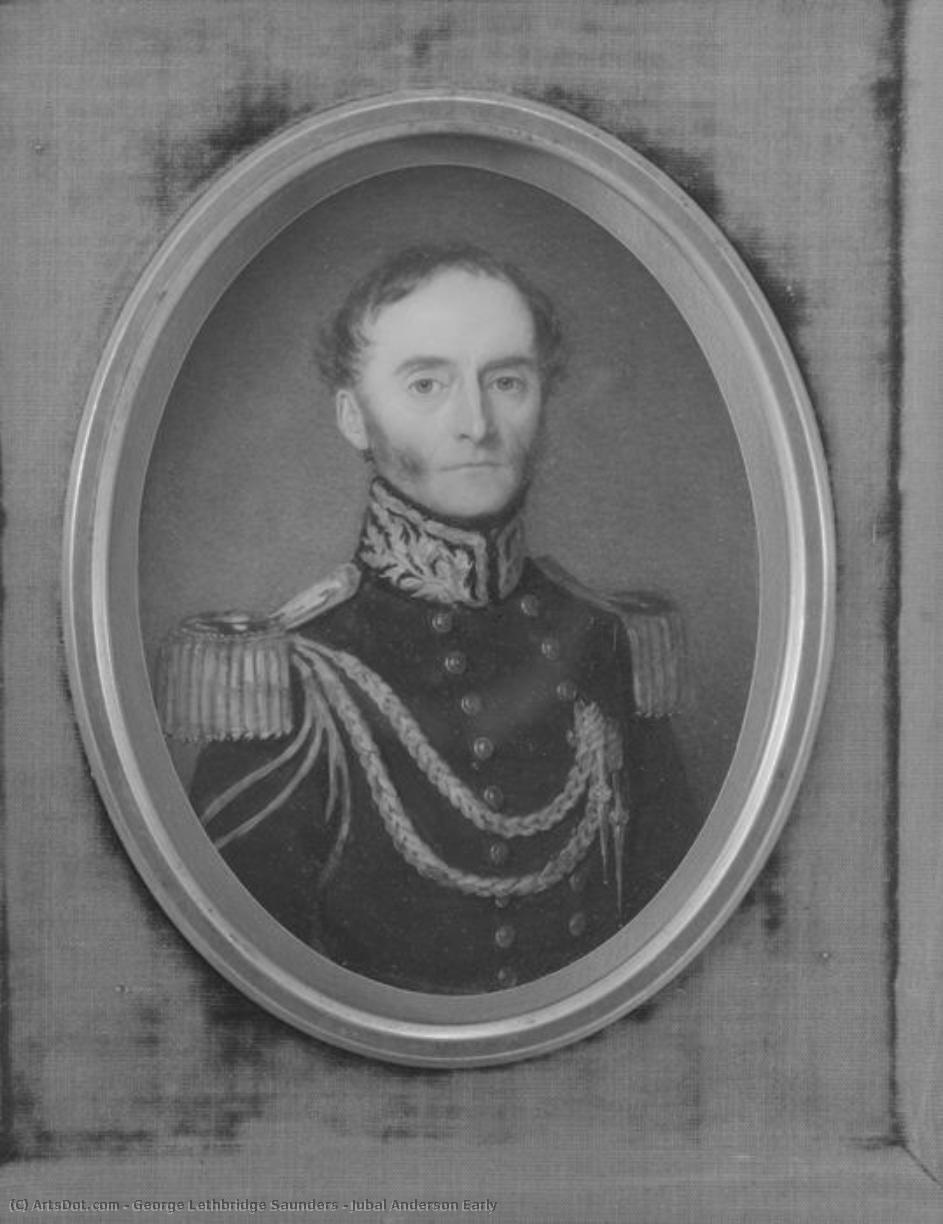
Jubal Anderson Early
 1847
1847 10.0 x 8.0 cm
 더 보기
더 보기
지클레 / 아트 프린트
빠른 제작과 다양한 마감 옵션을 제공하는 박물관 품질의 지클레이 또는 캔버스 프린트. ( 손으로 그린 그림 구매 이미지 구매)




































작품의 원본 비율을 유지하는 미리 설정된 크기 중에서 선택하세요.

특정 프레임이나 공간에 맞춰 직접 치수를 입력하실 수 있습니다. 선택하신 사이즈가 원본 이미지의 비율과 일치하지 않을 경우, 작품을 크롭(자르기)하거나 이미지를 대칭 또는 단색 채우기로 확장하여 제작합니다. 제작 시작 전, 최종 확인을 위해 디지털 목업이 전송됩니다.
화면상의 미리보기는 실제 크롭이나 확장 상태를 반영하지 않으므로, 최종 구도는 오직 목업을 통해서만 정확하게 확인하실 수 있습니다.
맞춤 사이즈 제작도 가능하지만, 원본 비율을 유지하기 위해서는 사전 정의된 목록에서 치수를 선택하시는 것을 권장합니다.


 유리 옵션은 110cm 미만 크기에서만 선택 가능합니다.

Jubal Anderson Early
지클레 / 아트 프린트
복제본 크기
-


최종 결제 금액
$ 80
작품 상세 설명
작가 약력
A Transatlantic Brush: The Life and Art of George Lethbridge Saunders
George Lethbridge Saunders, born in Bristol in 1807, was a painter whose career unfolded across the Atlantic, leaving behind a legacy of refined portraiture that captured the elegance of both English society and the burgeoning wealth of the American South. While not a household name today, Saunders’s story is one of artistic migration, skillful adaptation, and a unique position as a chronicler of two distinct worlds on the cusp of significant change. He began his journey in England, establishing himself as a proficient painter of miniatures – those exquisitely detailed small portraits that were so highly prized for their intimacy and likeness. Exhibiting regularly at the Royal Academy from 1829 to 1839, Saunders honed his technique, mastering the delicate art of watercolor on ivory and building a reputation for capturing not just physical resemblance but also the character and social standing of his sitters.
Early Success in England & The Move to America
Saunders’s early work reflects the prevailing aesthetic sensibilities of the time – a focus on realism, meticulous detail, and a certain formality. His portraits from this period often depict members of the English gentry, rendered with a precision that speaks to his technical skill and dedication. By 1840, however, Saunders embarked on a significant chapter in his life: a move to the United States. This was not an uncommon trajectory for artists seeking new patronage and opportunities, but Saunders’s destination – the American South – would profoundly shape the latter part of his career. He quickly found success exhibiting at venues like the Apollo Association in New York City and the Artists' Fund Society in Philadelphia, extending his reach to Boston, Baltimore, Richmond, Savannah, Columbia, and Charleston.
Portraits of a Changing Nation
The South Saunders encountered was a society steeped in tradition yet undergoing rapid transformation. The plantation economy fueled by enslaved labor created a class of wealthy landowners who were eager to commission portraits as symbols of their status and lineage. It was within this context that Saunders’s artistic focus shifted, leading him to paint some of the most prominent figures of the Confederate aristocracy. He immortalized politicians and generals, capturing their likenesses at a time when the nation teetered on the brink of civil war. His portraits weren't merely representations; they were statements of identity, power, and belonging. Among his notable subjects were John Carnan Ridgely of Hampton Plantation and Charles S. Gilmore of Baltimore, individuals who embodied the wealth and social structure of the Southern elite. Perhaps most significantly, Saunders painted a portrait of Jefferson Davis, later President of the Confederate States, now held in the National Portrait Gallery in Washington D.C., cementing his place in American historical art.
A Legacy of Detail & Historical Insight
Saunders’s skill lay not only in his technical proficiency but also in his ability to adapt his style to suit the tastes and expectations of his patrons. His miniatures, whether depicting English aristocrats or Southern planters, are characterized by a remarkable attention to detail – from the intricate folds of clothing to the subtle nuances of facial expression. He was adept at conveying social status through posture, attire, and setting, creating portraits that were both visually appealing and symbolically rich. His return to England in 1851 did not diminish his artistic output, though it marked a shift back towards the subjects and styles he had cultivated earlier in his career. Saunders continued exhibiting until his death in Bristol in 1863.
Enduring Significance
Today, George Lethbridge Saunders’s work offers a fascinating glimpse into two distinct cultures during a period of significant upheaval. His portraits are not simply beautiful objects; they are historical documents that reveal the values, aspirations, and anxieties of the societies he depicted. While his name may not be as widely recognized as some of his contemporaries, Saunders's contribution to both English and American portraiture is undeniable. He stands as a testament to the power of art to capture not just likenesses but also the spirit of an era – a transatlantic brushstroke across the canvas of history.

george lethbridge saunders
1807 - 1863 , United Kingdom
주요 정보
- Artistic Movement Or Style: Portraiture, Miniatures
- Date Of Birth: 1807
- Date Of Death: 1863
- Full Name: George Lethbridge Saunders
- Nationality: English
- Notable Artworks:
- Portrait of a Gentleman
- Mrs. Israel Thorndike
- Jubal Anderson Early
- Jefferson Davis
- Adam Tempted by Eve
- Place Of Birth: Bristol, United Kingdom

