

 실제 크기로 보기
 보내기
보내기 공유하기
공유하기
 상세 보기
상세 보기 가이드 보기

 이미지 다운로드
 유사 작품 더 보기
 X-레이
X-레이 슬라이드 쇼 보기
 통계 정보
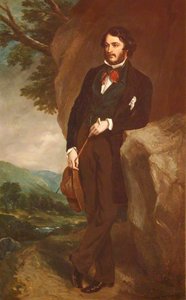
통계 정보Admiral Sir Edward Codrington (1770–1851)
 127.0 x 102.0 cm
 상세 보기
상세 보기
지클레 / 아트 프린트
빠른 제작과 다양한 마감 옵션을 선택할 수 있는 박물관 수준의 지클레이 및 캔버스 프린트. ( 수작업 채색 복제본 주문하기 디지털 이미지 판매 채널로 전환)




































작품의 원본 비율을 그대로 유지하는 프리셋 사이즈 중에서 선택해 보세요.

특정 프레임이나 공간에 맞춰 직접 치수를 입력하실 수 있습니다. 선택하신 사이즈가 원본 이미지의 비율과 일치하지 않을 경우, 작품을 크롭(자르기)하거나 이미지를 대칭 또는 단색 채우기로 확장하여 제작합니다. 제작 시작 전, 최종 확인을 위해 디지털 목업이 전송됩니다.
화면상의 미리보기는 실제 크롭이나 확장 상태를 반영하지 않으므로, 최종 구도는 오직 목업을 통해서만 정확하게 확인하실 수 있습니다.
맞춤 사이즈 제작도 가능하지만, 원본 비율을 유지하기 위해서는 사전 정의된 목록에서 치수를 선택하시는 것을 권장합니다.


 유리 옵션은 110cm 미만 크기에서만 선택 가능합니다.

Admiral Sir Edward Codrington (1770–1851)
지클레 / 아트 프린트
복제본 규격
-


총 결제 금액
$ 80
작가 소개
The Soul Captured in Oil: The Life and Legacy of George Frederick Clarke
In the golden, flickering light of the Victorian era, few artists possessed the ability to bridge the gap between mere physical likeness and profound psychological depth as masterfully as George Frederick Clarke. Born in London in 1823, Clarke emerged from a world of growing industrial complexity into an artistic landscape defined by a reverence for tradition and a burgeoning fascination with Romanticism. His journey was not merely one of personal ambition but was deeply rooted in a lineage of patronage; the son of William Clarke, a man of significant legal standing and means, George was afforded the rare luxury of an education that prioritized the cultivation of the aesthetic spirit. This early immersion in the upper echelons of British society provided him with more than just financial stability—it granted him intimate access to the very subjects who would become his lifelong muses: the aristocracy, the intellectuals, and the historical titans of his age.
The trajectory of Clarke’s artistry was irrevocably altered by his formative years at Marlborough College, where he encountered the formidable influence of John Ruskin. To study under Ruskin was to be initiated into a philosophy that demanded both scientific precision and emotional resonance. From this mentorship, Clarke inherited a devotion to the "truth to nature" principle, a belief that would manifest in his meticulous attention to the textures of velvet, the subtle sheen of silk, and the weathered contours of a human face. This Ruskinian influence instilled in him a unique duality of technique; he became a rare virtuoso capable of navigating the delicate transparency of watercolor washes and the rich, commanding weight of oil glazes. His canvases often shimmered with an ethereal luminosity, achieved through a sophisticated layering process that allowed light to appear as if it were emanating from within the subject itself.
A Master of the Victorian Gaze
As his career matured, Clarke’s reputation solidified as a premier portraitist of the British elite. His work was characterized by an academic realism that never descended into the sterile or the mechanical. Instead, he sought to capture what contemporaries called the "essence" of the sitter. Whether rendering the dignified presence of Dr. William Harris Murch or the commanding stature of Lord John Manners, Clarke utilized a rich, tonal palette to evoke a sense of permanence and historical weight. His portraits were not merely records of appearance but were narrative windows into the character of the Victorian era, capturing the gravity, the duty, and the quiet introspection of a generation.
The technical brilliance of his oeuvre can be observed through several defining elements:
- Textural Complexity: His ability to blend thin oil glazes with watercolor-like washes created surfaces that possessed an almost tactile quality, inviting the viewer to feel the weight of a heavy cloak or the softness of skin.
- Atmospheric Depth: Drawing from Romantic ideals, Clarke often integrated subtle environmental elements—such as the distant, moody landscapes seen in his 1874 portrait of the 7th Duke of Rutland—to mirror the internal temperament of his subjects.
- Psychological Insight: Beyond the finery of aristocratic dress, Clarke’s true achievement lay in his use of light and shadow to suggest the hidden thoughts and complexities of the human psyche.
By the time of his passing in 1906, George Frederick Clarke had left an indelible mark on the history of British portraiture. He stood as a bridge between the rigid formal traditions of the early nineteenth century and the more emotive, atmospheric approaches that would follow. His legacy remains preserved in the halls of prestigious collections, serving as a testament to a period when art served as the ultimate mirror to the soul of a nation, capturing the fleeting dignity of an era through the enduring power of the brush.
george frederick clarke
1823 - 1906
작가 정보 요약
- Artistic Movement Or Style: Romanticism
- Artists Or Movements Influenced By This Artist: ['British Portraiture']
- Artists Who Influenced This Artist: ['Sir Thomas Lawrence']
- Date Of Birth: 1823
- Date Of Death: 1906
- Full Name: George Frederick Clarke
- Nationality: British
- Notable Artworks:
- Lord John James Robert Manners (1818–1906)
- Portrait of Lady Harriet Manners
- Place Of Birth: London, England