Realism · 1825
Self-Portrait (조지 치너리, 1825)
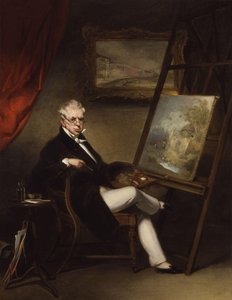
조지 치너리 (1774–1852) 작가의 Self-Portrait 1825년에 제작되었습니다. Realism 운동에 속합니다. Oil On Canvas(으)로 제작되었습니다. 뉴욕, 미국에 위치한 메트로폴리탄 미술관에 소장되어 있습니다. 크기는 22 × 18 cm입니다.
- 1825
- Oil On Canvas
- 22 × 18 cm
- 메트로폴리탄 미술관, 뉴욕

 미리보기

 수작업 유화 작품
 공유하기
 공유하기
 학습용 요약본


 다운로드
 유사 작품 더 보기
 X-레이
 슬라이드 쇼 보기
 질의응답

 통계 정보
Self-Portrait 요약
- 제목
- Self-Portrait
- 작가
- 조지 치너리 (1774–1852)
- 작가 출생지
- 런던, 영국
- 제작 연도
- 1825
- 매체
- Oil On Canvas
- 크기
- 22 × 18 cm
- 전시 장소
- 메트로폴리탄 미술관, 뉴욕, 미국
- 운동성
- Realism
- 제작 시기
- 19th Century
- 주제
- portrait, self-reflection, spectacles, fur collar, china, 1825
Self-Portrait은(는) 무엇을 묘사하고 있나요?
Identification of the Self-Portrait by George Chinnery
This work is a Self-Portrait by the artist George Chinnery. It represents a significant moment in his career, painted during his time in China between 1825 and 1828. Among the dozen self-portraits Chinnery produced throughout his life, this particular likeness is noted for being his most intimate and engaging. It offers a rare, personal glimpse into the character of a man known for his wit and his volatile, eccentric nature.
The piece was executed during a period of transition for the artist. Having moved to southern China due to mounting debts, Chinnery used his brush to document not only the landscapes and people of the region but also his own shifting circumstances. This specific portrait captures a sense of introspection that distinguishes it from his more formal commissions for the British community in India or the merchants of Macau.
Visual Composition and Subject Matter
The composition is centered on the subject's face and upper torso, presenting a middle-aged man in a moment of quiet introspection. He is positioned with his body turned slightly toward the viewer’s right, though his presence remains immediate and direct. A pair of spectacles rests upon his face, and a dark, textured fur collar frames his neck, adding a sense of weight and substance to his figure. His expression is serious, lending a somber quality to the encounter.
The color palette is restrained, relying heavily on a foundation of browns, ochres, and muted reds. These tones harmonize with the subject's warm brown skin tone, creating a cohesive and grounded atmosphere. Behind him, the background is intentionally blurred, suggesting the presence of a distant landscape without providing specific topographical detail. This lack of clarity in the distance pushes the figure forward, ensuring the viewer's attention remains fixed on the character of the man himself.
Technique and Artistic Style
This oil-on-canvas portrait is defined by a tactile, physical presence. The artist employs a technique characterized by loose brushwork and a heavy use of impasto, where the paint is applied thickly to build up the surface. This layered approach does more than just apply color; it creates a sense of volume and form, allowing the light to catch the ridges of the pigment. Such a method gives the work a textured, almost sculptural quality that emphasizes the physicality of the medium.
The style leans toward realism, yet it is executed through expressive brushstrokes that prioritize character over photographic precision. Rather than relying on smooth, blended transitions, the artist uses visible marks to define the contours of the face and the deep folds of the clothing. These lines work in tandem with the play of light and shadow to establish the subject's features. The result is a work that feels immediate and deeply personal, capturing a specific mood through the very texture of the paint itself.
History and Provenance of the Work
This intimate likeness was painted in China during the years 1825–28. It carries a distinguished lineage, having once belonged to Benjamin Chew Wilcox. A businessman involved in the opium trade, Wilcox was a prominent figure who also commissioned a full-length portrait of himself from the artist.
The provenance of the work connects it to the significant commercial history of the region. It is currently held within the collection of The Hong Kong and Shanghai Banking Corporation Ltd. This placement ensures the piece remains linked to the historical networks that the artist navigated throughout his residency in Asia.
Self-Portrait은(는) 어느 미술관에 소장되어 있나요?
메트로폴리탄 미술관
뉴욕, 미국
메트로폴리탄 미술관의 기원과 역사 메트로폴리탄 미술관은 기업가와 금융가, 그리고 당대를 대표하는 예술가와 사상가들이 공유한 원대한 비전에서 그 뿌리를 찾을 수 있습니다. 1870년 법인으로 설립된 이후, 이 기관은 점차 늘어가는 소장품들을 품어 안을 영구적인 안식처를 찾아 나섰습니다. 현재의 자리에 정착하기 전, 미술관은 웨스트 14번가에 위치한 더글라스 맨션 저택에서 잠시 머물며 그 첫걸음을 뗐습니다.


Self-Portrait의 고해상도 이미지

조지 치너리, Self-Portrait (1825), 메트로폴리탄 미술관. 퍼블릭 도메인
Self-Portrait에 관한 질문과 답변
"Self-Portrait"의 원작은 어느 박물관에 소장되어 있나요?
조지 치너리의 "Self-Portrait"은(는) 메트로폴리탄 미술관, 뉴욕, 미국에 전시되어 있습니다. 박물관 목록은 복제품이 아닌 원작을 기준으로 합니다.
조지 치너리의 "Self-Portrait"은(는) 언제 제작되었나요?
조지 치너리의 "Self-Portrait"은(는) 1825년에 제작되었습니다.
"Self-Portrait"은 어떤 기법으로 제작되었나요?
조지 치너리의 "Self-Portrait"의 재료는 Oil On Canvas입니다. 복제화는 이 기법 특유의 질감을 그대로 구현하는 것을 목표로 합니다.
조지 치너리의 "Self-Portrait"의 실제 크기는 어떻게 되나요?
조지 치너리의 "Self-Portrait"의 원작 크기는 22 x 18 cm입니다. 복제화는 동일한 비율을 유지하면서 다른 크기로도 주문 가능합니다.
조지 치너리의 "Self-Portrait"에는 어떤 소재가 등장하나요?
조지 치너리의 "Self-Portrait"에 나타난 주제로는 portrait, self-reflection, spectacles, fur collar, china, 1825, british art, eccentric figure 등이 있습니다. 이들은 모여 작품의 소재를 요약해 보여줍니다.
조지 치너리의 "Self-Portrait"은(는) 퍼블릭 도메인인가요?
조지 치너리의 "Self-Portrait"의 저작권 정보: 해당 작품은 퍼블릭 도메인 - 저작권 보호 기간이 만료되었습니다 상태입니다. 이는 이미지 복제 가능 여부를 결정하는 기준이 됩니다.
"Self-Portrait"의 작가는 누구인가요?
"Self-Portrait"은(는) 조지 치너리의 작품입니다. 이 페이지의 정보는 조지 치너리의 원작에 대해 설명합니다.
조지 치너리의 "Self-Portrait"은(는) 어떤 미술 사조에 속하나요?
조지 치너리의 "Self-Portrait"은(는) Realism 사조에 속하며, 이 사조는 해당 작품의 양식적 배경을 잘 보여줍니다.
"Self-Portrait"은(는) 조지 치너리의 예술적 발전 단계 중 어느 시기를 나타냅니까?
조지 치너리의 작품 세계에서 "Self-Portrait"은(는) Mature Period 시기의 작품입니다. 이 시기는 작가의 다른 작품들과 비교해 보는 데 유용한 지표가 됩니다.
아티스트 조지 치너리 소개
1774–1852, 영국
조지 치너리
초기 생애와 예술적 훈련 (1774-1801) 출생: 1774년 영국 런던 가족 배경: 그의 아버지는 거니(Gurney) 약식 체계의 전문가였습니다. 예술 교육: 런던 왕립 아카데미 학교(Royal Academy Schools)에서 수학하며 고전적 기법과 예술적 원칙의 토대를 다졌습니다. 초기 경력: 1802년 마드라스(첸나이)로 떠나기 전, 아일랜드에서 화가로서 어느 정도 성공을 거두었습니다. 아시아에서의 삶: 인도와 중국 (1802-1852) 인도로의 여정: 1802년 마드라스로 항해하여 도착한 그는 영국인 공동체 내에서 화가로서 입지를 굳혔습니다.
조지 치너리의 다른 작품들
 Portrait of Nathan Dunn1830
 Portrait of a Gentleman1800
 A Man Called W. C. Hunter1825
 Portrait of Harriet Low1833

Self-Portrait 관련 에세이
 Reflecting the Self: A History of Portraiture & Psychological InsightExplore the fascinating history of self-portraiture from Renaissance masters like Dürer & Rembrandt to modern interpretations. Discover the…
 Masterpieces of Henri Fantin-Latour: The Top 25 Essential ArtworksExplore the top 25 masterpieces of Henri Fantin-Latour. From floral studies to realism, discover the full collection on OriginalUniqueArt.c…
 German artworks of the 1910sGerman Expressionism in the 1910s features powerful works by Franz Marc, Max Beckmann, and Ernst Ludwig Kirchner. View the collection at Or…