

 미리보기
미리보기
 공유하기
공유하기 공유하기
공유하기
 상세 정보
상세 정보

 다운로드
다운로드
 유사 작품
유사 작품 X-레이
X-레이 슬라이드 쇼
 통계 정보
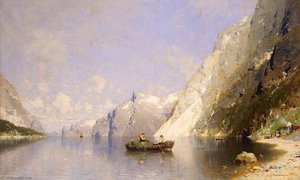
통계 정보Untitled (AQVJ9F)
 1914
1914 87.0 x 635.0 cm
 더 보기
더 보기
지클레 / 아트 프린트
빠른 제작과 다양한 마감 옵션을 제공하는 박물관 품질의 지클레이 또는 캔버스 프린트. ( 손으로 그린 그림 구매 디지털 이미지로 전환)




































작품의 원본 비율을 유지하는 미리 설정된 크기 중에서 선택하세요.

특정 프레임이나 공간에 맞춰 직접 치수를 입력하실 수 있습니다. 선택하신 사이즈가 원본 이미지의 비율과 일치하지 않을 경우, 작품을 크롭(자르기)하거나 이미지를 대칭 또는 단색 채우기로 확장하여 제작합니다. 제작 시작 전, 최종 확인을 위해 디지털 목업이 전송됩니다.
화면상의 미리보기는 실제 크롭이나 확장 상태를 반영하지 않으므로, 최종 구도는 오직 목업을 통해서만 정확하게 확인하실 수 있습니다.
맞춤 사이즈 제작도 가능하지만, 원본 비율을 유지하기 위해서는 사전 정의된 목록에서 치수를 선택하시는 것을 권장합니다.


 유리 옵션은 110cm 미만 크기에서만 선택 가능합니다.

Untitled (AQVJ9F)
지클레 / 아트 프린트
복제본 크기
-


최종 결제 금액
$ 80
작가 약력
A Brush with the Nordic Soul: The Life and Art of Georg Anton Rasmussen
Georg Anton Rasmussen, born in 1842 and passing in 1914, remains a captivating figure within the landscape tradition of 19th-century German painting. Though not as widely celebrated as some of his contemporaries, Rasmussen’s evocative depictions of Norwegian fjords and coastal scenes possess a unique atmospheric quality that continues to resonate with art lovers today. His life, while relatively undocumented, appears deeply intertwined with the landscapes he so passionately portrayed – a dedication born perhaps from an early connection to the natural world. While biographical details are scarce, it is known that Rasmussen spent significant time in Norway, absorbing its dramatic beauty and translating it onto canvas with a distinctive palette knife technique. He wasn’t merely *recording* scenery; he was interpreting it through a lens of personal feeling, imbuing his works with a sense of quiet contemplation and the sublime power of nature.The Norwegian Influence: A Palette of Light and Shadow
Rasmussen's artistic journey was profoundly shaped by Norway’s breathtaking vistas. The country’s majestic fjords – deep inlets carved by glaciers, flanked by towering cliffs and cascading waterfalls – became his primary subject matter. Unlike the meticulous detail favored by some landscape artists, Rasmussen embraced a more impressionistic approach, prioritizing atmosphere and emotional impact over precise representation. His paintings are characterized by bold brushstrokes, often applied with a palette knife to create a textured surface that mimics the ruggedness of the Norwegian terrain. This technique lends his works a sense of immediacy and physicality; one can almost feel the chill of the Nordic air and hear the roar of the waves crashing against the shore. The light in Rasmussen’s paintings is particularly noteworthy – he masterfully captured the subtle nuances of the northern sky, from the soft glow of twilight to the dramatic contrasts of sunlight and shadow. He wasn't simply painting *what* he saw, but rather *how* it felt to be immersed within that environment.Technique and Style: Beyond Realism
Rasmussen’s distinctive style sets him apart from many of his contemporaries. While rooted in the realist tradition, his work transcends mere imitation of nature. The heavy impasto created by his palette knife technique is central to this effect. This wasn't a matter of simply applying paint; it was a deliberate attempt to capture the very *essence* of the landscape – its texture, its weight, its energy. The thick layers of pigment create a three-dimensional quality that draws the viewer into the scene. He often employed a limited color palette, focusing on blues, greens, grays, and browns to evoke the somber beauty of the Nordic environment. However, within this restrained range, he achieved remarkable depth and luminosity through subtle variations in tone and value. His paintings are not about vibrant spectacle; they’re about quiet power and enduring presence. This approach aligns him with a broader movement towards atmospheric realism that was gaining momentum in Europe during the late 19th century, though his focus on Norwegian landscapes remained uniquely personal.Legacy and Historical Context
Though Rasmussen did not achieve widespread fame during his lifetime, his work has experienced a resurgence of interest in recent years. His paintings offer a compelling glimpse into the artistic sensibilities of the 19th century – a period marked by both a fascination with realism and a growing desire to capture subjective experience. He stands as an important example of artists who sought to move beyond mere representation and explore the emotional power of landscape.- His work reflects the Romantic tradition’s emphasis on nature's sublime beauty.
- He contributed to the development of atmospheric realism in German painting.
- Rasmussen’s paintings provide valuable insights into the cultural and artistic exchange between Germany and Norway during the 19th century.
georg anton rasmussen
1842 - 1914