

 실제 크기로 보기
 보내기
보내기 공유하기
공유하기
 상세 보기
상세 보기 가이드 보기

 이미지 다운로드
 유사 작품 더 보기
 X-레이
X-레이 슬라이드 쇼 보기
 통계 정보
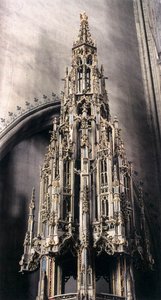
통계 정보Tabernacle (detail)


 상세 보기
상세 보기
지클레 / 아트 프린트
빠른 제작과 다양한 마감 옵션을 선택할 수 있는 박물관 수준의 지클레이 및 캔버스 프린트. ( 수작업 채색 복제본 주문하기 디지털 이미지 판매 채널로 전환)




































작품의 원본 비율을 그대로 유지하는 프리셋 사이즈 중에서 선택해 보세요.

액자나 벽면 크기에 맞춰 필요한 가로와 세로 길이를 입력해 주세요. 프린트는 원본 이미지보다 크게 제작할 수 없으며 오직 자르는 것만 가능하므로, 비율이 다른 사이즈를 선택할 경우 이미지의 일부가 잘려 나갈 수 있습니다. 인쇄 작업에 들어가기 전, 최종 확인을 위해 디지털 목업을 보내드립니다. 이 페이지에 표시된 이미지는 실제 잘리는 영역을 나타내지 않으며, 오직 목업을 통해서만 정확한 확인이 가능합니다.


 유리 옵션은 110cm 미만 크기에서만 선택 가능합니다.

Tabernacle (detail)
지클레 / 아트 프린트
복제본 규격
-


총 결제 금액
₩ 109181
작가 소개
The Architect of Devotion: The Life and Legacy of Gabriel van den Bruyne
In the heart of the Northern Renaissance, amidst the burgeoning intellectual and artistic fervor of Flanders, lived a creator whose work bridged the gap between structural precision and spiritual transcendence. Gabriel van den Bruyne (circa 1500 – 1561) was not merely an artist in the traditional sense, but a master of form who operated at the intersection of architecture and fine art. Born in the historic city of Leuven, his life unfolded during a period of profound transformation in Europe, where the rigid lines of Gothic tradition were beginning to soften under the influence of humanist inquiry and the luminous realism of the Netherlandish masters.
To understand Van den Bruyn’s aesthetic, one must look to his formative years at Saint John's College in Leuven. This prestigious institution provided him with a foundation in classical learning and humanism, an education that would later imbue his architectural designs and artistic compositions with a deep sense of proportion and symbolic weight. While the precise details of his early apprenticeship remain shrouded in the mists of time, the echoes of giants like Jan van Eyck and Rogier van der Weyden are unmistakable in his approach to detail and light. He inherited the Flemish obsession with meticulous realism—the ability to render the texture of marble, the weight of fabric, and the subtle gradations of shadow—and applied it to the very bones of sacred spaces.
A Masterpiece in Marble and Faith
The zenith of Van den Bruyne’s career is inextricably linked to the Sint-Jacobskerk in Leuven. It was here that his dual identity as an architect and artist converged to produce works of enduring spiritual power. His most celebrated contribution, the Tabernacle (completed between 1536 and 1538), stands as a testament to his ability to manipulate physical medium to evoke divine presence. Working primarily in marble, Van den Bruyne achieved a level of sculptural finesse that transformed cold stone into a vessel for liturgical devotion.
This period of his work represents a sophisticated synthesis of several key artistic elements:
- Architectural Rigor: The use of structural geometry to create a sense of permanence and stability within the sacred space.
- Luminous Detail: A mastery of light and shadow, likely influenced by the oil painting techniques of his contemporaries, applied to the relief and surface of stone.
- Theological Narrative: The integration of complex religious symbolism that invited the faithful to contemplate deeper truths through visual beauty.
His monumental Saint James Altarpiece, completed in 1549, further solidified his reputation as a visionary. This work was not simply an object of decoration but a profound theological statement, commissioned by the clergy of St. James' Cathedral to push the boundaries of what an altarpiece could communicate to the masses. Through this ambitious undertaking, Van den Bruyne demonstrated that architecture and art were not separate disciplines, but rather two languages used to tell the same story of faith.
Historical Significance and the Flemish Spirit
Though history often favors the flamboyant brushstrokes of Rubens or the panoramic landscapes of Bruegel, the significance of Gabriel van den Bruyne lies in his role as a foundational pillar of the Northern Renaissance. He belonged to that vital generation of creators who navigated the transition from the medieval mindset to the modern era. His work reflects the intellectual currents of Antwerp and the wider Flemish territories during the reign of Philip II, a time when art was becoming increasingly sophisticated, driven by both religious fervor and the rising influence of wealthy merchant patrons.
Van den Bruyne’s legacy is found in the enduring presence of his structures within the sacred landscapes of Belgium. He remains a pivotal figure for scholars studying the evolution of Northern European art, reminding us that the beauty of the Renaissance was built not just on canvas, but on the very foundations of the cathedrals themselves. His ability to marry the structural logic of an architect with the emotive soul of an artist ensures that his name continues to resonate within the halls of art history.
Gabriel Van Den Bruyne
1500 - 1561 , Belgium
작가 정보 요약
- Full Name: Gabriel Belgeonne
- Nationality: Belgian
- Date Of Birth: 1500
- Date Of Death: 1561
- Place Of Birth: Leuven, Belgium
- Notable Artworks:
- Mai nouveau II
- Complicite trouble
- Artistic Movement Or Style: Engraving
- Artists Who Influenced This Artist: ['Gustave Marchoul']
- Artists Or Movements Influenced By This Artist: ['Far Eastern philosophy']