프린트 판매로 전환
 상세 보기
상세 보기







































 가로 또는 세로 중 어느 한 면이라도 105cm(약 41인치)를 초과하는 작품이나 복제화의 경우, 프레임은 분해된 키트 형태로 배송됩니다. 이는 안전한 배송을 보장하고 운송 중 발생할 수 있는 손상을 방지하기 위함입니다.


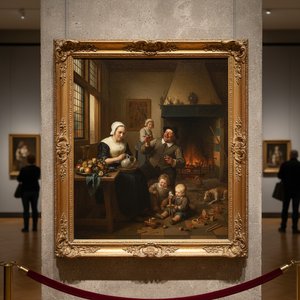
A Window Into Domestic Tranquility: Gabriel Metsu’s “A Woman Seated at a Window”
Gabriel Metsu's "A Woman Seated at a Window," painted circa 1660, stands as a quintessential example of Dutch Golden Age genre painting—a niche-piece meticulously crafted to capture the subtle beauty and contemplative spirit of everyday life. More than just a depiction of a woman indoors, this artwork is laden with symbolic resonance, reflecting prevailing artistic sensibilities and humanist ideals of the era. Gerrit Dou’s influence is palpable in Metsu's masterful illusionistic technique, mirroring the architectural form of a window recess—a stylistic choice that elevates the scene beyond mere representation into an immersive experience for the viewer.Composition & Illusionism: The Art of Mimicking Reality
The painting’s composition immediately draws attention to its central figure – a woman gracefully posed at a windowsill bathed in diffused light. Metsu skillfully employs linear perspective, creating depth within the room and guiding the eye towards the focal point. Supporting this central element are carefully arranged objects—a bowl brimming with fruit, scattered books, and a grapevine climbing upwards—each contributing to the overall atmosphere of serene domesticity. The arched window frame itself reinforces this illusionistic effect, harking back to Dou’s pioneering use of nisstuk format, where artists aimed to convincingly reproduce architectural spaces as if they were actual windows.Color Palette & Texture: Subtle Harmonies and Precise Rendering
The color palette is restrained yet impactful, dominated by muted browns and blacks that establish a grounding backdrop for the scene. However, Metsu introduces warmer hues—primarily reds and yellows within the fruit bowl—and splashes of blue-green from the grapevine, creating visual interest without overwhelming the viewer’s gaze. Crucially, Metsu demonstrates exceptional brushwork, achieving smooth transitions between light and shadow and meticulously rendering textures – from the folds of the woman's dress to the delicate surface of the fruit. This dedication to realism underscores the artist’s commitment to capturing not just what is seen but also how it feels.Symbolism: Beyond Appearance—Psalm 128 and The New Eve
“A Woman Seated at a Window” transcends its visual beauty through layered symbolism rooted in biblical references. The apple held by the woman serves as an allusion to “The New Eve,” representing Mary, symbolizing fertility and divine grace – a motif prevalent in Dutch art during this period. Simultaneously, the birdcage and hearth evoke images of happiness and comfort, echoing Psalm 128’s blessing upon those who cultivate their homes with diligence. These elements collectively convey a humanist vision of domestic life as a cornerstone of spiritual fulfillment.Concluding Impression: A Legacy of Quiet Elegance
Gabriel Metsu's “A Woman Seated at a Window” remains an enduring testament to the Dutch Golden Age’s artistic prowess—a masterpiece that continues to inspire admiration for its meticulous realism, subtle symbolism, and evocative portrayal of human experience. Its quiet elegance speaks volumes about the era’s preoccupation with portraying everyday life with dignity and grace, cementing Metsu's place as one of the most celebrated artists of his time.질의응답
"A Woman Seated at a Window"은(는) 가브리엘 메추의 예술 활동기 중 어느 시기에 해당하나요?
"A Woman Seated at a Window"은(는) 가브리엘 메추의 예술적 생애 중 Mature Period 시기에 해당합니다. 이 분류는 해당 작품을 작가의 예술적 발전 과정과 연결해 줍니다.
가브리엘 메추의 "A Woman Seated at a Window"의 휘도는 어느 정도인가요?
가브리엘 메추의 "A Woman Seated at a Window"의 휘도는 Dark입니다. 휘도는 색상이 빛을 얼마나 반사하는지를 나타냅니다.
가브리엘 메추의 "A Woman Seated at a Window"은 어떤 소재와 분위기를 결합하고 있나요?
"A Woman Seated at a Window"은(는) domesticity, symbolism, interior scene, fruit bowl, genre painting, illusionistic format, psalm 128, window niche을(를) 보여주며, 기록된 분위기는 Serene입니다.
More about this painting
 실제 크기로 보기
 보내기
보내기 공유하기
공유하기
 상세 보기
상세 보기 가이드 보기

 이미지 다운로드
 유사 작품 더 보기
 X-레이
X-레이 슬라이드 쇼 보기
 Q&A
Q&A 통계 정보
통계 정보