프린트 판매로 전환
 상세 보기
상세 보기







































 가로 또는 세로 중 어느 한 면이라도 105cm(약 41인치)를 초과하는 작품이나 복제화의 경우, 프레임은 분해된 키트 형태로 배송됩니다. 이는 안전한 배송을 보장하고 운송 중 발생할 수 있는 손상을 방지하기 위함입니다.


Summer by Frederick Carl Frieseke: A Glimpse of Tranquility
- Artist: Frederick Carl Frieseke
- Year: 1914
- Medium: Oil on Canvas
- Location: MOA Museum of Art, Japan
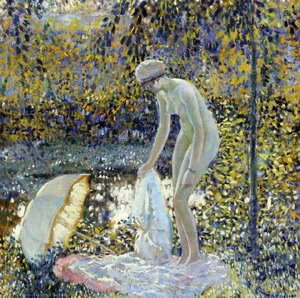
Frederick Carl Frieseke's "Summer" is a captivating example of American Impressionism, transporting viewers to a serene garden setting. The painting depicts two women immersed in a moment of peaceful intimacy, showcasing Frieseke’s mastery of light and color.
Composition and Artistic Style
"Summer" exemplifies Frieseke's signature style – a harmonious blend of Impressionistic techniques with elements of Realism. The composition centers around two figures: one woman reclining languidly on the ground, her head resting comfortably in the lap of another who is playing a musical instrument. Lush greenery and vibrant flowers form a backdrop, creating an atmosphere of tranquility and escape.
Frieseke’s use of broken brushstrokes and bold colors captures the fleeting effects of light, characteristic of Impressionism. The perspective is subtly flattened, prioritizing atmospheric depth over strict realism. This technique draws the viewer into the scene, evoking a sense of being present in that idyllic garden. Details like birds flitting through the foliage and a nearby chair add layers of visual interest.
Historical Context and Influences
Created in 1914, "Summer" reflects the artistic trends of the early 20th century. Frieseke spent much of his career living and working in France, particularly within the Giverny art colony – home to Claude Monet and other prominent artists. While he maintained a degree of independence from Monet's style, Frieseke was undoubtedly influenced by the broader Impressionist movement and admired artists like Renoir.
The painting’s subject matter—leisurely scenes featuring women in idyllic settings—was popular among American expatriate artists during this period. "Summer" embodies a desire to capture moments of beauty and relaxation, reflecting a shift towards more personal and intimate themes in art.
Symbolism and Emotional Impact
Beyond its aesthetic appeal, “Summer” carries subtle symbolic weight. The abundance of flowers represents nature's vitality and fertility, while the nude figure embodies classical ideals of beauty and grace. The act of playing music suggests harmony and emotional connection between the two women.
The overall effect is one of profound tranquility and sensuality. Frieseke’s skillful use of light and color creates a dreamy atmosphere that invites viewers to escape into a world of peace and serenity. "Summer" evokes feelings of warmth, relaxation, and appreciation for the simple pleasures in life—a timeless masterpiece that continues to resonate with audiences today.
질의응답
"Summer"의 Impressionism 양식에는 어떤 정서적 어조가 담겨 있나요?
"Summer"은 Impressionism 운동 내에서 Romantic 정서를 담아내고 있습니다.
학생들을 위한 프레데릭 칼 프리스케의 "Summer" 관련 팩트시트가 있나요?
프레데릭 칼 프리스케의 "Summer"에 대한 가이드 페이지를 이용하실 수 있습니다. 이 페이지는 학생들과 수업용으로 제작된, 인쇄 가능한 작품 정보 시트를 제공합니다.
"Summer"의 색조는 얼마나 채도가 높나요?
프레데릭 칼 프리스케의 "Summer"은(는) Muted의 채도로 기록되었습니다.
More about this painting
 실제 크기로 보기
 보내기
보내기 공유하기
공유하기
 상세 보기
상세 보기 가이드 보기

 이미지 다운로드
 유사 작품 더 보기
 X-레이
X-레이 슬라이드 쇼 보기
 Q&A
Q&A 통계 정보
통계 정보