프린트 판매로 전환
 상세 보기
상세 보기







































 가로 또는 세로 중 어느 한 면이라도 105cm(약 41인치)를 초과하는 작품이나 복제화의 경우, 프레임은 분해된 키트 형태로 배송됩니다. 이는 안전한 배송을 보장하고 운송 중 발생할 수 있는 손상을 방지하기 위함입니다.


Hélène: A Glimpse of Intimate Beauty
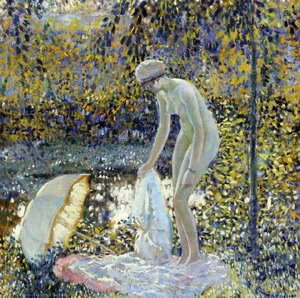
Frederick Carl Frieseke's "Hélène," painted in 1901, is a captivating example of American Impressionism, showcasing the artist’s mastery of light and color to evoke a sense of quiet intimacy. This oil on canvas painting, currently residing at the University of Michigan Museum of Art, transports viewers into a serene domestic scene, inviting contemplation and appreciation for the subtleties of human emotion.
Style and Technique: The Essence of Impressionism
Frieseke’s artistic style is deeply rooted in Impressionism, yet infused with his own unique sensibility. He skillfully employs soft colors—predominantly warm beiges, browns, and golds—and delicate brushstrokes to create a luminous atmosphere. Unlike the more vibrant palettes often associated with French Impressionists, Frieseke favors muted tones that lend a sense of tranquility and nostalgia to his work. In "Hélène," this is particularly evident in the way light filters through the room, gently illuminating the woman's face and upper body while casting soft shadows across the surrounding space. The visible brushstrokes contribute to the painting’s overall impressionistic feel, suggesting movement and capturing a fleeting moment in time. Frieseke’s technique prioritizes atmosphere and emotion over strict realism, resulting in a work that is both visually appealing and emotionally resonant.
Subject Matter and Composition: A Moment of Reflection
The subject of "Hélène" is a woman seated on a bed within an interior setting. Her posture—leaning forward with her chin resting on her hand while delicately touching her face—suggests introspection or quiet contemplation. The composition centers around the figure, drawing the viewer's eye to her expression and creating a sense of intimacy. The surrounding elements – the sofa, wall adorned with a framed picture, and rug – serve as supporting details that enhance the overall atmosphere without distracting from the central subject. Frieseke’s deliberate arrangement of these elements creates a balanced and harmonious composition, further emphasizing the painting's serene mood.
Symbolism and Emotional Impact: Quiet Melancholy
Beyond its aesthetic appeal, "Hélène" carries subtle symbolic weight. The solitary figure evokes feelings of quiet melancholy or nostalgia. The muted color palette reinforces this sense of introspection, creating a contemplative atmosphere that invites viewers to reflect on their own emotions. While the scene appears peaceful and serene, there's an underlying current of sadness or longing conveyed through the woman’s posture and expression. Frieseke masterfully captures these nuanced emotions, transforming a simple domestic scene into a profound exploration of human experience.
Frederick Carl Frieseke: The Artist Behind the Masterpiece
- Born: April 7, 1874, Owosso
- Died: August 24, 1939
Frederick Carl Frieseke was a prominent figure in the American Impressionist movement. He spent most of his life as an expatriate in France, where he honed his craft and developed a unique style characterized by dappled sunlight and depictions of female subjects. His works can be found in museums and collections around the world.
질의응답
"Hélène"은(는) 어떤 색조에 가깝나요?
"Hélène"은(는) Golden Yellow Range 톤에 가깝습니다.
"Hélène"은(는) 언제 제작되었으며, 어떤 사조에 속하나요?
"Hélène"은(는) 1901년에 Impressionism 사조의 흐름 속에서 제작되었습니다.
프레데릭 칼 프리스케의 "Hélène"은(는) 선물로 추천하시나요? 어떤 분께 드리면 좋을까요?
프레데릭 칼 프리스케의 "Hélène"은(는) Anniversary을(를) 위한 선물로, 특히 Accent에 추천합니다. 작품의 복제본을 선물용으로 전하실 수 있습니다.
More about this painting
 실제 크기로 보기
 보내기
보내기 공유하기
공유하기
 상세 보기
상세 보기 가이드 보기

 이미지 다운로드
 유사 작품 더 보기
 X-레이
X-레이 슬라이드 쇼 보기
 Q&A
Q&A 통계 정보
통계 정보