프린트 판매로 전환
 상세 보기
상세 보기







































 가로 또는 세로 중 어느 한 면이라도 105cm(약 41인치)를 초과하는 작품이나 복제화의 경우, 프레임은 분해된 키트 형태로 배송됩니다. 이는 안전한 배송을 보장하고 운송 중 발생할 수 있는 손상을 방지하기 위함입니다.


A Symphony of Symbolism and Delicate Technique
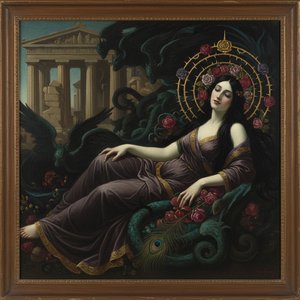
In the quiet, evocative realm of German Symbolism, few works capture the delicate tension between stability and uncertainty as poignantly as Franz Ritter von Stuck’s “The Seesaw.” Completed in 1898, this masterpiece transcends a simple depiction of two figures to become a profound exploration of psychological equilibrium. As one gazes upon the canvas, the viewer is immediately drawn into a world where the physical act of play is imbued with a heavy, almost melancholic significance. The painting serves as a cornerstone of an era that sought to move beyond mere representation, instead using the canvas to illuminate the hidden, often turbulent truths of the human experience.
The composition is masterfully asymmetrical, a deliberate choice by Stuck to mirror the precarious nature of the subject itself. One woman remains firmly planted upon the earth, her gaze directed upward in a moment of quiet contemplation, while her companion leans precariously against the central pole, seeking balance amidst movement. This structural imbalance creates a palpable sense of tension, suggesting a struggle for stability within an ever-shifting reality. The presence of nature—a solitary tree and the subtle inclusion of birds in the background—adds a layer of atmospheric depth, grounding this symbolic drama within a dreamlike, mythic landscape.
The Mastery of Color and Light
Stuck’s technical prowess is most evident in his sophisticated use of color and light to direct the viewer's emotional response. The palette is dominated by muted, monochromatic shades of grey and brown, creating an atmosphere that feels both timeless and slightly somber. However, this subdued environment is brilliantly interrupted by a singular, striking element: the splash of crimson on the seated woman’s dress. This bold contrast does more than just catch the eye; it serves as a focal point for the painting's emotional intensity, highlighting her vulnerability and adding a pulse of life to an otherwise hushed scene.
The artist employed a technique characterized by painstaking, delicate brushwork, a hallmark of the Symbolist movement. Every stroke contributes to a sense of atmospheric depth, where the boundaries between the figures and their environment feel soft yet intentional. For the discerning collector or interior designer, this interplay of light and shadow offers an incredible versatility. The painting possesses a quiet authority that can anchor a room, providing a sophisticated focal point that invites long periods of reflection and conversation.
A Timeless Legacy for the Modern Collector
To possess a reproduction of “The Seesaw” is to bring a piece of art history into the contemporary home. Franz Ritter von Stuck, often referred to as the “Prince of Art,” was a figure who bridged the gap between the rigid academic traditions of the 19th century and the burgeoning energy of modernism. His ability to blend classical precision with deep, psychological mystery makes his work eternally relevant. This painting does not merely decorate a space; it transforms it, offering an intellectual and emotional depth that resonates with anyone drawn to the beauty of the unseen.
Whether you are seeking to inspire guests in a curated gallery setting or looking for a soulful addition to a private study, this work stands as a testament to the power of Symbolism. It is a piece that rewards repeated viewing, revealing new layers of meaning with every encounter—a true investment in the enduring legacy of German fine art.
질의응답
"The Seesaw"의 미리보기를 어디에서 볼 수 있나요?
프란츠 폰 슈투크의 "The Seesaw"의 미리보기를 작품의 미리보기 페이지에서 확인하실 수 있습니다.
"The Seesaw"의 작가는 누구인가요?
"The Seesaw"의 작가는 프란츠 폰 슈투크입니다. 이 작품은 프란츠 폰 슈투크의 이름으로 등록되어 있습니다.
프란츠 폰 슈투크의 "The Seesaw"에는 어떤 색상 팔레트가 사용되었나요?
"The Seesaw"의 색상은 Earthy 팔레트를 이룹니다. 이 분류는 작품을 지배하는 주요 색상군을 설명합니다.
More about this painting
 실제 크기로 보기
 보내기
보내기 공유하기
공유하기
 상세 보기
상세 보기 가이드 보기

 이미지 다운로드
 유사 작품 더 보기
 X-레이
X-레이 슬라이드 쇼 보기
 Q&A
Q&A 통계 정보
통계 정보