

 프린트 판매로 전환
 상세 보기
상세 보기







































 가로 또는 세로 중 어느 한 면이라도 105cm(약 41인치)를 초과하는 작품이나 복제화의 경우, 프레임은 분해된 키트 형태로 배송됩니다. 이는 안전한 배송을 보장하고 운송 중 발생할 수 있는 손상을 방지하기 위함입니다.


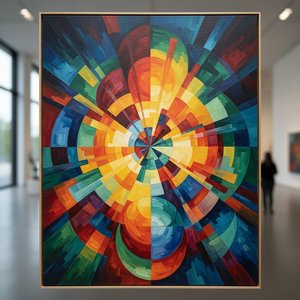
František Kupka’s “Color Drawings”: A Pioneering Exploration of Introspection
“Color Drawings,” attributed to the visionary František Kupka (1871-1957), stands as a pivotal work in the nascent field of abstract art. Born in Opočno, Bohemia, Kupka's artistic trajectory represents a remarkable shift from representational painting to an intensely personal investigation of color and form – a journey that began with traditional academic training but ultimately led him to become one of the earliest pioneers of Simultanism, later known as Orphism.
- Subject Matter: The central figure, a woman lost in contemplation, immediately draws the viewer into a deeply personal space. Her downward gaze and closed eyes evoke a sense of introspection, inviting us to share her silent moment of reflection.
- Color Palette: Kupka’s masterful use of color is paramount. The dominant yellow hue creates an ethereal atmosphere, amplifying the emotional resonance of the scene. Blues are strategically employed to emphasize the woman's dress and contribute to the overall sense of serenity and mystery.
The Rise of Simultanism: A Reaction Against Representation
Kupka’s artistic evolution reflects a broader movement occurring at the turn of the 20th century – a rejection of traditional representational painting in favor of exploring the simultaneous effects of color and form. Influenced by artists like Paul Séraphin and earlier experiments with optical illusions, Kupka sought to capture not what he *saw*, but rather how his eye *perceived* color and light. This approach, termed “Simultanism” or “Orphism,” aimed to represent the subjective experience of vision itself.
His time in Paris during the late 1890s was crucial. Exposure to the avant-garde artistic circles and his studies with Laurens provided him with the tools and intellectual framework necessary to develop his radical ideas. The painting’s composition, with its fragmented figures and emphasis on color relationships, is a direct result of this transformative period.
Technique and Composition: A Dance of Color
Kupka's technique in “Color Drawings” is characterized by loose, expressive brushstrokes and a deliberate avoidance of traditional perspective. The painting’s composition isn’t built around a central focal point; instead, the eye is drawn across the canvas through the interplay of color and shape. The figures are rendered with simplified forms, almost dissolving into the surrounding color field – a hallmark of Simultanism.
- Brushwork: Noticeable gestural marks contribute to the painting’s dynamic energy and convey a sense of immediacy.
- Color Relationships: The careful juxtaposition of colors creates visual tension and harmony, further enhancing the emotional impact of the work.
Symbolic Resonance and Emotional Impact
"Color Drawings" transcends mere aesthetic pleasure; it’s a profound meditation on the human condition. The solitary figure embodies themes of introspection, vulnerability, and perhaps even spiritual seeking – concerns that resonated deeply with Kupka's own philosophical inquiries. The painting’s evocative atmosphere invites viewers to contemplate their own inner worlds, making it a timeless work of art that continues to captivate audiences today.
질의응답
"Color drawings" 작품을 증강 현실(AR)로 미리 볼 수 있나요?
"Color drawings"은(는) 증강 현실 미리보기를 제공합니다. 작품의 AR 미리보기 페이지를 통해 호환 가능한 기기에서 여러분의 공간에 배치된 작품을 확인해 보세요.
프란티셰크 쿠프카의 "Color drawings"의 정서적 분위기는 어떠한가요?
프란티셰크 쿠프카의 "Color drawings"에 기록된 정서적 톤은 Reflective입니다. 이는 작품이 표현하는 감정을 요약한 것입니다.
프란티셰크 쿠프카의 "Color drawings"의 색감과 가장 잘 어우러지는 공간은 어디인가요?
Dark 색조를 담은 프란티셰크 쿠프카의 "Color drawings"는 Living Room에 배치하시길 추천드립니다. 이 작품의 색감이 이러한 제안의 이유이기도 합니다.






 실제 크기로 보기
 보내기
보내기 공유하기
공유하기
 상세 보기
상세 보기 가이드 보기

 이미지 다운로드
 유사 작품 더 보기
 X-레이
X-레이 슬라이드 쇼 보기
 Q&A
Q&A 통계 정보
통계 정보