
 미리보기
미리보기
 공유하기
공유하기 공유하기
공유하기
 상세 정보
상세 정보 가이드 보기

 다운로드
다운로드
 유사 작품 더 보기
 X-레이
X-레이 슬라이드 쇼 보기
 질의응답
질의응답 통계 정보
통계 정보The Judgment of Paris

- 135.0 x 188.0 cm


 더 보기
더 보기
지클레 / 아트 프린트
빠른 제작과 다양한 마감 옵션을 제공하는 박물관 수준의 지클레이 및 캔버스 프린트. ( 수작업 채색 복제본 주문하기 디지털 이미지로 전환)




P118B ₩10

P118H ₩10

P118W ₩10

P438Z ₩10

P508JH ₩12

P508YH ₩12

P805H ₩10

P805Z ₩10

P919BZ ₩10

P919G ₩10

P919XJ ₩10

P959ZH ₩10

P968JZ ₩12

W106C ₩8

W218G ₩10

W218JH ₩8

W218Y ₩10

W307PJ ₩10

W316G ₩10

W316PJ ₩8

W316Y ₩10

W398PJ ₩8

W4111J ₩10

W500HY ₩15

W500JH ₩15

W692G ₩12

W849H ₩8

W940BG ₩15

W953PJ ₩8




작품의 원본 비율을 그대로 유지하는 프리셋 사이즈 중에서 선택해 보세요.

액자나 벽면 크기에 맞춰 필요한 가로와 세로 길이를 입력해 주세요. 프린트는 원본 이미지보다 크게 제작할 수 없으며 오직 자르는 것만 가능하므로, 비율이 다른 사이즈를 선택할 경우 이미지의 일부가 잘려 나갈 수 있습니다. 인쇄 작업에 들어가기 전, 최종 확인을 위해 디지털 목업을 보내드립니다. 이 페이지에 표시된 이미지는 실제 잘리는 영역을 나타내지 않으며, 오직 목업을 통해서만 정확한 확인이 가능합니다.


 유리 옵션은 110cm 미만 크기에서만 선택 가능합니다.

The Judgment of Paris
지클레 / 아트 프린트
복제본 크기
-


최종 결제 금액
₩ 108774
The Judgment of Paris: A Baroque Triumph
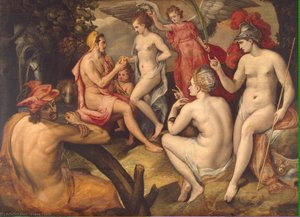
“The Judgment of Paris” by Frans Floris stands as a monumental achievement in Northern Renaissance art, embodying the fervor for classical ideals that characterized the Romanist movement. Painted around 1550, this opulent oil painting transcends mere visual representation; it’s a carefully crafted tableau brimming with narrative complexity and imbued with profound humanist thought.
- Subject Matter: The scene depicts the pivotal moment from Greek mythology – the contest between Hera, Athena and Aphrodite to determine who was the fairest among goddesses. Paris, the Trojan prince, is tasked with adjudicating their claims, ultimately awarding the golden apple to Aphrodite, securing Helen’s affections and triggering the legendary Trojan War.
- Style: Floris's work firmly establishes itself within the Baroque style, distinguished by dynamic movement, dramatic lighting, and theatrical composition. Unlike the serene elegance of earlier Renaissance art, “The Judgment of Paris” pulsates with energy, capturing the intensity of human emotion and divine intervention.
- Technique: Floris’s mastery is evident in his meticulous application of oil paint—a technique perfected during this period. He skillfully employs blending, glazing, and scumbling to achieve remarkable textural depth and luminosity. The artist's attention to detail extends to the depiction of skin tones, drapery folds, and stone surfaces, creating a palpable sense of realism.
The painting’s color palette dominates with warm hues—rich reds, golds, and browns—contrasting sharply against cooler blues and greens in the background. These colors amplify the dramatic atmosphere, highlighting key figures and emphasizing the opulent grandeur of the scene. Floris's use of perspective contributes to the theatrical effect, flattening space while suggesting depth through layering and atmospheric haze.
- Symbolism: Beyond its narrative core, “The Judgment of Paris” is laden with symbolic elements. The presence of Hermes guides the goddesses and Paris, representing divine authority and rational judgment. Nike, the winged goddess of victory, crowns Aphrodite, signifying triumph and fulfillment. Furthermore, the depiction of fruits and foliage underscores themes of fertility and abundance.
- Historical Context: Floris’s painting reflects the intellectual currents of its time—the Romanist movement's passionate embrace of Italian High Renaissance masters like Michelangelo and Raphael. Artists traveled to Italy to study these masters and assimilate their stylistic innovations into Northern art traditions. This artwork embodies the humanist spirit prevalent in Antwerp during the mid-16th century.
Emotionally, “The Judgment of Paris” evokes a powerful blend of passion, drama, and transgression. Floris captures the psychological complexities of desire and ambition, presenting a scene that resonates with timeless themes of beauty, love, and divine influence. It remains an unforgettable testament to Baroque artistry and Northern Renaissance intellectual heritage.
질의응답
Frans Floris의 "The Judgment of Paris"의 색감과 가장 잘 어우러지는 공간은 어디인가요?
Earthy 색조를 담은 Frans Floris의 "The Judgment of Paris"는 Living Room에 배치하시길 추천드립니다. 이 작품의 색감이 이러한 제안의 이유이기도 합니다.
주문하기 전에 Frans Floris의 "The Judgment of Paris"를 미리 볼 수 있나요?
Frans Floris의 "The Judgment of Paris"의 미리보기는 작품의 가상 배치 미리보기 페이지에서 확인하실 수 있습니다.
Frans Floris의 "The Judgment of Paris"의 휘도는 어느 정도인가요?
Frans Floris의 "The Judgment of Paris"의 기록된 휘도는 Soft Shadow입니다.
작가 정보
The Flemish Master of Romanism: The Life and Legacy of Frans Floris
In the vibrant, intellectual landscape of the 16th-century Low Countries, few figures loomed as large or as influential as Frans Floris. Known to history as Frans Floris the Elder, this Flemish Renaissance pioneer acted as a vital bridge between the Northern traditions of his homeland and the monumental grandeur of the Italian High Renaissance. Born in Antwerp around 1519 into a lineage of skilled craftsmen, Floris carried the weight of a family tradition rooted in stonemasonry and artistry. This heritage of precision and structural understanding would later manifest in his ability to compose massive, complex scenes that commanded the attention of both royalty and the burgeoning merchant class of Antwerp.
The trajectory of Floris’s career was irrevocably altered by his immersion in Romanism, a stylistic movement that saw Northern artists traveling to Italy to absorb the lessons of masters like Michelangelo and Raphael. Under the guidance of mentors such as Lambert Lombard, Floris developed an acute sensitivity to anatomical accuracy and the dramatic use of light and shadow. His work became a profound dialogue between Flemish meticulousness and Italian muscularity. This synthesis allowed him to move beyond mere representation, creating works that embodied the humanist ideals of his era—where classical mythology and biblical narratives were reimagable through a lens of epic scale and emotional depth.
A Tapestry of Myth and Allegory
The breadth of Floris’s oeuvre is nothing short of extraordinary, spanning monumental history paintings, intimate portraits, and intricate designs for tapestries. His mastery lay in his ability to breathe life into the ancient myths, transforming static legends into dynamic, breathing dramas. In works such as The Judgment of Paris, one can witness the opulent textures and complex compositions that defined his mature style, utilizing classical mythology to explore themes of beauty, desire, and fate. Similarly, his Pomona serves as a stunning testament to his ability to depict mythological abundance, blending the grotesque with the sublime in a way that foreshadowed the dramatic energy of the Baroque era.
Beyond the grand scale of his mythological epics, Floris possessed a remarkable gift for capturing the human essence in portraiture and allegorical studies. His paintings often functioned as intellectual puzzles, rich with symbolic detail intended for a sophisticated audience:
- The Allegory of Music: A captivating scene where a lady with a lute is set against the backdrop of Roman soldiers, offering a profound glimpse into the era's use of musical symbolism.
- Head of a Woman: A masterclass in light and shadow, where pearl-adorned curls and lifelike skin tones demonstrate his command over the subtle nuances of portraiture.
- The Awakening of the Arts: A work that showcases his ability to utilize rich textures and dynamic movement to convey the very spirit of creative rebirth.
Historical Significance and Enduring Influence
Frans Floris was more than just a painter; he was an architect of a new Northern aesthetic. By integrating the anatomical rigor of the Italian Renaissance with the narrative richness of Flemish tradition, he helped establish Antwerp as a premier center for European art. His influence extended far beyond the canvas, as his designs for tapestries and prints disseminated his Romanist ideals across the continent, shaping the visual language of generations of Northern artists.
Though his life was cut short in 1570, the impact of his work remained a cornerstone of the Northern Renaissance. He successfully navigated the transition from the late Gothic sensibilities to the sophisticated humanism of the 16th century, leaving behind a legacy of monumental history paintings that continue to captivate viewers with their dramatic compositions and profound intellectual depth. To study the works of Frans Floris is to witness the very moment when the North truly embraced the light of the Renaissance.
Frans Floris
1519 - 1570
작가 정보 요약
- Artistic Movement Or Style: Romanism
- Artists Or Movements Influenced By This Artist: ['Lucas de Heere']
- Artists Who Influenced This Artist: ['Lambert Lombard']
- Date Of Birth: 1519
- Date Of Death: 1570
- Full Name: Frans Floris
- Nationality: Flemish
- Notable Artworks:
- The Awakening of the Arts
- Banquet of the Gods
- Head of a Woman
- Place Of Birth: Antwerp
관련 콘텐츠

화려함 속에 감춰진 진실! 바로크 미술을 정의한 10대 걸작 탐구
화려함과 극적인 표현이 압권! 바로크 미술을 대표하는 10대 걸작의 숨겨진 이야기를 만나보세요. 베르니니, 루벤스 등 거장의 작품부터 바로크 색감, 예술적 기법까지 – OriginalUniqueArt.com에서 명품 복제 & 인테리어 영감을 얻으세요! 지금 바로 컬렉션을 탐험해보세요.

Theatricality & Triumph: Baroque Drama in Painting & Sculpture
Explore the dramatic world of Baroque art! Discover its history, defining characteristics, & lasting influence on painting & sculpture. Expert insights into Caravaggio, Zurbarán, and Bernini – plus high-quality reproductions at OriginalUniqueArt.

Baroque Classicism: The Grandeur of Order and Drama in 17th-Century Art History
Explore the profound elegance of Baroque Classicism. Discover how 17th-century masters synthesized dramatic emotion with classical order through the lens of the Counter-Reformation and the works of legends like Carlo Maratta and Andrea Sacchi.

The Dramatic Flourish: Exploring the Baroque Movement's Enduring Legacy in Art History
Explore the dramatic world of Baroque art! Discover iconic artists like Caravaggio & Rubens, defining techniques, and its lasting impact on art history. Expert insights for collectors & enthusiasts at OriginalUniqueArt.

바로크의 드라마: 현대 인테리어에 풍요로움과 감동을 불어넣기
바로크 예술의 풍요로운 세계를 탐험하고, 현대 인테리어에 감동을 불어넣는 방법을 OriginalUniqueArt에서 만나보세요. 카라바조, 렘브란트 등 거장들의 작품과 키아로스쿠로 기법 활용 노하우를 공개합니다.