

 실제 크기로 보기
 보내기
보내기 공유하기
공유하기
 상세 보기
상세 보기 가이드 보기

 이미지 다운로드
 유사 작품 더 보기
 X-레이
X-레이 슬라이드 쇼 보기
 통계 정보
통계 정보Bacchus and Ariadne


 상세 보기
상세 보기
핸드메이드 유화 복제화
작가가 직접 캔버스에 손으로 그린 유화 작품으로, 원하는 크기와 액자로 맞춤 제작해 드립니다. ( 프린트 판매로 전환 디지털 이미지 판매 채널로 전환)




P118B $10

P118H $10

P118W $10

P438Z $10

P508JH $12

P508YH $12

P805H $10

P805Z $10

P919BZ $10

P919G $10

P919XJ $10

P959ZH $10

P968JZ $12

W106C $8

W218G $10

W218JH $8

W218Y $10

W307PJ $10

W316G $10

W316PJ $8

W316Y $10

W398PJ $8

W4111J $10

W500HY $15

W500JH $15

W692G $12

W849H $8

W940BG $15

W953PJ $8




작품의 원본 비율을 그대로 유지하는 프리셋 사이즈 중에서 선택해 보세요.

특정 프레임이나 공간에 맞춰 원하는 크기를 직접 입력하실 수 있습니다. 선택하신 크기가 원본 이미지의 비율과 일치하지 않을 경우, 작품을 자르거나 추가적인 수작업 요소를 더해 그림을 확장하여 제작합니다. 제작 시작 전, 최종 확인을 위해 디지털 목업을 보내드립니다.
화면상의 미리 보기는 실제 크롭(자르기)이나 확장된 상태를 완벽히 반영하지 않을 수 있습니다. 최종 구도는 오직 목업을 통해서만 정확하게 확인하실 수 있습니다.
맞춤 크기 제작도 가능하지만, 원본의 비율을 그대로 유지하기 위해서는 미리 정의된 목록에서 크기를 선택하시는 것을 권장합니다.
주문 완료 후 OriginalUniqueArt.com 팀에서 상세 안내를 위해 고객님께 이메일을 보내드리며, 미리보기 시안을 함께 제공해 드립니다.


 유리 옵션은 110cm 미만 크기에서만 선택 가능합니다.

Bacchus and Ariadne
재현 매체
복제본 규격
-


총 결제 금액
$ 300
A Tempestuous Sea: Decoding Frank Auerbach’s ‘Bacchus and Ariadne’
Frank Helmuth Auerbach's *Bacchus and Ariadne*, painted in 1971, is not a literal depiction of the mythological scene it names. Instead, it’s a powerful evocation of its underlying themes – passion, chaos, transformation, and the intoxicating power of nature – rendered through the lens of Abstract Expressionism. The painting presents as a dynamic seascape, though one fractured and rebuilt with energetic brushwork and a bold palette. Auerbach doesn't *show* us Bacchus and Ariadne; he conveys the *feeling* of their encounter: the dizzying rush of liberation, the wildness of Dionysian revelry, and the vulnerability inherent in surrendering to something larger than oneself.Technique & Texture: A Symphony of Impasto
The most immediately striking aspect of this work is Auerbach’s masterful handling of paint. Thick impasto – layers upon layers of pigment built up on the canvas – creates a remarkably tactile surface. This isn't merely paint *on* canvas; it feels as though the sea itself has been sculpted before our eyes. The artist employs both brush and palette knife, resulting in a varied texture: sometimes smooth and blended, other times rough and aggressively applied. This technique is central to Auerbach’s style, reflecting his interest in capturing not just what he *sees*, but how he *experiences* the world – its weight, its energy, its emotional resonance. The flattened perspective further emphasizes the materiality of the paint, drawing attention to the act of creation itself and rejecting traditional notions of pictorial space.Symbolism & Emotional Resonance
While abstract, subtle symbolic elements emerge from the swirling forms. The dominant blues undoubtedly suggest water – the sea that carried Ariadne to Naxos and where Bacchus discovered her. Interwoven reds hint at passion, energy, and perhaps even danger. However, Auerbach avoids explicit representation; these colors function more as emotional cues than literal signifiers. The overall effect is one of turbulence and release. The chaotic composition mirrors the unpredictable nature of both the sea and human emotion. It’s a painting that doesn't offer easy answers but invites contemplation on themes of love, loss, and the sublime power of the natural world.Auerbach & Modern British Art
Frank Helmuth Auerbach (born 1931) is a significant figure in Modern British art, known for his expressive portraits, landscapes, and studies of urban life. Though he resists easy categorization, his work shares affinities with both Abstract Expressionism and the School of London – a group of artists characterized by their figurative intensity and psychological depth. *Bacchus and Ariadne* demonstrates Auerbach’s unique ability to synthesize these influences, creating a style that is both deeply personal and universally resonant. His works are held in prominent collections, including The Ingram Collection, offering public access to his captivating vision. This painting exemplifies his lasting legacy as an artist who fearlessly explored the boundaries of abstraction and emotional expression.작가 소개
Early Life and Escape from Darkness
Frank Helmut Auerbach, born in Berlin on April 29, 1931, embodies a remarkable story of resilience woven into the fabric of his powerfully expressive art. His early life was tragically overshadowed by the rising tide of Nazi persecution. As a Jewish child in pre-war Germany, Auerbach’s parents made the agonizing decision to send him to Britain in 1939, one of six children sponsored by the compassionate writer Iris Origo. This act of desperate hope proved pivotal; while young Frank found refuge across the Channel, his parents remained behind, ultimately perishing in the horrors of Auschwitz in 1942. The profound loss and the trauma of displacement would become an unspoken yet deeply felt undercurrent throughout Auerbach’s artistic journey.
Settling in Britain, Auerbach attended Bunce Court School in Kent, where he displayed a natural aptitude for both art and drama—a path that nearly led him to the stage. However, it was his burgeoning passion for visual expression that ultimately prevailed. He embarked on formal studies at St Martin’s School of Art from 1948 to 1952, followed by a period at the Royal College of Art from 1952 to 1955. Crucially, Auerbach also benefited from the tutelage of David Bomberg at the Borough Polytechnic in London between 1947 and 1953. Bomberg’s emphasis on direct observation and emotional intensity proved a formative influence, shaping Auerbach's distinctive approach.
The School of London and a Unique Artistic Voice
Auerbach quickly emerged as a leading figure within the loosely defined “School of London,” a group of artists—including Francis Bacon and Lucian Freud—who shared a commitment to figurative painting, psychological depth, and a gritty realism. However, Auerbach’s style was uniquely his own. He rejected the prevailing abstract expressionism in favor of a deeply personal vision rooted in the urban landscape and the human form. His early works were characterized by a thick impasto technique, built up layer upon layer with palette knives and even rags, creating surfaces that are both tactile and emotionally charged.
The 1950s saw Auerbach establishing his presence through exhibitions at the Beaux Arts Gallery in London. These early shows revealed a burgeoning talent grappling with themes of memory, loss, and the complexities of modern life. He didn’t shy away from portraying the harsh realities of post-war Britain, focusing on scenes of everyday existence—busy streets, anonymous figures, and the architectural fabric of the city.
Technique as Emotional Excavation
Auerbach's distinctive technique is central to understanding his art. He doesn’t merely *represent* a subject; he seems to excavate it from the canvas itself. His method involves working rapidly, often outdoors, building up layers of paint with extraordinary physicality. This process isn’t about precise rendering but rather about capturing an essence—a feeling, a mood, a sense of presence. The resulting surfaces are dense, almost sculptural, and imbued with a remarkable energy.
His use of papier-mâché masks, created from casts of faces and then layered with paint, adds another layer of complexity to his portraits. These masks aren’t intended as literal representations but rather as vehicles for exploring the psychological depths of his subjects. They become fragmented, distorted, yet strangely compelling expressions of identity.
Major Achievements and Lasting Legacy
Throughout his career, Auerbach received widespread recognition for his contributions to contemporary art. A major retrospective at the Hayward Gallery in 1978 cemented his reputation, followed by inclusion in the groundbreaking “A New Spirit in Painting” exhibition at the Royal Academy of Arts in 1981. He represented Britain at the Venice Biennale in 1986, sharing the Golden Lion with Sigmar Polke—a testament to his international standing.
His works are held in major museum collections worldwide, and he continues to inspire generations of artists with his unwavering commitment to figurative painting and his deeply personal artistic vision. Auerbach’s paintings aren't simply images; they are emotional landscapes, born from a life marked by loss, resilience, and an enduring search for meaning in the complexities of the human experience.
Influences and Historical Significance
While firmly rooted in his own unique vision, Auerbach’s work draws upon a rich artistic heritage. The influence of David Bomberg is undeniable, particularly in his emphasis on direct observation and emotional intensity. He also admired artists like Gustave Courbet and Honoré Daumier, whose gritty realism resonated with his own desire to portray the realities of modern life.
Auerbach’s historical significance lies in his refusal to embrace prevailing trends. At a time when abstract expressionism dominated the art world, he remained steadfastly committed to figurative painting, pushing the boundaries of the medium and exploring the psychological depths of his subjects with unparalleled intensity. He is considered one of the most important British painters of the 20th and 21st centuries, leaving an indelible mark on contemporary art.

frank helmuth auerbach
1931 -
작가 정보 요약
- Artistic Movement Or Style: School of London
- Artists Or Movements Influenced By This Artist: ['Francis Bacon']
- Artists Who Influenced This Artist: ['David Bomberg']
- Date Of Birth: April 29, 1931
- Full Name: Frank Helmut Auerbach
- Nationality: British
- Notable Artworks:
- Seated Figure
- Mornington Crescent – Summer Morning II
- David
- Place Of Birth: Berlin, Germany
관련 기사

추상표현주의를 정의한 10대 걸작: 예술과 인테리어의 새로운 영감
추상표현주의의 심장을 뛰게 한 10대 걸작을 만나보세요. 폴록, 로스코 등 거장의 작품 비하인드 스토리와 예술적 영감을 OriginalUniqueArt에서! 지금 바로 미술품 컬렉션을 탐험하고, 당신의 공간에 특별한 예술적 감성을 더하세요. OriginalUniqueArt.com
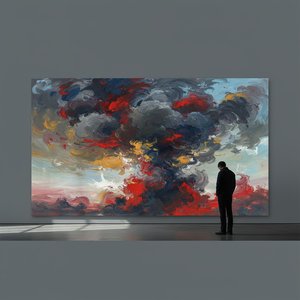
Beyond Representation: Exploring the Emotional Landscape of Abstract Expressionism
Explore the profound emotional world of Abstract Expressionism with OriginalUniqueArt. Discover key artists like Pollock & Rothko, learn about collecting, and find museum-quality reproductions to inspire your space.
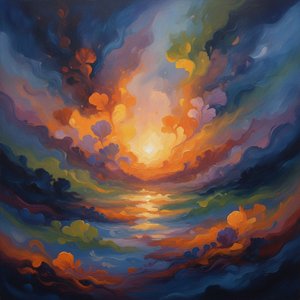
The Soul of Color: A Journey into the Emotional Resonance of Lyrical Abstraction
Embark on a cultural journey through Lyrical Abstraction. Explore how masters like Kandinsky used color and motion to translate emotion into visual poetry. Discover the profound beauty of abstract expressionism and learn to curate emotional resonance in your own art collection.

Kandinsky's Masterpieces: 25 Paintings That Define Abstract Art | OriginalUniqueArt
Journey through Wassily Kandinsky's 25 most iconic abstract paintings. Explore his revolutionary use of color, form & spiritual expressionism. Find museum-quality Kandinsky reproductions and elevate your home decor with OriginalUniqueArt.com. Discover all masterpieces on OriginalUniqueArt.com!
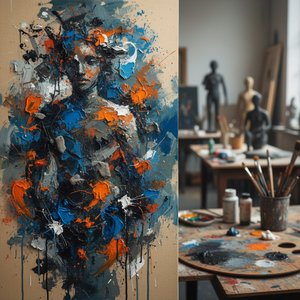
Frank McClure: A Study in Abstract Expressionism's Emotional Landscape & Material Innovation
Discover the profound emotional depth & innovative techniques of Frank McClure, a key figure in Abstract Expressionism. Explore his woodcuts, influences, and lasting legacy – essential reading for serious art collectors.