
 미리보기
미리보기
 프린트 구매
 공유하기
공유하기 공유하기
공유하기
 상세 정보
상세 정보

 다운로드
다운로드
 유사 작품
유사 작품 X-레이
X-레이 슬라이드 쇼
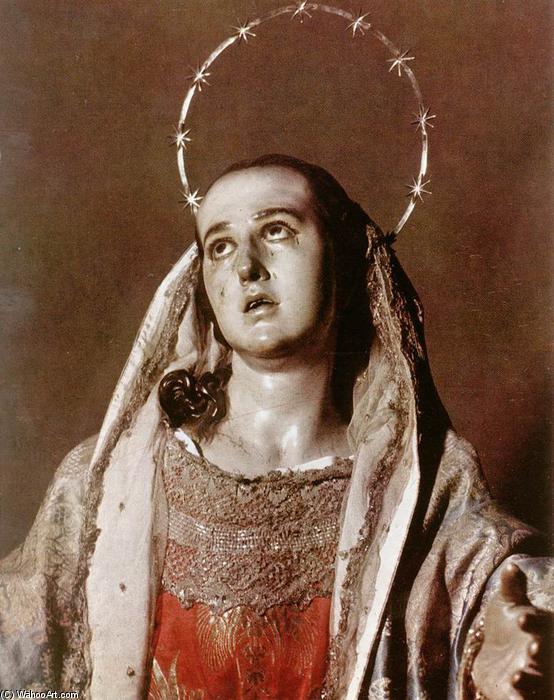
Dolorosa


 더 보기
더 보기




































작품의 원본 비율을 유지하는 미리 설정된 크기 중에서 선택하세요.

특정 프레임이나 공간에 맞도록 직접 크기를 입력할 수 있습니다. 선택하신 크기가 원본 이미지의 비율과 일치하지 않는 경우, 작품을 자르거나 추가적인 손으로 그린 요소를 사용하여 그림을 확장합니다. 제작 시작 전 승인을 위해 디지털 목업을 보내드립니다.
화면 미리 보기는 실제 자르기 또는 확장을 반영하지 않습니다. 최종 구성은 목업을 통해서만 정확하게 확인하실 수 있습니다.
맞춤 크기 제작도 가능하지만, 원본 비율을 유지하기 위해 사전 정의된 목록에서 크기를 선택하시는 것을 권장합니다.
주문 후 OriginalUniqueArt.com 팀에서 상세 안내를 위해 고객님께 이메일을 보내드리며, 미리보기 시안을 제공해 드립니다.


 유리 옵션은 110cm 미만 크기에서만 선택 가능합니다.

Dolorosa
재현 기법
복제본 크기
-


최종 결제 금액
$ 300
작가 약력
The Soul of Baroque Murcia
Francisco Salzillo y Alcaraz stands as the preeminent voice of the Spanish Baroque in the eighteenth century, a master whose hands breathed life into wood to create some of the most profound religious imagery in European history. Born in 1707 in Murcia, Spain, his artistic destiny was woven from the very fibers of his family's workshop. As the son of Nicolás Salzillo, a Neapolitan sculptor who brought the dramatic sensibilities of Italy to Spanish soil, Francisco was raised in an environment where art and devotion were inseparable. This lineage provided him with more than just technical training; it gifted him a stylistic vocabulary rooted in the emotive power of Bernini and the classical elegance of Italian sculpture, which he would later refine into a uniquely Murcian expression.
The trajectory of his career was marked by an early and remarkable maturity. By the age of twenty, he had already demonstrated a profound ability to capture spiritual depth through works such as the statue of Saint Ignatius Loyola for the Montepulciano Dominican Monastery. Following the passing of his father in 1727, the weight of the family legacy fell upon his shoulders. Alongside his siblings, Francisco transformed the Salzillo workshop into a powerhouse of artistic production, fostering a tradition of excellence that would define the religious landscape of the Region of Murcia for decades. His work was never merely about the physical act of carving; it was an attempt to bridge the gap between the earthly and the divine, making the mysteries of faith tangible through the medium of polychromed wood.
Mastery of Wood and Devotion
Salzillo’s technical brilliance lay in his mastery of polychrome sculpture, specifically the use of the estofado technique. This painstaking process involved carving intricate figures from wood, applying layers of gold leaf, and then painting over them to create textures that mimicked the rich fabrics of royal and divine vestments. His sculptures were not intended for the static silence of a gallery, but for the rhythmic, communal movement of Semana Santa (Holy Week) processions. These pasos—monumental sculptural groups—were designed to tell the story of Christ's Passion with such visceral realism that they could move entire crowds to tears.
His oeuvre is characterized by a seamless transition from the heavy, dramatic shadows of the high Baroque toward the lighter, more delicate grace of the Rococo. This evolution allowed him to imbale his figures with a sense of human tenderness and psychological complexity. Whether depicting the sorrowful Virgin in his Dolorosa or the solemnity of the Last Supper, Salzillo possessed an uncanny ability to render emotion through subtle gestures and facial expressions. His work reached its zenith in his expansive Nativity scenes, where he recreated biblical landscapes with an astonishing level of detail, turning miniature worlds into windows of profound spiritual contemplation.
A Legacy Carved in Faith
The historical significance of Francisco Salzillo extends far beyond the borders of Murcia. He was a foundational figure of the Murcian School, establishing an academy in 1765 to ensure that the secrets of his craft would be passed to future generations. Although many of his most precious works were tragically lost or damaged during the devastation of the Spanish Civil War, the fragments that remain continue to serve as pillars of Spanish cultural identity. Today, institutions such as the Iglesia de Jesús and the Salzillo Museum stand as sanctuaries for his enduring genius.
To contemplate a Salzillo masterpiece is to witness the intersection of art, history, and intense religious fervor. His life's work remains a testament to the power of sculpture to act as a vessel for collective memory and spiritual longing. Through his hands, the rigid medium of wood became fluid with emotion, ensuring that the Baroque spirit of Murcia would never truly fade from the annals of art history.

Francisco Salzillo
1707 - 1783 , Spain
주요 정보
- Artistic Movement Or Style: Baroque
- Artists Or Movements Influenced By This Artist: ['Rococo']
- Artists Who Influenced This Artist:
- Juan Martínez Montañés
- Gregorio Fernández
- Date Of Birth: May 1707
- Date Of Death: March 2, 1783
- Full Name: Francisco Salzillo y Alcaraz
- Nationality: Spanish
- Notable Artworks:
- El Belén
- Dolorosa
- Place Of Birth: Murcia, Spain
관련 기사 더 보기

고야의 걸작 25선: 스페인의 영혼을 담은 명화 컬렉션 | OriginalUniqueArt
고야의 걸작 25선을 만나보세요. 스페인 화가 Francisco Goya의 낭만주의 회화, 어두운 색조와 강렬한 감성이 담긴 명화를 OriginalUniqueArt에서 감상하세요. 고품질 유화 복제본으로 예술 작품을 소장하고 홈 데코를 완성해보세요! 지금 바로 컬렉션을 탐험하세요.

The Golden Age Reforged: Dramatic Realism & Religious Zeal in Spanish Baroque Art
Explore the dramatic world of Spanish Baroque art! Discover masters like Zurbarán & the powerful influence of religious zeal on painting techniques – a guide for collectors and enthusiasts.

Capturing Light and Soul: A Journey Through the Dramatic Mastery of Spanish Baroque Art
Explore the profound beauty of the Spanish Golden Age. From Velázquez's light to Zurbarán's devotion, discover the dramatic mastery and spiritual depth of Spanish Baroque masterpieces through our expert art history journey.

The Dramatic Flourish: Exploring the Baroque Movement's Enduring Legacy in Art History
Explore the dramatic world of Baroque art! Discover iconic artists like Caravaggio & Rubens, defining techniques, and its lasting impact on art history. Expert insights for collectors & enthusiasts at OriginalUniqueArt.

Francisco de Zurbarán: Mysticism, Realism & the Golden Age of Spanish Painting
Explore the captivating world of Francisco de Zurbarán, a master of Spanish Baroque painting. Discover his dramatic tenebrism, religious masterpieces like 'La Porciúncula,' and lasting influence on art history.

